





Amidst all of this is a crepuscular sepulchritude of electronic abstract noise and instrumental passages where full attention can be given to the impeccable sound design. On the level of structural engineering, it’s another marvelous feat. There are so many subtle details in the electronic portion, while the acoustic elements often recall the languid melodies of ancient folksongs.
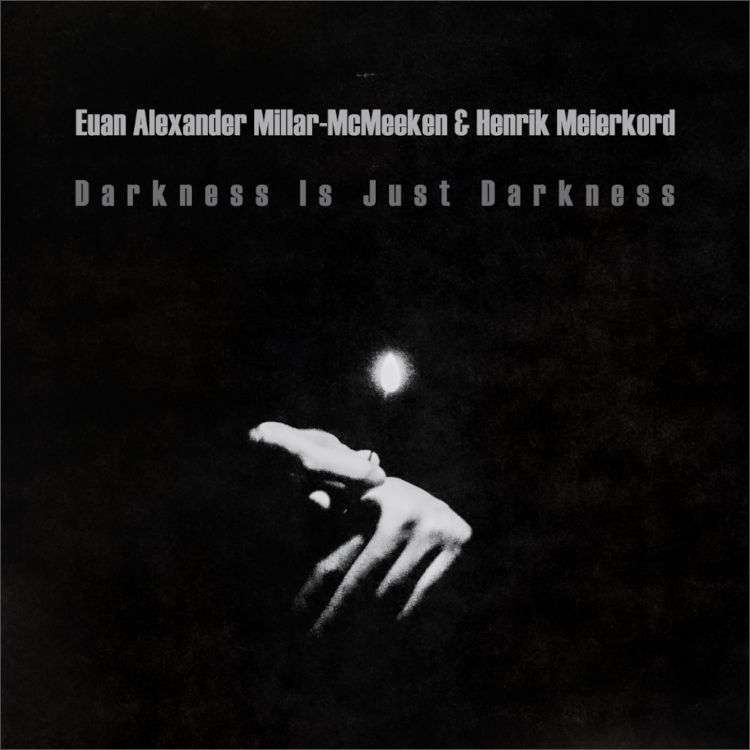
Looking at the shadow finds something truly beautiful
There is no need to be afraid of the dark. It’s just darkness. Sometimes it needs to be explored to be better understood. I don’t know who first came up with the word endarkenment, but it’s a word I think of when listening to this record. Not as some kind of antimonial left-hand path that sets itself up as something sinister, but just as a willingness to turn within and examine all the stuff that isn’t so fluffy and feel-good. I suppose therapist types and latter-day Jungians might call such an internal examination shadow work. This album sounds like shadow work to me, and in looking at the shadow finds something truly beautiful.
It’s elegiac in mood as one might expect if you’ve listened to other music by Euan Alexander Millar-McMeeken, or the contemporary studio-chamber experimentation of Henrik Meierkord. Here they collaborate together for the first time after Millar-McMeeken sent Meierkord some initial recordings. The cellist was blown away by what he heard and wanted to come in as a full collaborator. What emerges is a stark sense of loss, where what is absent hovers around the notes, even as they fill up the void with a somber passion. Yet there is a beauty there in the dark, something comforting and tangible to hold onto amidst the sorrow.
In the first piece, radio junkies like myself will delight in the fascinating static of the first song, with its snippets of broadcasts and transmissions. Such samples appear across the album as a whole, but they are used sparingly giving them depth. All the sounds have a proper place, and it seems the collaborators found the right place for everything.
The philosophical bent of the work comes out right away as Millar-McMeeken asks, “This music wants a proof of gods existence / let the ear attend / on the borders of your vision.” By the end I don’t know if the answers have been given, but certainly there has been catharsis in asking heavy questions and having deep talks.
This work could easily have sat in the realm of what some artists many decades ago would have called sound-poetry where the focus was on the sound of the words and the sounds that accompanied the words.
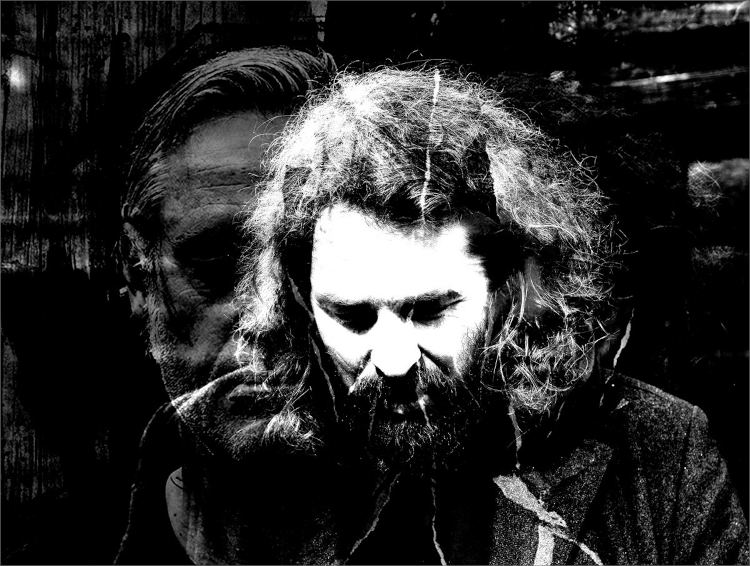
Music gives further weight to the visionary poetic insights into the human condition ::
It also reminds me of the work of American composers Robert Ashley and Laurie Anderson. They wrote music around their words, embroidering the spoken and the sung together into narrative tapestries where the emphasis was on listening to the words in a tradition that took its cue from opera. Yet they are disjointed narratives, offering snapshots and slices of life, where the music gives further weight to the visionary poetic insights into the human condition. Just as with Ashley’s work on Perfect Lives, or Anderson’s on United States Live, the voiced aspects of the album are in a “conversational register.” It’s like sitting with a friend as they pour forth a soliloquy to someone they know and trust. It is thus a privilege to be invited in as a listener to this intimate self-revealing.
Millar-McMeeken’s words here aren’t heavy on narrative but are full to the breaking with emotional weight, and yet they hover around the atmospheres of romanticist revelation conjured by Meierkord’s deft cello playing which flashes like a light to illuminate portions of the dark.
“All One Breath” consists of gentle drones and the weaving of Meierkord’s soul enchanted cello around a soft lengthening of tones that do make it sound as if it was all drawn on one breath.
Amidst all of this is a crepuscular sepulchritude of electronic abstract noise and instrumental passages where full attention can be given to the impeccable sound design. On the level of structural engineering, it’s another marvelous feat. There are so many subtle details in the electronic portion, while the acoustic elements often recall the languid melodies of ancient folksongs as on “Where Morning Broke.”
On the song “Are You Restless” the cello sounds tape warbled as if with vibrato, as do the piano parts. Little beeps, almost like the kind you hear in a hospital when someone is hooked up to all kinds of machines, key in their short little tones to punctuate the music. Eventually the monologue gives way to singing. The boundary between poetry and song has always been elusive, but here in the borderlands of musical sound art, and the borderlands of spoken word and singing, it shows and shines on that permeable line. He sings “I will give you everything” with such emotion you know the writing comes from some situation, whether real or imagined matters not, pregnant with tumultuous discord.
“The boundary between poetry and song has always been elusive, but here in the borderlands of musical sound art, and the borderlands of spoken word and singing, it shows and shines on that permeable line.” ~Justin Patrick Moore
Relief from that feeling comes in a heartbreaking musical resolve in the opening cello and piano phrases of “Silence in the Dark.” Usually that comes towards the pinnacle of a song, but here it is at the beginning, though forming a pinnacle of the album. There is a quietude and calm restraint to these passages as it now takes the listener back down into the valley of shadow. Darkness is thus a place of peace, of reflection, of coming back into oneself. In the light of the day all focus is external out into the world, yet here the focus is on the internal, a place of reflection, where even amidst the tumult, a way forward can be found. Burning distortion and fuzz coruscate off the strings as if searching for a place of rest and ease of heart.
The use of static, of what sounds like wind, of ruffling makes this a perfect accompaniment to autumn as the nights grow longer. Winter is yet ahead, but the darkness is just darkness. Nothing to be afraid of or to deny.
In “An Hour Before Dawn” the voice is multitracked again with the words of the disjointed narrative, the soliloquy to a friend late at night, perhaps after one too many whiskeys have been filled in the tumbler, and the deep stuff starts to come out from behind the walls and defenses we put in front of each other. A sung part weaves around this as ever does Meierkord’s playing which anchors the entire work.
On “Memory” bit-destroyed granular processes join with plucked guitar strings and bursts of fuzz and the slight hum, present in various songs throughout, of a gentle sustained drone. The notes are like feathers of a crow or a raven or some other black bird ruffled by the slow wind of utterance. The static crackles continue in the final song “A Little Part of this in Everyone,” where the final resonant emotional resolve is unfurled, unwinding to the final words and notes.
No need to worry as long shadows fall. No need to deny the dying of the light.
Darkness Is Just Darkness is available on Audiobulb. [Bandcamp]