









Marco Simioni :: wave_function (Evel)
wave_function ultimately displays an artist working in top form, mapping out a series of experimental electronic terrains that converge into something uniformly disjointed, immersive, and quietly mind-bending.



Experimental Electronic Music

wave_function ultimately displays an artist working in top form, mapping out a series of experimental electronic terrains that converge into something uniformly disjointed, immersive, and quietly mind-bending.
Across its ten tracks, vocals function as much as part of the instrumentation as they do a traditional lead, with Hammerbell and John Winston Phillips giving each song its own shifting character.
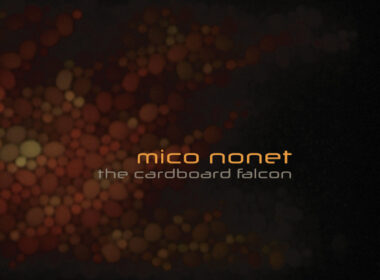
The Cardboard Falcon is a profoundly vibrant, impressionistic, cinematic, slow-moving, and melodically oriented neoclassical album that will lead the listener to a state of serenity and contemplation.
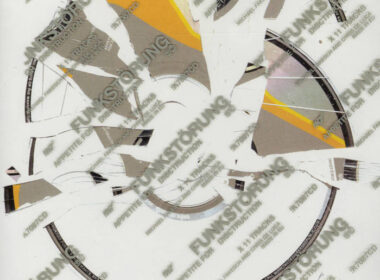
Funkstörung’s done it again. On Appetite for Disctruction, rattling beats and sweet melodies interact with an artist’s precision. Not only that, but the occasional vocal […]
Across a captivating ICA performance and the propulsive, gloriously unruly It’s Nothing Personal, Loraine James turns fractured rhythms, unconventional voices and restless electronic experimentation into something deeply human, proving that music’s greatest power lies not in perfection, but in its capacity to make instability feel alive.
Molecular Recordings delivers two uncompromising statements of hard-edged techno, with Ma Haiping’s Velocity Unlocked and a six-track compilation (Structure Series 3) putting the focus squarely on relentless kicks, pressure-cooked grooves, and music built to flatten a dancefloor.
Spencer Clark’s Typhonian Highlife project transforms dreams, occult lore, extraterrestrial encounters, and experimental electronics into otherworldly soundscapes that blur the boundaries between music, mythology, and the hidden dimensions of imagination.

Metanoia: Music From Therapy marks an important step in Circuit3’s development. Fitzpatrick’s electronic music retains its connection with a clearly defined tradition: analogue machines, sequences, emotional minimalism and synthetic soundscapes. Here, however, that tradition is used to confront something deeply personal.
With DUB da Beat, a self-released four-track EP available through Bandcamp, Walker returns to a sound that feels both deeply rooted in his history and wonderfully untouched by time. Massive basslines rumble beneath a haze of dubwise echoes, warped acid squelches, and fractured rhythms, creating a woozy, late-night atmosphere that rewards sinking into rather than simply listening to.

While continuing the legacy and wholly unique style introduced in Nekkuja and in 2022’s breakthrough Pripyat (both released on PAN), Dja Dja, her first self-released album, sees a much stronger architecture and development: almost double the length of its predecessors, the album is configured as an epic, and directly inspired by the monomyth of the hero’s journey.
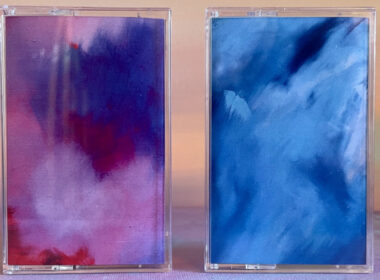
These two releases make a particularly effective pairing. no wonder • なるほど explores musical memory, accumulated fragments, and the creative freedom that comes from working within constraints. ilulissat turns outward, drawing on the physical world and translating its impact into an abstract but emotionally direct sonic language. Both favor patience, intention, careful construction, and a willingness to let sounds develop beyond their initial identities.
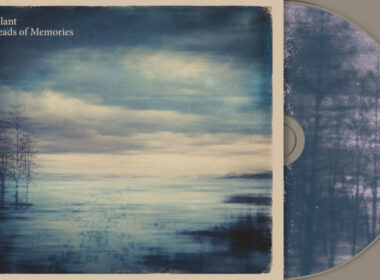
Vigilant offers here a meticulously crafted and sentient electronic release where processed field recordings interact with dreamily flowing dronescapes. A magical and magnetic feeling rises to the surface, leading the listener to a state of emotional stillness.

Jordan Schmelzer’s debut as Dead Edit, Signal Loss, plunges deep into the industrial undercurrents of IDM, where fractured rhythms, mechanical weight, and ambient collage converge in a dense assemblage of broken beats and digital decay.
Titled Les allées tourbillonnaires, this new release is a shadowy and immersive exploration of sound motifs and sonic details extracted from environmental noises and green-field recordings.

Strange storytelling, field recordings dusted in gray, gentle melancholy strings, and tribal electronic rhythms, meet stuttering voices and spell casting as sing-songing in a realm of wondrous enchantment.


![[2View] Ma Haiping/Velocity Unlocked & Various/Structure Series 3 (Molecular)](https://igloomag.com/wp/wp-content/uploads/2026/10/structure-series-3-feat-75x75.jpg)


![[2View] Nekomachi/no wonder • なるほど & tsubai/ilulissat (Perceptual Tapes)](https://igloomag.com/wp/wp-content/uploads/2026/10/nekomachi-no-wonder-tsubai-ilulissat-tapes_feat-75x75.jpg)