





Passed Recordings thus signs one of its most mature operations: a collective, contemplative, rigorous work, capable of transforming C3 into a small sonic homeland, fragile and vast, familiar and remote, where time bends slowly and sound returns to being a form of attention.
Order loses its command, the sequence becomes a constellation
130.81 chooses the compilation form as an instrument of thought. The initial idea carries as much weight as the sound itself: it guides the hands of the artists, opens a shared field, and invites listening to perform a gesture that has become increasingly rare: to pause within a single note, to let it grow, to watch it change colour, density, temperature. Passed Recordings, a collective born online and later gathered around a concrete practice of sharing, seems to rediscover here one of the most beautiful vocations of ambient culture: building community through attention. C3, with its 130.81 Hz, becomes rule, centre, compass and magnetic field. Each participant enters into relation with that nucleus and bends it toward their own sensitivity, with discretion, patience and artisanal care.
The most successful aspect of such a tightly bound project is its mobile quality. The album invites shuffle play, and that possibility genuinely changes the perception of the work. Order loses its command, the sequence becomes a constellation, the pieces call to one another through subtle resonances. In this choice one senses an almost twentieth-century trust in open form, a trust that runs through Eno, certain post-industrial drifts, the long shadow of Basinski, the abrasive matter of Tim Hecker, the slow waters of Loscil, the emotional gravity of Rafael Anton Irisarri, all the way to that lyrical composure Ryuichi Sakamoto was able to entrust to silence. Passed Recordings takes that heritage and carries it into a shared laboratory, with the humility of those who know that a small sound, when observed for long enough, contains an entire climate.
“Transforming C3 into a small sonic homeland.” ~Mirco Salvadori
130.81 lives on micro-variations, on harmonic fields that open like luminous dust, on low frequencies breathing with a slow pace, on digital glimmers left to flow toward their natural dissolution. The presence of C acts like a taut thread beneath the surface. At times it emerges clearly, as a mother note, almost a distant organ or a string left vibrating. Elsewhere it becomes specter, grain, electroacoustic tremor, the memory of a tonality recognized more by the body than by the ear. The result possesses a strange intimacy: to listen means following the way thirty-one authors choose the same initial matter and transform it into an emotional landscape, each with their own pace, their own light, their own share of darkness.

Small impulses recalling domestic objects filtered through sleep ::
The compilation rises above the demonstrative catalog and finds a unified breath. The gentler presences seem to move through a milky half-light, with brushed chords, synthesizer vapors, small impulses recalling domestic objects filtered through sleep. The darker ones widen the mass, searching for deep pressures, mineral drones, dense reverberations, noises that seem to rise from machines left running in a deserted place. The more melodic tracks open essential lines, almost private songs reduced to a filament, while the more abstract ones lead the project toward an area of pure magnetism, where timbre replaces theme and duration becomes thought. Its beauty comes precisely from this fluid alternation: the album preserves its loyalty to the harmonic pivot while allowing different characters to circulate, from drone to ambient music, from post-rock sensitivity to a faint noise-inflected unease, from rarefied miniature to long cosmic immersion.
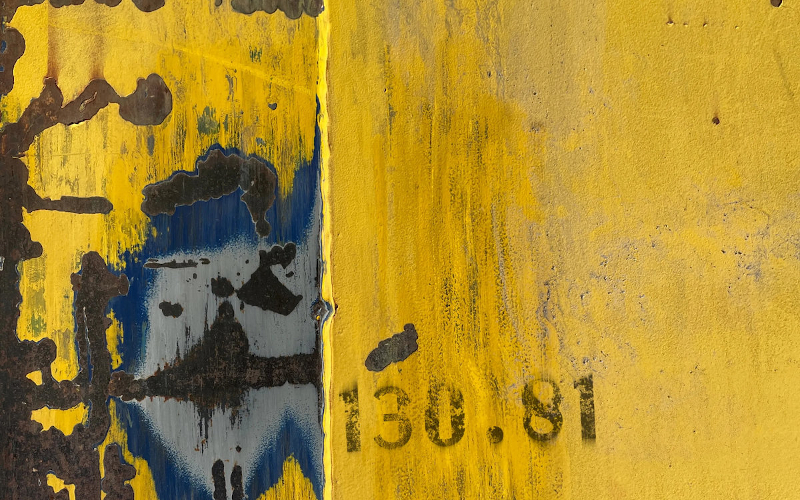
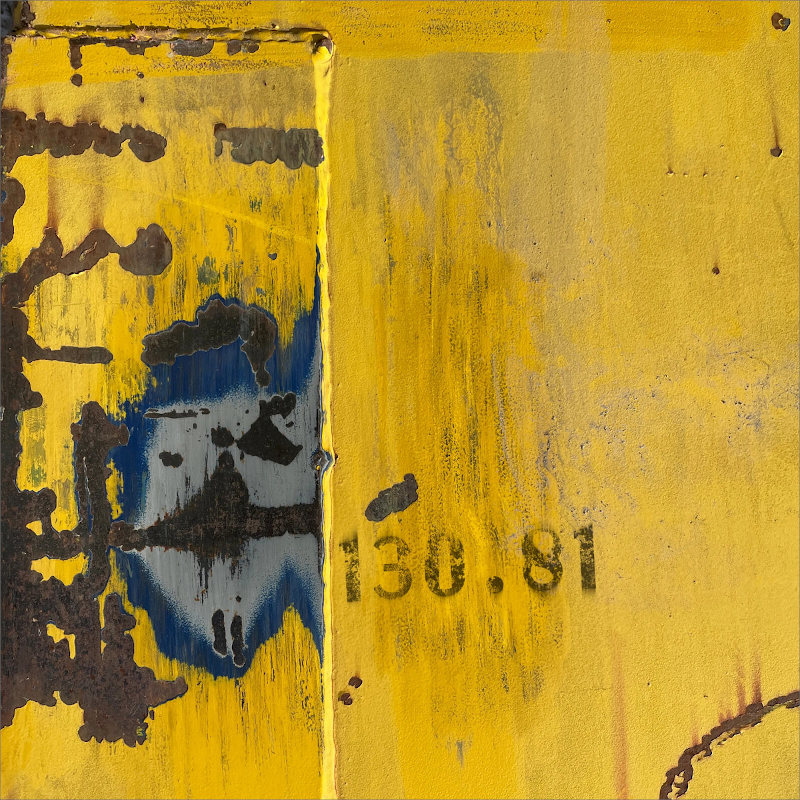
The cover image, that worn yellow crossed by dark marks and a blue shadow, works as a visual index of the sound. There is a surface wounded by time, a matter that has taken in rain, light, oxidation, and continues to emanate presence. The images in the booklet amplify this idea through a sequence of natural, animal, cosmic and domestic visions: veiled seas, starry skies, rocks, snow, a cat, a bird, luminous forms. The graphic project gives the album the quality of a sensitive archive, almost a sentimental atlas built around a note. Each page suggests that C3 can become water, feather, nebula, fur, screen, path, synthetic flesh, low wind. The music confirms that promise and translates it into listening.
Within this flow, certain names mark poles of attraction in the continuity of the overall course. Ed Herbers opens a clear and suspended zone, Legacy Systems brings a more extended tension, Jenn Jacobsen introduces a gathered warmth, Unruly Disturbance works on an almost ceremonial idea of C major. Akinetic, with Cryocoma, delivers one of the project’s most physical moments: a vibrant frost, a deep pulse around the tonal centre, harmonics that seem to refract through white matter, a slowness suggesting active immobility. G!GA LURGH tilts the gaze toward wider orbits, Exit Chamber gives the compilation a tone of deep shadow and control, Asha Patera lengthens the breath into an open song, Trees Can Talk ideally closes the graphic and sonic circle with a luminous lament. These are internal signposts within the journey, notes of orientation, small recognisable stars in a broad vault.
130.81 asks for duration, repetition, return, mental disposition ::
The value of the album grows when one understands that the limitation chosen by Passed Recordings also concerns an ethics of listening. In an age that pushes every work toward rapid identification, 130.81 asks for duration, repetition, return, mental disposition. It invites us to hear the smallest differences, to distinguish the color of a reverberation, the weight of a sonic tail, the way a low frequency can support a celestial line, the way silence between two musical events creates expectation. The compilation speaks to those who know the history of ambient as an art of permanence and variation, to those who have loved music born at the margins of rock, electronic research and drone, to those who still seek in sound a form of patient listening, almost monastic, with gathered measure and concentration.
There is also a human element that matters. The choice to donate part of the sales to Médecins Sans Frontières places the work within a line of solidarity already present in the label’s path. Passed Recordings has often used the compilation as a form of encounter and support, and here that practice gains further grace. Thirty-one artists, one note, a changing listening experience, a concrete destination. The romanticism of musical community, so often invoked and so rarely realised with such coherence, takes form here with measure. Music does what it does best when left to its own dignity: it brings distant sensibilities into relation, gathers minute energies, transforms limitation into shared language.
130.81 is an album to be heard at medium-low volume, letting the low end enter the floor and the harmonics settle in the air. It works through headphones, where every grain becomes an intimate detail, and it works in the open space of a home system, where the central note seems to find new reflections. Its strength is born from the patience with which it cultivates the minimal gesture. Its depth is born from the capacity to make change appear within what seems motionless. In the end, the sensation is that of having crossed a long tide tuned to a single point, a tide in which each wave carries a different signature and each signature agrees to serve a common voice. Passed Recordings thus signs one of its most mature operations: a collective, contemplative, rigorous work, capable of transforming C3 into a small sonic homeland, fragile and vast, familiar and remote, where time bends slowly and sound returns to being a form of attention.
130.81 is available on Passed Recordings. [Bandcamp]

Related posts ::
 Reverb Delay :: The Storm Has Passed (Mighty Force)
 Mauthausen Orchestra :: Private Thoughts Recordings (st.an.da.)
 Minimum Sentence :: Russia EP (Burial Recordings)
 V/A :: Spaciousness (Lo Recordings) — Abul Mogard track premiere!
 Ard Bit :: Field Recordings – 01 Sri Lanka & 02 Nolay (Self Released)



![Andreas Tilliander :: Ljud [2026 Remaster] (Keplar)](https://igloomag.com/wp/wp-content/uploads/2026/10/andreas-tilliander-ljud-remaster-vinyl-75x75.jpg)