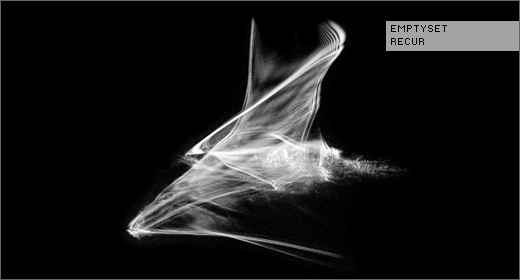





tsx and Sue Tompkins have carved out a niche so specific that almost no one else occupies it. recur⁷ is further proof they’re fine keeping it that way.

Fragmented, algorithmic, weird
The recur series is a long-running project, and recur⁷ marks the sixth iteration of this collaboration between tsx (Oswald Berthold) and Sue Tompkins. tsx—short for “music To Stay Xane“—is a persona created by Oswald Berthold, a member of the legendary Viennese electronic collective farmersmanual and current curator of the falsch label. Berthold has been active in experimental electronic music since the mid-90s, working across multiple projects including CD_slopper (with Florian Hecker) and pxp. His work revolves around native digital aesthetics, often using neural networks, mobile phone production, and bespoke algorithmic processes. Sue Tompkins brings severe prior credentials as the vocalist for Life Without Buildings, the Glasgow art-school band whose lone album Any Other City (2001) has become a cult classic. Tompkins‘ vocal style—fragmented, looping, speak-singing phrases, has influenced a generation of post-punk bands. She’s also a respected visual and sound artist, working with text, collage, and spoken-word performances that explore rhythm, repetition, and the interplay between meaning and abstraction.
The recur series started off with just tsx alone. It wasn’t until recur² (2020) where Sue Tompkins joined in, and from there on it was as if the collab was meant to be. The series now includes recur (2017), recur² (2020), recur³ (2019), recur⁵ (2022) and recur⁷ (2026). I can’t find recur⁴ in the discography, which suggests either they were private releases, scrapped, or the numbering system is intentionally non-linear. But recur⁷ landed on me as being unique in its presentation and genre style.

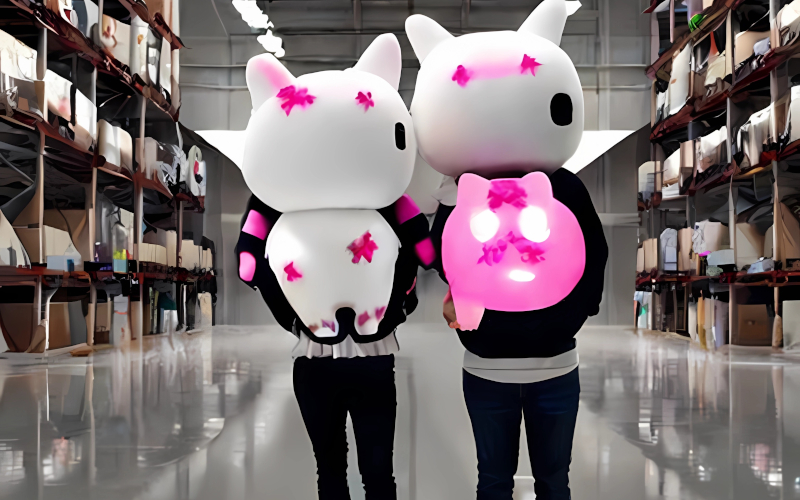
This style of music is different, and I felt it deserved some attention because of its bizarreness. Each iteration doesn’t change at all actually, it all sounds like the same piece. In fact, if you were to line them all up together, they’d fit well. The genre, as best described, has a mixture of electronic beats, bubbly melodies that really are not stable, just freestyled almost, and her vocals are sporadically placed on purpose to confuse or manipulate the listener. It’s oddly enough to hear throughout, but it’s very reminiscent of early Dat Politics with their earlier productions from Plugs Plus (2002). Dat Politics, the French electronic duo, built their sound around lo-fi, bubbly, glitchy pop that felt intentionally childlike and chaotic. The same energy is present here, playful but disorienting, cute but unsettling.
Playful but disorienting, cute but unsettling ::
The vibe is meant to really confuse and be experimental, off-tone, off-beat, but the production value is still there. It sounds improv almost, and at times cute little rhythms and sayings emerge with looping voices, which make it interesting to listen to. The album description mentions that vocals were recorded by Sue in various casual settings into her phone, then sliced into small chunks and sorted into heaps by their sonic similarity using an audio similarity algorithm. The placement of the sliced and sorted vocal chunks is done with a small program that has beat perception, rearranging everything into a state of “second order dissociation.” This is the “mixing enzyme”—a little machine that moshes the timing and volume of sounds. Fragments of meaning disappear faster than it takes them to be vocalized. This production technique is central to the sound. It’s not just fragmented vocals—it’s algorithmic fragmentation, where the machine decides the placement based on audio similarity rather than semantic meaning.
I wouldn’t even listen to this starting from this iteration. You should listen to the other iterations as a whole—it’s like an audio journey almost. You can’t just approach it from this number. You must listen to more. No standout tracks for me on this one, however I think both artists have found a sound niche that suits them well and the series. Five years of work for a 15-minute EP. The dedication is admirable, or possibly evidence of severe indecision. The basic tracks were laid down in 2019, iterated on twice, previewed once on SoundCloud, and eventually released privately in 2024 with only cosmetic adjustments. The hi-hat textures in “mute their knee” and “the pleasure of completed action” are meant to replicate the sound of rain on a skylight, which is a very specific reference point for what is essentially organized chaos. The metric grids also break from the standard 4/4 format, which is always a bold move in electronic music. This is the recur series stripped down to its essentials: fragmented, algorithmic, weird. Not for casual listeners, but for anyone willing to engage with it as a series, it’s a compelling exercise in machine-assisted meaning.
tsx and Sue Tompkins have carved out a niche so specific that almost no one else occupies it. recur⁷ is further proof they’re fine keeping it that way.
recur³ is available on farmersmanual. [Bandcamp]