



Lost Tribe Sound knocked it out of the park in 2026 with this interconnected series of releases. Diving into the extensive back catalog of the label is certainly an effort that will reward the curious and careful listener, while waiting for what they decide to bring out next will reward the patient.

“This music is too damn important to us.” ~Ryan Keane

There are so many independent labels and artists doing amazing work in the realm of electronic and experimental music, it can be hard to keep up with the flow. One of the ways I used to try and find new music was to go over to the main page at Bandcamp and watch the ticker-tape from their “selling right now” feature and click on a random album. Doing that produced some excellent results, but also plenty of duds, though apparently other people really dug whatever I was clicking on.
There is an easier way. It’s tried and trusted way. All you need to do to find the artists and albums that speak to you is follow the work of a label you can trust, and I have come to trust the material being put out by Lost Tribe Sound. They have been hitting grand slams and home runs all this year. These releases are at home in the outfield where the organic meets the mechanical, where the exploratory and experimental meet the traditional tropes of a variety of genres, but where those tropes get bent and reappraised and put to new use. The Lost Tribe of musicians and projects they have assembled come from far corners of the earth, and also exist outside of time, because the music itself is as timeless as it is tattered by the vagaries of deep experience in this world.
Ryan Keane, the person behind the efforts at the label, has worked hard in gathering a variety of voices for the Moss and Melee series that exists in two parts and across seven albums which cover a wide terrain of material but all share in a nuanced approach to ambience, strange sideways motions, understated melancholy bedroom chamber pop, and feverous folk drone.
The Moss and Melee series itself is broken down into two parts, Old Growth and Controlled Burn. These each gather together the albums that share overall moods and genre tone. I’ll explore all of the releases in each of these series as we go.
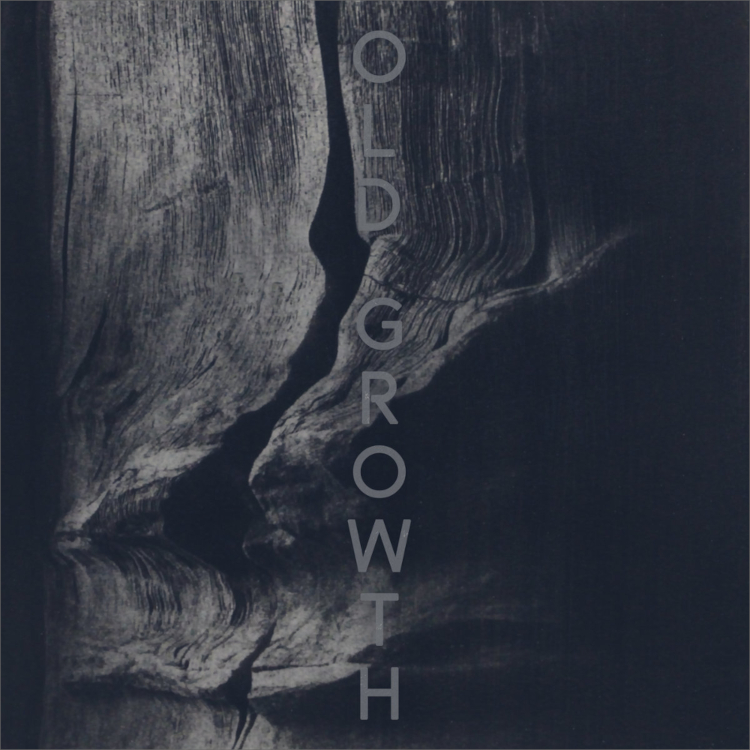
Old Growth
Keane is on a decisive mission to bring this music out and help it find an audience, writing that, “Old Growth is the music that gets right to the core of why we have continued to push through this gloom era with all its compiling world calamity, mental taxation, and financial drains to create this new series. This music is too damn important to us.” That mission brings new works from Daniël Jolan (aka ‘t Geruis), Seabuckthorn, Corrado Maria De Santis, and Rafa Ramos Sania.
It’s time to find the others. Let’s dig in to each of their works, which have all the grain of truly ancient trees.
Sublime Lenteur by Daniël Jolan
Slow walks, slow movements, solitary dreams all pervade the consciousness of the listener on Daniël Jolan’s album Sublime Lenteur, the first entry in the Old Growth portion of the Moss and Melee series. On this record, the frayed fabric of time reveals spectral envelopes.
Some head cleaner music is made by blasts of angular noise and high-volume dissonance. This album is like fabric softener for the mind. It’s soft itself and strips the coarseness out of a head. Once finished, open up the lint drawer and take out that stuff. Put it through a filter and repeat. Sonic Youth may have made their famous album Washing Machine, and the band Dry Cleaning are becoming a notable musical force in their own right, but Jolan puts me through the dryer on a slow cycle. When my emotions are getting soggy, this calms things down, as I tumble in the softness.
Abstract swatches of refined texture loop and zone out, later to be joined by pianos. All of it is rather somnambulant. It’s orchestral in the way a hoover vacuum cleaner is orchestral, if you are of the right frame of mind. There is fuzz and wind and ancient horns sounding their tones beneath a field of magnificent static.
Listening I think of the soft beds of moss, the kind of natural fuzz of the forest floor. It’s a calm moment in the growth life of an ecosystem. When Jolan first started work on the album in “it was a very grey and cloudy winter full of change and searching, I started doing these long and solitary walks in the woods, just fog, snow, rain, being there with myself, with hopes and sadness and connection and nature falling asleep with the promise of a wonderful return… I would get back from these walks and directly continue working on an idea, so I was living these really wonderful moments where I had this rare feeling of being able to directly translate something into my work. This bubble of creation. It made me reflect on why I love so much to make sounds, why it means so much to me and what I feel needs to exist in it.”
Walking as a source of creative inspiration can never be underestimated. I think every artist, writer, and musician should go out and walk as much you can. Personally I don’t walk with music or headphones on, preferring to be as introspective as I can, but if I did I would choose an album such as this, or the one provided to Lost Tribe Sound by Seabuckthorn.
Never the Same River by Seabuckthorn
Just as Jolan got ideas for Sublime Lenteur from walks in the woods, Andy Cartwright started getting ideas for Never the Same River from his weekly walks in the mountains, where he began to notice the minute changes occurring in the landscape over the course of time. It was the same path, the same mountains, the same landscape, but it was different, so maybe it was never the same after all.
True to the name of the album, Seabuckthorn has delivered a cohesive body of songs, all comprised of a similar water, all coursing through the same valleys and land, but with many differences. Perhaps they are like siblings, they come from the same parents, but each are unique. The songs are part of the river but they aren’t the same songs. Each one is a separate entity, like the particles that make up the great bodies of aqueous water across the earth. While separate and perfectly able to stand on their own, they add up the sum of their parts across the album in a lulling, rushing, meandering, rhythmic downpour.
These rhythms are again aqueous and amorphous. The songs are like a raft made to go over rapids and other turbulence. There is a beauty to the structure and there is a perilous haunting to the elongated and sustained string tones and drones Seabuckthorn has become known for. In certain places you can hear where the glue from one recording has been joined to another to create something out of a multitude of fragments.
Out of this personal library of sound, where one sonic placement references another, unpredictable patterns are born out of chance operations. Boiled down and mixed into an essential flow it becomes a marriage of ambient Americana, ritualized studio solitude, and momentary details that mutate to become centerpieces in a sprawling and serpentine sound pool that courses its way across a vast territory. The river changes the territory, and the territory changes the river. Neither are ever the same.
Threshold of Light by Corrado Maria De Santis
Controlled burns are sometimes slow burns. Sometimes it’s an audio barbiturate. Artificially induced chemical relaxation has no hold over the power of audio induced relaxation. The long, creaking drones and rich tableau of microscopic electronic sound particles roam through a dark ambient night as so many insects waiting to be caught by bats in their sonar headlights.
From sundown’s gloaming to the black abyss of midnight, from the night just past to the radiant dawn, these works pass through a vale of tears. They are drones that gnash, like chattering teeth in secret night while alone. Across five pieces, these granular compositions arc with an organic electricity, a companion through inner voyages and nocturnal terrains.
Just when you think the darkness is too much, the sun begins to rise again.
A Broadcast Of Your Silence by Rafa Ramos Sania
Over the course of four 10-minute tracks Valencian-based double bass player and all-around multi-instrumentalist Rafa Ramos Sania takes listeners on a harrowing ambulance ride through the underbelly of civilized life. From the opening siren-like wail on “Sumac,” it’s something of a fraught journey (very different from his new album out on Whitelabelrecs, Suburbia, Still which is an outing under his Calm Pieces moniker).
Though I’d say there is plenty of darkness in suburbia, on A Broadcast of Your Silence, he is free to go down into singular introspective emotional depths. He had first intended to write some music for solo double-bass, but found it to be a bit of a challenge. It needed something more and he found what he needed inside this enervating, under-your-skin sequence by listening to the constant stream of news about war and violence on the radio.
There should be grief and disquiet in meditating on all the people lost in these endless wars. There should be moments of silence for those who are now in permanent silence. It seems to me that Ramos gave their voice back, that he knew it was his job to broadcast these feelings. As such, for instrumental music, it is quite disquieting.
Composing with radio sounds, or with radio in mind has been a throughline in contemporary music ever since John Cage and Karlheinz Stockhausen first started thinking of radios as instruments in and of themselves. You don’t really hear the voices of the newscasters Ramos heard on this record. You do hear him playing in reactive response to the resonant weight of the sorrow felt from taking in so much destruction over the airwaves. Yet it is still radio phonic, and it is still in line with what people in the vaporwave scene these days call signalwave: music made from or inspired by samples from material that has been broadcast. Here those broadcasts go into him as a signal and come out again as the bow scrapes against the string, transformed into something raw. Announcers on the radio may give journalistic distance to atrocity. Ramos asks us to look at it, for only by feeling what is actually going on can there be any hope for it to stop.
There are some radio sounds though, such as on “Carob” where towards the end of the piece his double-bass starts fading out as the radio starts fading in. The initial recordings were done across four days, one day for laying down the foundation of each. He crafted the rest of the elements from his archive of sounds and other double-bass recordings.
The dark ambience of neo-classical continues across “Arak” and “Grape Leaves,” the shifting undertones and organic warmth of his primary instrument droning in dirges, or zigzagging in slow virtuosic scintillations fitting for an elegy of all those who have been lost in the wars.
If all of that grief which poured through the radio was in search of a vessel for its expression, it found one in Ramos, and the result is an impeccable tribute to the memory of those whose lives are no more.
Moss and Melee II – Controlled Burn by Lost Tribe Sound
For part II of the Moss and Melee series Keane gathered together their “strange breed of indie music” and put these on full display. “We’ve spent many nights helping shaping each of these albums, digging through the loneliness, isolation, togetherness, and ponderous moments of sadness and relief that this music conjures.”
For these three albums come the project Yoal, featuring Japanese songwriter Satomimagae, and Euan Alexander Millar-McMeeken; “the Igloo Mag appointed master of ritual shoegaze,” Arrowounds; and another outing with Euan Alexander Millar-McMeeken in collaboration with Craig Tattersall for the second album from their project Civic Hall.
From these ashes the seeds of the new will be born.
Gloaming by Yoal
Listen to this without expectation and feel where the scars in your life go from hardened to becoming tender again, but through it, know that you are alive, have lived, and would do it all again. It may be uncomfortable at times to be burdened with so much emotion, as in this music, but if it can be channeled towards love of humans, towards love of animals, plants, channeled into art, it becomes a nurturing force for growth. The shared hardships become a bond of union. It’s such a bond of musicianship that Satomi Magae (Satomimagae) and Millar-McMeeken share.
It starts with a peculiar tone warped in vibrato opens the door to a realm of expansive consciousness and emotion on the first song “Tori.” Slow notes join in with the voice of Satomi Magae. Her singing is transportive. Long silken threads reach into higher dimensions and bring down treasures from heaven to earth.
“The Sea of Gold” is a song that can break your heart right open. More people need broken hearts in my opinion. They just harden and don’t heal if they haven’t been broken. They just cut themselves off from the world of emotional feeling. Euan and Satomi duet on this part of the album. On “The Suns White Wind” minimalist strings join the voices in an upward ascending spiral flight of tears. Plucked strings of gentle softness ease the return to earth.
Gloaming is a masterpiece of cross continental melancholy experimental bedroom folk pop -if you want to put a name on this music. This pair needs to keep at it! (Please?) There is a magic between them. The voices, the instruments, the interplay. It’s the intangible spiritual force made present through music when these creative souls bring their hearts together and join together in sound. With such beauty created, it would be a shame to not hear what they may come up with next.
Fluidic Time Cathedral by Arrowwounds
In keeping with Arrowound’s journey through ritual shoegaze and ambient atmospheric noise, the patterns on this album unfold over long time frames. The slow time of this long exposure method blurs the movement of sound enabling the listener to focus on the static elements. Insects and sounds of beasts haunt the primordial fern flecked forests as swirling loops of dissonant shadow rise and dissipate. The music cycles through a world of immersive timbres and mellifluous pitches across nine haunting movements. It takes awhile to travel through this cathedral of the forest where the trees are like ancient gods.
Time dilates and contracts according to their own notions of time, far beyond human reckoning.
Songs like “Moth Carcass Throat Remedy” chunnel along with a throbbing bass beat and the shimmer expected from shoegaze music, but it’s been refracted through further prisms and transported to the understory of these dark woods. The light gets through here and there, but only as it illuminates spectral totem creatures and the moss-covered stones of gurgling stream winding their way through the roots. Other pieces portray sacred geometries through nuanced electronic construction.
The short piece “The Amanuensis” slips in unannounced, like a memory from a time before birth, downloading direct insight into the current life and its trajectory. There are moments, such as on “Conception of an Allegory” where I hear what the light of heaven sounds like, coming down from those gaps in the branches. The entire album is a journey of illumination. The final track “Cascading Inner Lightning Parts 1 & 2” features some acoustic fingerpicking. It might even be banjo. Whatever it is, its perfect.
The forest may have suffered from a controlled burn but that is how the light is able to come back in to thickets that were deeply entangled and overgrown. Now old seeds can sprout anew. Stand in the sacred grove of this cathedral and be renewed.
The Dead Bell by Civic Hall
Bell’s hold a mystic fascination for me.
Psychologically, this album takes its toll. Life itself takes a toll.
In listening to this, and many other worthwhile endeavors it’s a toll worth paying.
I have a mystic fascination with bells, and this album is a real gem, though it does take an emotional and psychological toll on the listener. It’s one well worth paying. Stuffing emotions down doesn’t do anything to bury them. They resurface later. Music like this helps excavate the hidden and release challenging emotions in positive ways so we can get on with life. Music like this serves life. Euan’s soft voice over the lo-fi pianos and symphony of static and mysterious hums is transcendent.
“I am whispers in the stone.”
Have you ever had the feeling of calling someone over and over again? That’s what gets evoked in “I love you most in times of rain.”
On this song there is a bit more bass, maybe from a bass guitar or other strummed instrument. It helps ground the feelings in the body when so much of the soundworld created by this pair could slip away into a hypnagogic dream. At one point the voice is close, at another, it sounds as if it is coming to us from down inside a long tunnel, far away, as far away as the flicker of light, and now close again.
Synthesizer strains on warped tapes brighten things up with tones reminiscent of Vangelis. When these chords hit I feel a warm of sympathy in my heart. A fellow human resonance as the tape fades into a blur.
If you believe there is weight and gravity to light, this music will reinforce that belief in you. Sepia toned dust motes filter and unfurl across blistered passages of carefully attenuated noise.
Mastered by Alex at Quiet Details, it could have very well been an album on the Quiet Details label. It is literally baked from one end to the other in a foreboding quietude and demands attentive listening. The details are subtle and numerous. That said it is very much a Lost Tribe Sound album on the “indie” end of their offerings, and is a capstone on a series that started strong, finished strong, with nary anything you’d want to skip. The only thing I wanted to do is spend more time with all all of these albums.
Found Sounds from the Lost Tribe
Lost Tribe Sound knocked it out of the park in 2026 with this interconnected series of releases. Diving into the extensive back catalog of the label is certainly an effort that will reward the curious and careful listener, while waiting for what they decide to bring out next will reward the patient.
Moss and Melee I – Old Growth by Lost Tribe Sound is available on Lost Tribe Sound.

Related posts ::
 Arrowounds :: Loneliness of the Hollow Earth Explorer Vol. 2 (Lost Tribe Sound)
 Arrowounds :: The Loneliness of the Hollow Earth Explorer Vol. 1 (Lost Tribe Sound)
 Lost Tribe :: Lost Tribe (Blind Prophet)
 Lost Myths :: Lost Myths vol. VII (Lotophagus)
 WE FORFEIT (Mix 9) :: A Rolling Jamal Gathers No Moss