






Illusion of Safety deserves recognition not just for its longevity, but for its persistent refusal to become comfortable. Across more than four decades, Burke has continued questioning what experimental music can be, moving between radically different approaches without abandoning the curiosity that first made the project compelling.
Remarkably varied and uncompromising
There are certain artists whose importance to experimental music extends well beyond their recordings. Their influence can be found in the possibilities they opened up, the conventions they challenged, and their willingness to follow ideas into unfamiliar territory. Illusion of Safety belongs firmly in that category. For more than four decades, Daniel Burke and an evolving group of collaborators have occupied a distinctive position within American industrial, noise, and experimental music, consistently resisting easy classification while developing a body of work that remains remarkably varied and uncompromising.
My own history with Illusion of Safety stretches back to the late 1980s, when I began buying their cassette releases at The House of Records, my local record shop in Eugene, Oregon, and ordering recordings through the printed mail-order catalogs of RRR Records. Throughout the late 1980s and into the 1990s, those catalogs and independent record stores were essential lifelines for discovering experimental music that existed far outside the mainstream. There was something particularly exciting about finding an unfamiliar release, reading whatever limited information was available, and taking a chance on music that might turn out to be unlike anything you had previously encountered. Illusion of Safety was one of those groups whose recordings continually rewarded that curiosity.
Familiar musical expectations were completely abandoned ::
During those years, I also heard stories about their notoriously unpredictable live performances. There were rumors of chaotic, confrontational shows that seemed to blur the distinction between a concert and some kind of elaborate psychological experiment. It would take until 2005 before I finally had the opportunity to see Illusion of Safety perform, with Daniel Burke and Thomas Dimuzio comprising the lineup. After so many years of collecting and listening to their recordings, finally experiencing the project live felt like an important moment. It also reinforced something that had always attracted me to their work: Illusion of Safety was never about just making abrasive sounds, but about exploring what could happen when familiar musical expectations were completely abandoned.
Emerging from Chicago in 1983, Illusion of Safety became part of an American underground that approached industrial music as something considerably broader than distorted electronics, aggressive rhythms, or confrontational imagery. While much of the industrial movement’s early identity had been established by European groups such as Throbbing Gristle, SPK, and Cabaret Voltaire, American artists were developing their own interpretations, often drawing from performance art, tape experimentation, improvisation, and the emerging culture of independent cassette distribution. Illusion of Safety helped define this particularly adventurous corner of the underground, where the boundaries between music, sound art, and psychological experimentation were becoming increasingly irrelevant.
“Illusion of Safety was never about just making abrasive sounds, but about exploring what could happen when familiar musical expectations were completely abandoned.” ~Don Haugen
What distinguishes Burke‘s work from many of his contemporaries is an extraordinary willingness to abandon familiar approaches. Across more than forty full-length releases, Illusion of Safety has moved through industrial deconstruction, musique concrète, minimalism, electroacoustic composition, noise, and elaborate constructions of found sound. Some recordings are brutally physical, others remarkably restrained. Certain works unfold through dense layers of manipulated audio, while others explore the smallest changes in texture, space, and duration. There has never been a single identifiable Illusion of Safety sound, although Burke‘s unmistakable sensibility connects these seemingly disparate approaches.
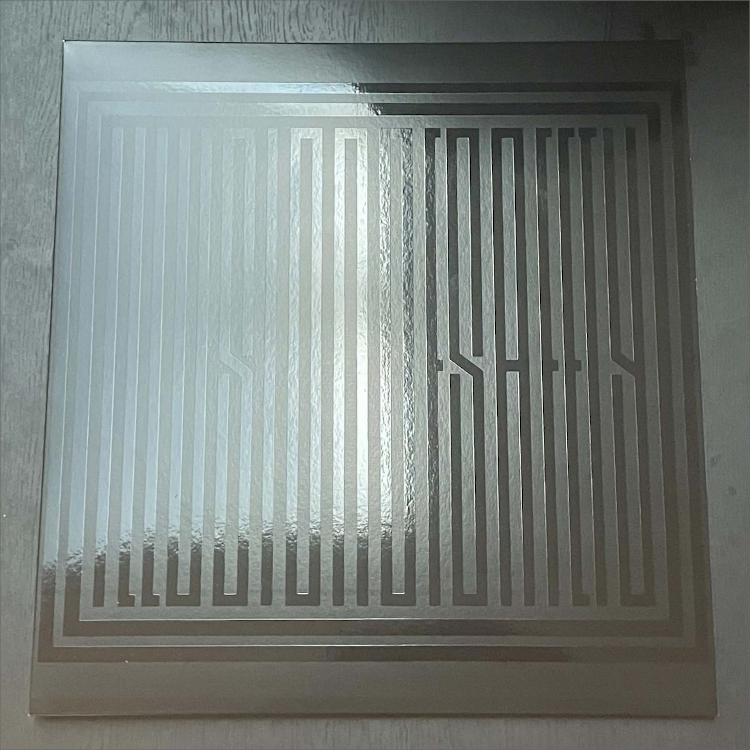
That creative restlessness is particularly evident throughout Historical Distractions, a collection of recordings from 1991 through 1994, released by Nihilist Recordings. Curated by Burke and Andy Ortmann, the album gathers selections from five releases: Historical (Staalplaat), Rules of the Game (eM 13n), Inside Agitator (Complacency), Cancer (Tesco), and Distraction (Odd Size). Remastered by Andrew Weathers in 2024, the material is presented on a limited edition of 250 vinyl copies, alongside a digital release.
The decomposition years ::
Burke refers to this period as the decomposition years, a wonderfully appropriate description of what was happening within the music. Rather than assembling sounds into recognizable compositions, Illusion of Safety was actively pulling apart the familiar language of recorded music, exposing its underlying structures and rebuilding them into something altogether more unpredictable.
Working primarily with sequencer constructions and 12-bit sampling, Burke treated recorded material as an endlessly adaptable resource. Commercial announcements, fragments of popular music, mechanical rhythms, instrumental performances, and disembodied voices were manipulated and reorganized into dense, frequently bewildering constructions. The resulting pieces occupy a fascinating intersection between industrial music, plunderphonics, musique concrète, and the more confrontational possibilities of audio collage.
Importantly, these techniques were never exercises in technical experimentation. There was always something deeply human, frequently uncomfortable, and occasionally hilarious beneath the surface. Burke seemed particularly interested in the absurdity of contemporary civilization, the contradictions of human behavior, and the unsettling ways that information, entertainment, and violence coexist within our everyday experiences.
The opening track, “Historical,” offers an excellent example of this approach. Featuring contributions from Thymme Jones, Mark Klein, and Jim O’Rourke, the composition brings together piano, orchestral synthesizer textures, and two overlapping tracks of O’Rourke‘s ferocious metal guitar leads. Rather than allowing these elements to settle into a recognizable musical arrangement, the piece places them in direct competition with one another. The guitars are especially striking, their exaggerated gestures pushing against the surrounding electronic material in ways that are simultaneously exhilarating and slightly ridiculous.
It is this willingness to embrace contradiction that makes the music so compelling. Illusion of Safety never seemed particularly concerned with whether something belonged within an established genre. If an unlikely combination produced an interesting result, that was reason enough to explore it.
Meticulous studio manipulation with the unpredictability of human performance ::
“Helen your brain, forever since about breakfast” offers another revealing example. Developed collaboratively by Burke, Chris Block, and O’Rourke through exchanges of sampled material, the piece eventually found its shape around Block‘s rhythmic contribution and a remarkably economical guitar performance by O’Rourke, reportedly recorded in a single take. There is something wonderfully spontaneous about that process, especially considering the intricate editing and construction involved elsewhere in the music. It demonstrates how Illusion of Safety could balance meticulous studio manipulation with the unpredictability of human performance.
Throughout the collection, conventional distinctions between composition, improvisation, and sound manipulation become increasingly difficult to maintain. “History is written by the winners” and “Faden Die” contribute to a larger musical vocabulary built from abrupt transitions, competing textures, and the transformation of familiar material into something far less recognizable.
The second side continues with “Thermonuclear Holy War,” “The White Zone,” “Rules of the Game,” “Repairs,” and “MusikFuk II.” Together, these selections illustrate just how expansive Burke‘s musical interests had become during this period. Heavy industrial rhythms, abstract drones, distorted instrumental fragments, and sudden interruptions coexist within arrangements that seem perpetually on the verge of collapse.
“Heavy industrial rhythms, abstract drones, distorted instrumental fragments, and sudden interruptions coexist within arrangements that seem perpetually on the verge of collapse.” ~Don Haugen
There are moments when the music approaches industrial dub, with repetitive, almost mechanical rhythmic structures providing a temporary foundation for increasingly strange sonic activity. Elsewhere, recognizable musical references are reduced to little more than their constituent parts. A rhythm might remain after everything surrounding it has been stripped away, or a familiar sound might suddenly appear in a context that renders its original meaning almost absurd.
Yet for all its apparent chaos, the music demonstrates a remarkable understanding of pacing and contrast. Burke knows when to allow an idea to develop and when to interrupt it. Dense passages give way to unexpected openings, while quieter atmospheric sections can be abruptly shattered by distorted samples or aggressive instrumental gestures. These changes rarely feel arbitrary. Instead, they reveal an artist who understands that the relationship between sounds can be just as important as the sounds themselves.
One of the more fascinating aspects of this material is its relationship with mass media and popular culture. Commercial voices, appropriated recordings, and fragments of familiar musical language become raw material for compositions that suggest a society overwhelmed by its own manufactured messages. Removed from their original settings, these sounds take on new and often disturbing implications.
This aspect of Illusion of Safety‘s work connects them to a broader tradition of cultural criticism within industrial music. From the beginning, the genre’s most adventurous practitioners recognized that recorded sound could function as something more than entertainment. It could expose contradictions, manipulate expectations, and force listeners to reconsider the seemingly ordinary information surrounding them.
But Burke‘s approach is rarely as straightforward as simply delivering a political statement or constructing an atmosphere of menace. His work is considerably more ambiguous, often allowing humor, beauty, aggression, and absurdity to exist simultaneously. The listener is left to make connections between fragments that might initially seem unrelated.
The original experimental spirit of industrial culture ::
That ambiguity is part of what makes Illusion of Safety so important within the American experimental underground. At a time when industrial music was increasingly becoming associated with more recognizable musical formulas, Burke continued exploring its less commercially accommodating possibilities. His work maintained connections to the original experimental spirit of industrial culture while incorporating ideas from contemporary composition, free improvisation, sound art, and the emerging possibilities of digital sampling.
Within the American noise scene, Illusion of Safety also represented an important alternative to the notion that experimental intensity must necessarily depend upon volume, distortion, or sustained aggression. Burke‘s music could certainly be punishing, but its power often came from the arrangement of contrasting materials, the manipulation of psychological tension, or the sudden appearance of something unexpectedly delicate.
This broader understanding of noise as a compositional resource, rather than a measure of sonic extremity, remains one of the most valuable aspects of the group’s work.
“Industrial music, noise, electroacoustic composition, and free improvisation may have different histories and audiences, but Burke has continually demonstrated how naturally their ideas can overlap.” ~Don Haugen
Illusion of Safety‘s significance is also reflected in its extensive performance history and the remarkable range of artists with whom Burke has collaborated. More than 300 concerts across the United States and Europe, alongside collaborations involving Jim O’Rourke, Z’EV, Kevin Drumm, Thomas Dimuzio, Jon Mueller, Randy Greif, Darin Gray, and others, reveal an artist deeply connected to multiple generations of experimental music.
Those connections are important because they illustrate how Illusion of Safety has operated across scenes that are sometimes treated as separate musical worlds. Industrial music, noise, electroacoustic composition, and free improvisation may have different histories and audiences, but Burke has continually demonstrated how naturally their ideas can overlap.
Listening to Historical Distractions more than thirty years after these recordings were originally created, what stands out is not simply how adventurous the material was for its time, but how little it seems to have aged. The editing remains wonderfully unpredictable, the sampling inventive, and the compositions resistant to the kind of easy categorization that can make experimental music feel strangely conventional.
There is also something particularly appealing about the limitations of the equipment used to construct these pieces. The grainy character of 12-bit sampling, the abrupt edits, and the physical quality of the rhythms give the recordings a personality that would be difficult to reproduce through more polished contemporary production methods. Rather than disguising those limitations, Burke used them as essential elements of the music.

A period of extraordinary creative curiosity ::
Andrew Weathers‘ remastering provides an opportunity to revisit these recordings as a cohesive collection, while the vinyl presentation reinforces their connection to a period when independent labels, physical releases, and international underground networks were essential to the circulation of experimental music.
Ultimately, Historical Distractions is much more than a collection of archival recordings. It captures Illusion of Safety during a period of extraordinary creative curiosity, when seemingly incompatible ideas were being thrown together to discover what unexpected possibilities might emerge.
There is a mischievous intelligence running throughout this material, a sense that Burke and his collaborators were enjoying the process of dismantling musical expectations as much as they were interested in constructing something new. That combination of seriousness and irreverence is increasingly refreshing.
For me, returning to these recordings also brings back something of the excitement of discovering Illusion of Safety all those years ago, searching through cassette racks at The House of Records or poring over the pages of an RRR Records catalog. Those experiences were part of what made the underground experimental music scene so rewarding. You never quite knew what you were going to encounter, and some of the most memorable discoveries came from taking chances on artists who seemed determined to do things differently. Illusion of Safety was certainly one of them.
Illusion of Safety deserves recognition not just for its longevity, but for its persistent refusal to become comfortable. Across more than four decades, Burke has continued questioning what experimental music can be, moving between radically different approaches without abandoning the curiosity that first made the project compelling.
Historical Distractions provides an excellent reminder of why Illusion of Safety remains such an important presence in American industrial and experimental music. These recordings are challenging, inventive, occasionally absurd, and frequently beautiful in ways that are difficult to anticipate. They capture an artist and his collaborators working without apparent concern for genre expectations, following their ideas wherever they might lead.
More than thirty years later, that sense of possibility remains every bit as exciting.
Historical Distractions was released July 31, 2026, by Nihilist Recordings (Nihil 110), available digitally and as a limited edition of 250 copies on 12-inch vinyl.
Historical Distractions is available on Nihilist.