






There are passages where the familiarity of the solutions diminishes the element of surprise, and others where a simple shift in timbre is enough to rekindle our attention. It is in these latter moments that Tangent‘s return acquires its most convincing significance.
A certain reluctance to make everything immediately comprehensible
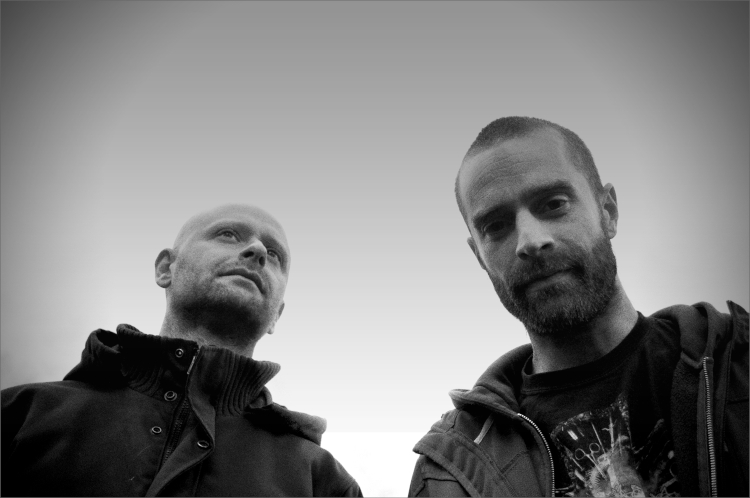
Three years of silence can change quite a few things, especially when music inhabits territories where even the slightest shift takes on significance. Robbert Kok and Ralph van Reijendam, the two Dutch musicians who have been working together as Tangent for years, return with Disclosure, bringing with them something of the time spent away from their instruments. You can hear it in the cautious way certain melodies take shape, in the frequencies that seem to be searching for their place, in the almost physical pleasure of setting the machines in motion again. The title suggests revelation, something finally brought into the open. And yet these seven tracks retain a reserved character, a certain reluctance to make everything immediately comprehensible. This disposition has always been part of the duo’s music, and here it finds a new reason to exist.
Their seventh album, once again released by n5MD, Disclosure picks up the thread left hanging with Presence Reverts to Absence in 2023. Anyone familiar with Tangent will recognise much of their sonic world: those vast synthetic expanses traversed by undercurrents of melancholy, the fragmented rhythms, a particular fondness for soundscapes that seem to conceal histories difficult to reconstruct. The more extensive use of modular synthesisers gives the material a less polished quality, making it more susceptible to subtle distortions. It is an interesting choice, restoring a tactile dimension to their electronic music that was sometimes obscured by digital processing on previous releases. The sounds breathe, deteriorate, change texture. Above all, they once again seem to belong to someone who is physically touching them.
The opening title track makes a fine statement of intent, although the word “statement” may be too emphatic for music so reluctant to make grand declarations. A lengthy atmospheric introduction prepares the arrival of a discreet melodic pattern, built around chords that seem to emerge from some indefinable distance. The progression has something cinematic about it, with its ability to suggest places and situations without ever defining them. Then the first rhythmic movements appear, and the atmosphere changes. The beats multiply, tiny shards of sound dart across the stereo field, and the bass begins to exert a more insistent pressure. What stands out is the quality of this transition, the way an initially motionless landscape gradually comes alive without losing its underlying unease.
Momentum builds ::
“Absence of Force” seems to gather up what has been left suspended. The harmonies broaden, the melody takes on an almost elegiac breadth, and for a few minutes the music offers some respite. It is one of the moments in which Kok‘s sensitivity to melancholic atmospheres emerges most clearly. His writing avoids sentimentality, working with just a handful of elements and allowing subtle shifts in timbre to alter the listener’s perception of the chords. The balance is fragile, and all the more convincing for it. With “Unfound Existence,” things become more complicated. The momentum builds, percussive fragments chase one another, and the organization of sounds grows increasingly restless. Van Reijendam‘s hand is recognizable in his taste for intricate rhythmic structures, for those small, carefully programmed accidents that lend instability even to an apparently regular sequence.
One of Tangent‘s most compelling qualities remains their ability to treat rhythm as an expressive medium in its own right. The percussion tells as much of the story as the synthesizers, sometimes even more. On “Denial,” the physical element takes over, giving the track a particularly forceful character. Sharp impacts, interference, metallic sounds and distorted bass frequencies form an intricate weave that retains its own internal logic even during the most turbulent passages. It recalls a period in electronic music when IDM still represented an open laboratory, a genuine opportunity to free programmed music from the predictability of metrical regularity. The reference inevitably points towards certain Warp releases, filtered through a darker sensibility closer to industrial unease. Some of these devices belong to an already well-established vocabulary, but the writing has enough personality to sustain them.
With “Vector of Acceleration,” the album probably reaches its most intense point. Seven minutes in which the rhythmic component acquires an almost brutal force, driven by deep pulsations and a relentless abrasion of the frequency spectrum. The music seems to move through an environment saturated with debris, the percussion carving pathways through increasingly compact masses of sound. Here the contribution of modular synthesis becomes particularly significant. The timbral irregularities generate a tension that would have lost some of its appeal through excessively clean programming. There are still some limitations. The gradual accumulation of layers, already encountered in the preceding tracks, makes the composition’s trajectory fairly easy to anticipate. Tangent seem attached to a particular way of organizing their material, and they rarely depart from it entirely. Once the machinery reaches full power, however, such reservations become secondary.
The lingering decay of chords ::
“Sonoluminescence” draws the listener back towards a more intimate dimension. The melodic figures unfold, the synthesizers recover a faintly veiled sweetness, and the whole piece takes on an almost contemplative quality. The title refers to a physical phenomenon in which sound produces light, an image particularly well suited to describing Tangent‘s music. Especially this track, which allows small glimmers to emerge within dimly lit environments. It possesses an understated grace and restores to the album an emotional depth that the more rhythmically driven sections tend to conceal. Attention shifts towards resonances, the lingering decay of chords, and the slow transformation of a few basic materials. It is a simplicity that only appears effortless, achieved through careful attention to the placement of each element.
The closing “Opposing Forces” calls everything back into question. Pulsations once again occupy center stage, while melodic fragments and electronic interference compete for space. The track progresses through successive changes in density, revisiting some of the ideas scattered throughout the album. Its most successful passages are those in which the different elements seem to operate with a degree of independence, as though each were following its own trajectory. The ending leaves a feeling of suspension, perfectly consistent with the album’s overall character.
“After three years of inactivity, rediscovering a shared musical language may carry a significance that goes beyond the search for a new formula.” ~Mirco Salvadori
The question remains as to how much Disclosure actually adds to Tangent‘s artistic development. The answer lies primarily in the sound itself, in that more pronounced analogue presence which makes the compositions feel more alive and less predictable in their details. Structurally, the duo continue to move within familiar coordinates. Extended introductions, percussive developments and progressive layering form a vocabulary that has become readily recognizable. At times, it would have been interesting to hear a more radical departure, a gesture capable of disrupting the balances so patiently constructed. Yet this caution, too, says something about the period the two musicians have been through. After three years of inactivity, rediscovering a shared musical language may carry a significance that goes beyond the search for a new formula.
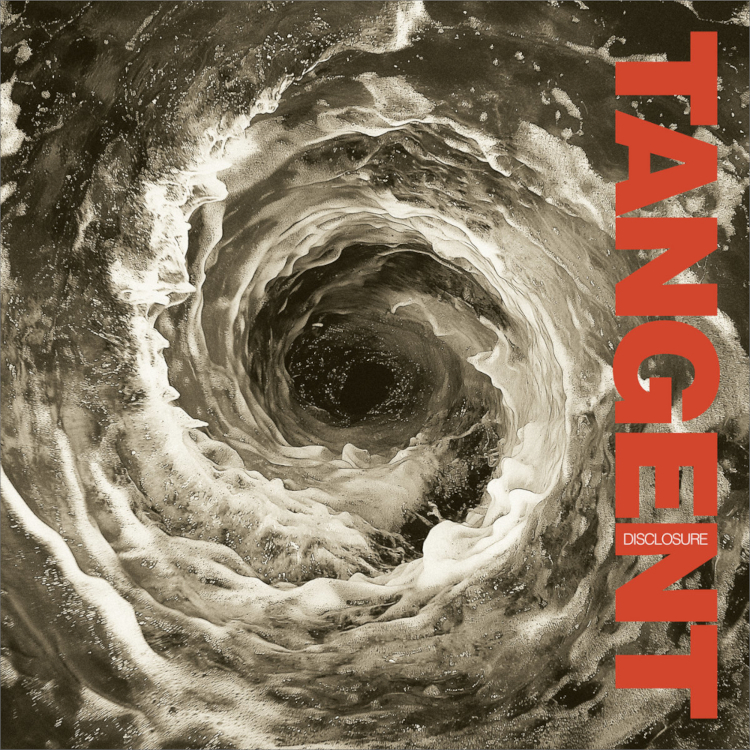
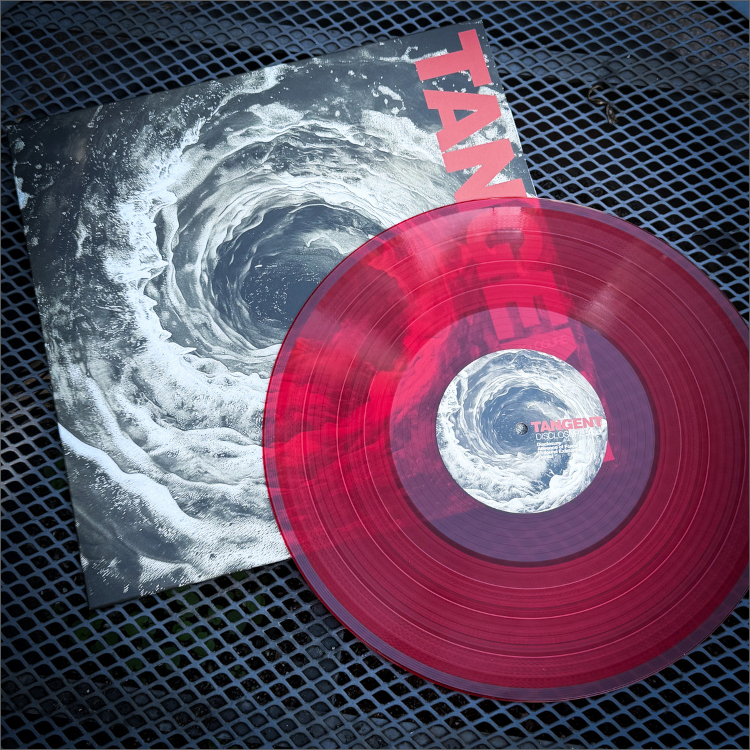
The cover of Disclosure, with its deep cavity carved into a substance of almost organic consistency, suggests a movement inwards. That impression lingers even after the final listen. Kok and van Reijendam have made an album that invites us to explore its interstices, to follow the subtle alterations in its sonic landscape, to recognize the presence of two distinct sensibilities that continue to find common ground. There are passages where the familiarity of the solutions diminishes the element of surprise, and others where a simple shift in timbre is enough to rekindle our attention. It is in these latter moments that Tangent‘s return acquires its most convincing significance. The pleasure of building something together can be felt once again, with all the hesitations, habits and possibilities that entails. And fortunately, the sound still bears its traces.
Disclosure is available on n5MD.