


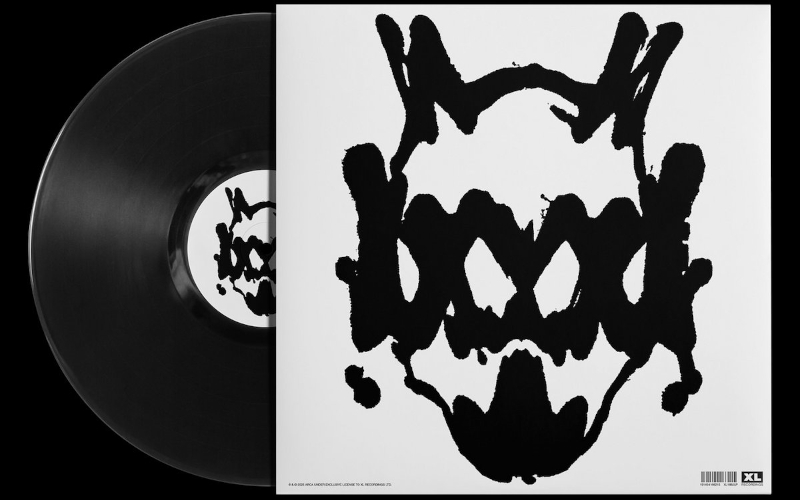



Arca’s latest record pushes her glitch-heavy, genre-defying sound further than ever, turning chaos, vulnerability, and radical experimentation into one of her most fearless works yet.
Arca turns chaos into art
Throughout her career, Arca has been moving in and out of pop and radical experimentation. If you’ve seen her in concert, you probably know how chaotic it can get, often slipping into the multimedia with a feral mix of live music, DJ-ing, and performance art. A heart-rending a cappella rendition of “Piel” from her 2017 self titled will follow a reggaeton classic, then Aphex Twin’s infamous “Ventolin” will play while she squirts paint on plexiglass and behind her, her face distorts in a thousand ways in glitched up videos. Just in the past year, she’s gone from working on music with mainstay names—producing for none other than Madonna in her return to form Confessions II and remixing for Robyn and Nine Inch Nails—to her first art exhibitions including at the ICA in London, to a new instalment of her NTS project Airdoll.
A new album and/or mixtape had been teased for some time now, following a break after the five-part Kick project. Airdoll—aired just two weeks before the release of XXXXX, and a few days before its announcement—showed a glimpse of things to come: a radio mix of largely own music, it included tracks from her previous uncategorisable releases @@@@@, ±±±±±, and Disintegrator alongside unreleased music. The flow and selection in Airdoll hinted at a complex, chaotic and experimental direction, in direct contrast to the laser-focused styles of Kick II to V and the accessibility of Puta/Sola. Last year’s double-single, in fact, was widely assumed to be the start of a new album cycle, however XXXXX does not include any previously released material, nor was it preceded by any singles.
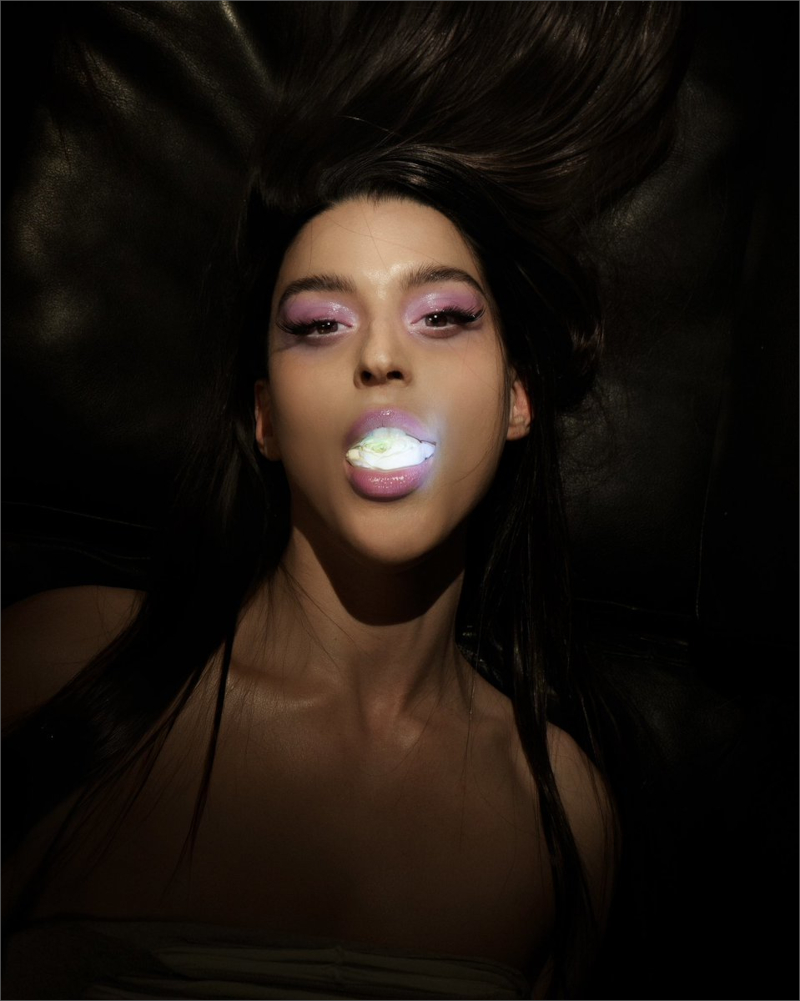
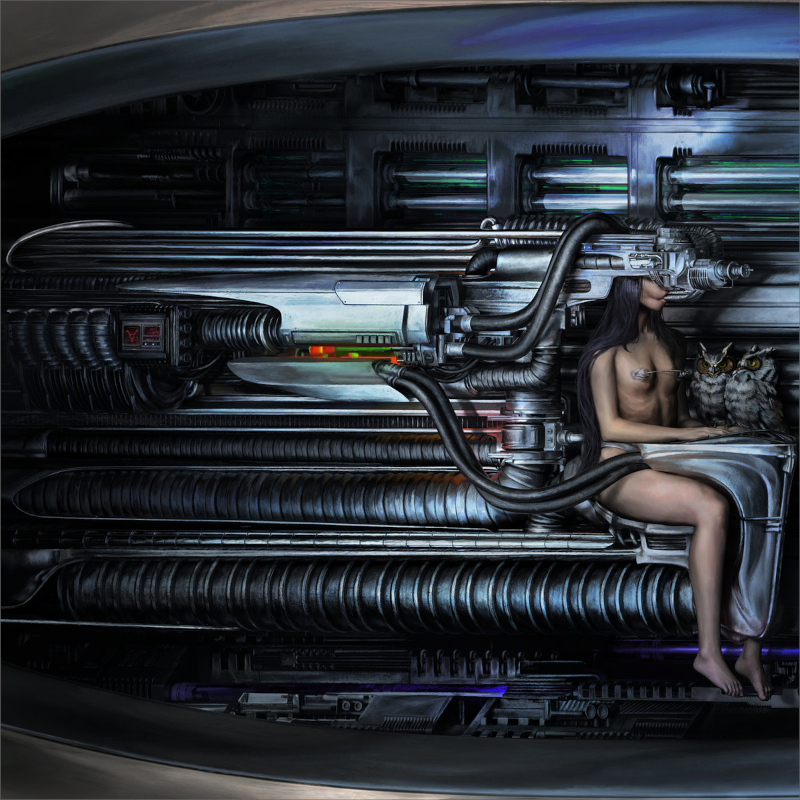
Rather, it dropped like a bolt out of the ether, or, as album opener “No End” states kicking off the diva experimental FM transmission, it “cut through the horizon with piercing hope”. Swelling strings follow, and pulsing industrial beats, and voices so processed to feel barely human in tracks flowing one into the other with no solution of continuity. It’s clear from the beginning that this album returns to the freeform exploration of earlier Arca releases such as &&&&& and Xen—the intense emotional quality of “Wound” is right there at the onset in “Willow,” with its strings soaring atop a likely sample of the bells from Aphex’s “XMD 5a”—but the truth is that it’s hard to compare XXXXX to anything other than Arca herself, bringing her craft to a logical peak. While some connections to her previous work and to others can be made, such as the aforementioned Aphex, or SOPHIE’s or Autechre’s outrageous sound design (the “Heart”/“Syncope”/“Raver” trifecta a wonderful case in point), or even the nod to Daddy Yankee’s “Rompe” in “Eidolon,” the album is a probing journey into the unknown, led by faith in the human. “Cinch,” the first of a few minute-long narrative respites in XXXXX’s torrential flow, makes this abundantly clear: “And so she wandered beyond the threshold, moving further still into the unknown. Eyes closed. Heart open.” The traveler, merged with a technology of her own making in the Gigerian album cover, has no fear.
One of the album’s highlights, the maximalist “Fxck” pushes pop’s catchiness into the extremes of deconstructed club, with a changa tuki propulsor and post-industrial sound design, crude hi-hats bouncing left and right in the stereo field while sub synth surges anchor lyrics on rough sex as a way to kill the Freudian father. “Taconeando” takes the opposite approach, with a bare and dry take on KicK iii’s warped hip hop influence. These two moments at the heart of the album, probably the closest to songs the album has to offer, pave the way to a latter section drifting into emotional and electrifying IDM, with “Grip” offering one of the record’s most passionate and memorable melodies—a piano progression (Arca’s acoustic instrument of choice) on top of dryly cut and harshly flanging synths—and “Everything” almost slipping into flash-core aesthetics with its relentlessness. The album closes on a harrowing and ambiguous note with “Sueño,” a strident number where a raptor voice so distorted it becomes a synth begs to stop, turn away, turn it off. The voice/synth glitches once more into self-reference, duetting with and bleeding into a sample of Arca’s own unreleased demo “Arpia,” or harpy.
A frequent proponent of the glitch as philosophy of art and of life, Arca has slit through innumerable systems such as artistic discipline, genre, gender and taste. XXXXX itself glitched from the mixtape format to album status, just like @@@@@ had glitched into the single format, and its tracks happily blip in and out of themselves and their meanings and feelings. The technology bringing on the glitch is that of the Diva: an archetype—half mythological, half psychoanalytical—holding it all together by a golden thread. A Pallas redux, goddess of art, craft and knowledge, warlike and just and now enhanced into the biomechanoid future, riding an impossible spacecraft, escorted by owls. It’s easy to fail to convey her, to not come through with words as a substitute to sound. As Minerva’s owls only spread their wings with the falling of dusk, the glitch is unpredicted, and only fully understandable after the fact.
XXXXX is available on XL. [Bandcamp]





![[2View] Maps and Diagrams’ beneath still stars (handstitched*) & returning light (Home Normal)](https://igloomag.com/wp/wp-content/uploads/2026/10/maps-and-diagrams-returning-light-beneath-still-stars_feat-75x75.jpg)