


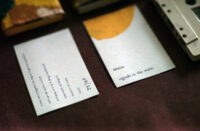

Knowing what Foel built this record out of—a difficult mental health stretch, a fascination with landscapes that are beautiful and hostile in equal measure, a process built on chaos eventually resolving into order, Gwasgaru earns its title honestly.
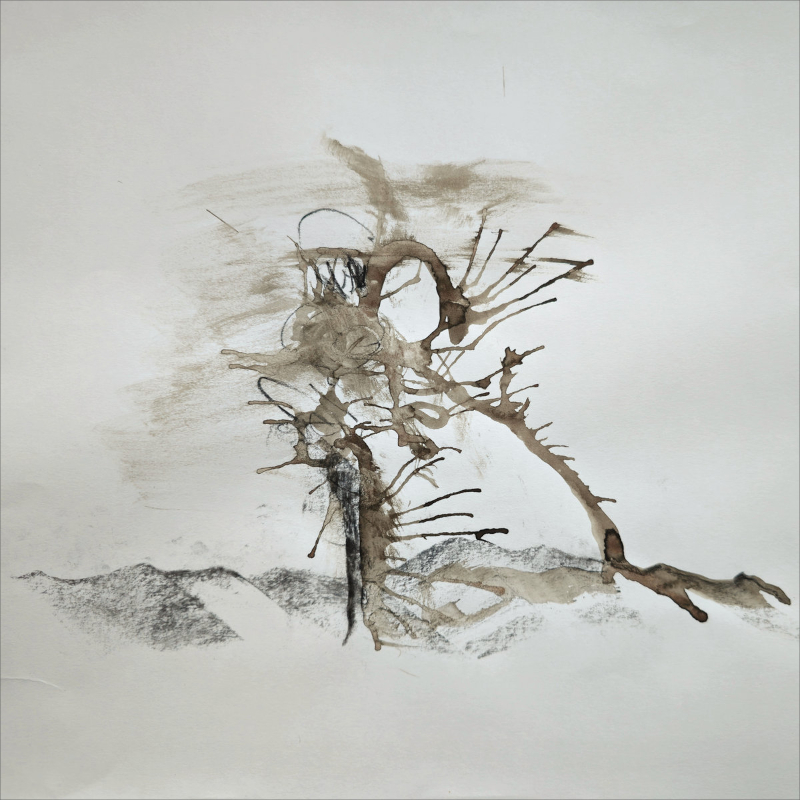
“Shaped randomness”
Jack Smith-Keegin spent twenty years building toward this. The North Wales-based producer behind Foel started making music at sixteen, but didn’t release anything until 2025’s Ogof Melltydd single on WEPN, two decades of self-taught tool-building before he felt ready to put anything out into the world. A Welsh speaker raising two children with his wife in the mountains and coastlines of North Wales, his musical entry point traces back to hearing Boards of Canada‘s Geogaddi at fifteen, an album he describes as hitting him straight in the heart. That door opened onto Warp, Plaid, Aphex Twin, Venetian Snares, and eventually Autechre—Draft 7.30 specifically, which he says didn’t click at first but became an obsession once it did. Gwasgaru—Welsh for “scatter” or “disperse“—was built mostly in Bitwig using its modular grid, alongside a custom Node.js program with a CSound backend that Foel describes as more than vapourware but not yet fully composition-ready. His process leans heavily on repeatable randomness—generating outcomes he can hunt through and refine, rather than gravitating toward what he already knows. It’s a technical approach in service of something deeply personal: Foel made this album during what he describes as a genuinely difficult stretch with his mental health, and the record carries that weight throughout.
The album’s opener is mature in its composition because it doesn’t set you up for anything you’d expect it to sound like. This is something deeper. The drums build into nothingness, kicks fading into the abyss of sound, layering as it continues toward the track’s end. “Rhewlif” has an interesting sound too, with its rhythm and melodic composition. At points it sounds and feels almost random, and it very well might be, nothing here sounds planned, nothing settles into a repetitive, catchy melodic pattern. That’s a deliberate choice rooted in how Foel works. Generative and randomized approaches to melody in IDM typically still operate within a defined scale or harmonic boundary, the notes are unpredictable in sequence but never unpredictable in pitch relationship, which means the result feels alive and unrepeating without ever sounding atonal or aimless. Foel‘s own description of “shaped randomness” fits exactly into that tradition.
One thing already standing out in Foel‘s work is the production technique of introducing new elements midway through a long track’s build. Partway through this track, he uses very sharp filtering on the bass synth, almost like lasers cutting through the waveform—a technique close to what’s sometimes called ducking, where one sound is compressed and pushed down in response to another. In layman’s terms: imagine the bass and another element fighting for the same space, and a compressor automatically lowers the volume of one every time the other hits, so they never collide and mask each other. It’s commonly used to let a kick drum punch through a bassline in dance music, but Foel applies it more abstractly here, using it almost as a rhythmic device in its own right rather than just a mixing utility. That’s what’s happening in this track, and it genuinely gives the piece its personality as it continues, almost as if the track is disintegrating from the inside.
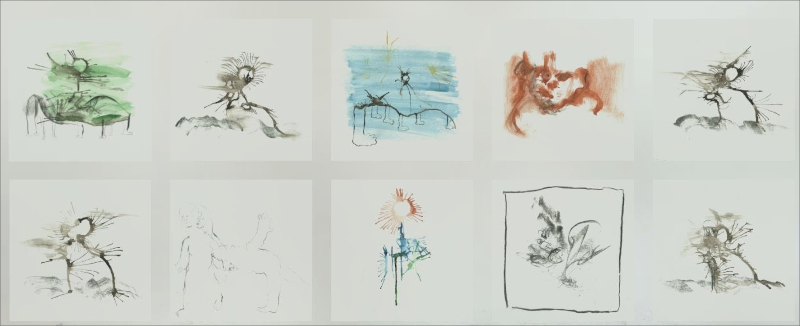
Almost like little nothings threaded through reverb stabs and drums ::
“Chwil” is another strange builder and by builder, this means Foel continues the theme of constructing anticipation across each track, whether through drums or melody, giving the listener’s ears a ride rather than a destination. Melody isn’t the focus here, which fits Foel‘s more experimental background showing through. “Dadmer” enters next and is genuinely a standout. The ducking concept reappears here, but this time the melodic note feels like it’s complementing the snare at the same moment, which creates an enjoyable experimental effect. Visually, it’s like the melody is a ping pong ball and the kick and snare are playing ping pong with it, batting it back and forth until it fades into nothing.
“Ar goll” is full of dark drums and ambience that grows almost frantically in a space obsessed with reverb and compression. “Gwasgiad” functions as a part two of that idea, but cleaner in its approach, there’s a resemblance now to Autechre‘s Quaristice in its sound design sensibility, and the drum and snare programming here is genuinely excellent. The closer, “Gwasgaru,” is a dark IDM track where Foel plays the melody far back in the mix, almost like little nothings threaded through reverb stabs and drums.
If there’s a theme running through this album that’s used well, it’s that ducking technique, deployed multiple times, clearly a recurring tool Foel reaches for strategically across these productions, and it’s exactly what makes them stand out as genuinely interesting to listen to. Knowing what Foel built this record out of—a difficult mental health stretch, a fascination with landscapes that are beautiful and hostile in equal measure, a process built on chaos eventually resolving into order, Gwasgaru earns its title honestly. By the closing track, that small melody really does sound like it’s floating away over the mountains, and you believe it.
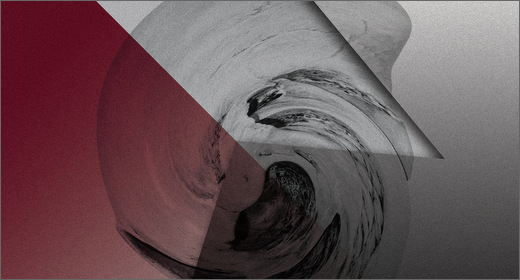
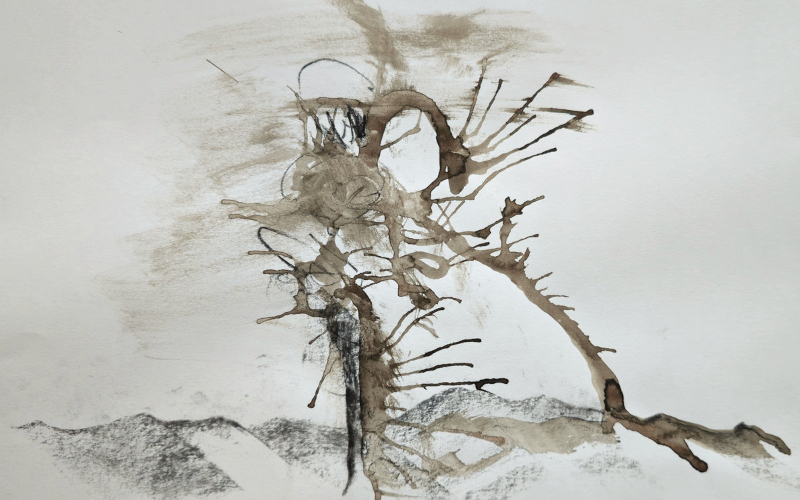
Art by: Ben Hendon
Gwasgaru is available on Machine. [Bandcamp]