



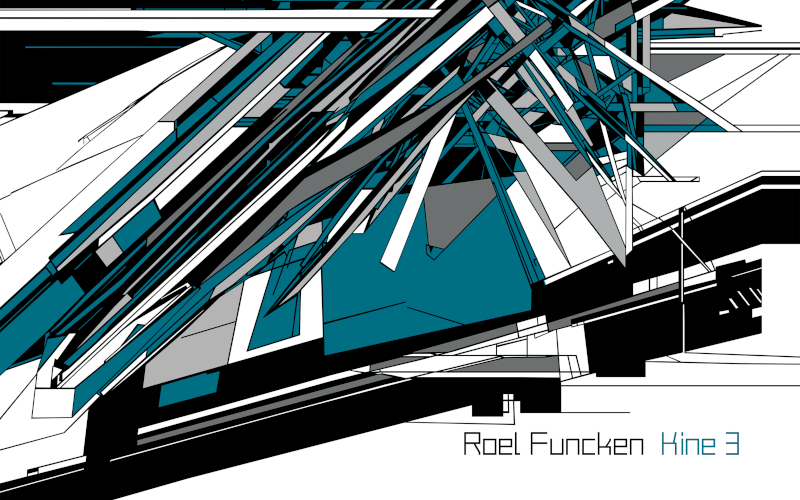



Kine 3 is a newer sound built off the classic. Roel Funcken has described the Kine series as emerging from a need to process a large body of work—dividing material into categories, finding what felt raw and process-driven and unfinished in the best possible way.
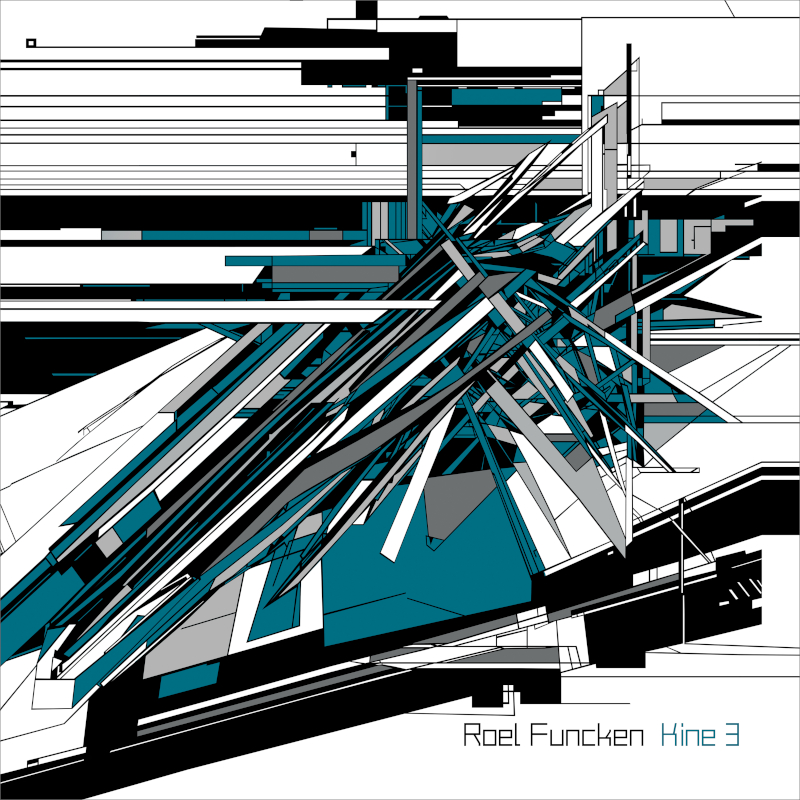
A producer still genuinely curious about what his machines will do next
The golden era of IDM left behind a particular kind of silence, not the absence of music, but the absence of the restless, process-driven curiosity that made that era feel alive. What’s left of it now echoes through the electronic music landscape in small signals, from old and new artists working in the margins. Roel Funcken has been one of those signals for over two decades, and Kine 3 is his loudest transmission yet—a massive tracklist, a substantial runtime, and the third installment of an ongoing series that began as a way of making sense of a large body of work. The Kine series, released through EC Underground—the South Florida-based multidisciplinary collective and label that has been bridging European and UK electronic music to US audiences since 2018, operates on a process-first logic: raw, modular, driven by hardware and intention rather than polish and structure.
My first encounter with Roel‘s work came through a college radio station playing Funckarma‘s Part 3 EP on Djak-Up-Bitch, the Rotterdam-based Dutch label specializing in modern electronica and IDM distributed through Clone. That particular series was something, the melodic play and drum work had a freshness that aged remarkably well, still sounds lovely today. Fast forward years later and here we land with Kine 3. This album shows the maturity of Roel as a solo artist, distinct from the Funckarma project that first put him on the map alongside his brother Don. His productions here aren’t built around melodic composition in the conventional IDM sense, they’re explorative and experimental, each track following a particular pattern of letting effects and drums do the talking while atmospheric or melodic backgrounds grind immersively in the background.
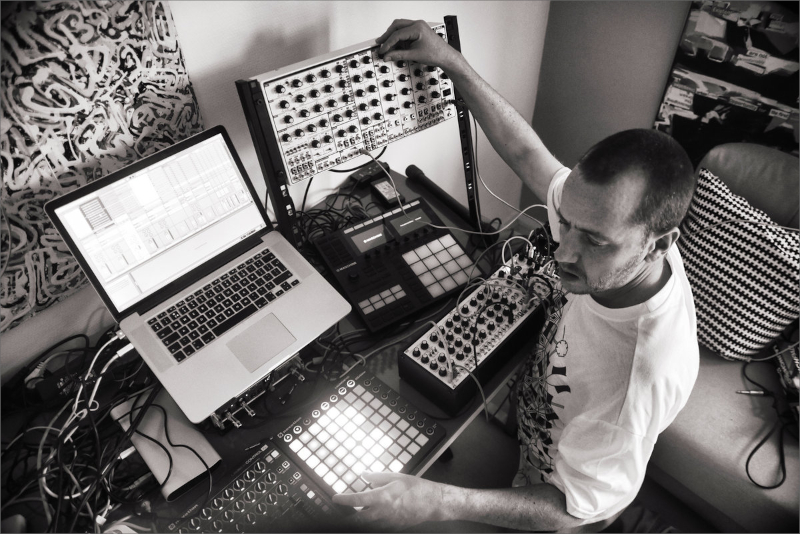
The loop continues ::
With a tracklist this expansive, the best approach is to section it. Tracks 1 through 8 share similarities in style and composition — drums and effects leading, melodies surfacing immersively rather than announcing themselves. What Funcken does here shouldn’t be misread as pure improvisation. It’s closer to freeplay with intention, a distinction that matters. Modular synthesis and process-driven production naturally produce moments that feel unplanned, but behind every patch decision is a set of deliberate choices: which modules are connected, what triggers what, where the randomness is allowed and where it’s controlled. Funcken‘s approach on Kine 3 sits in that exact space—the results sound alive and unpredictable but the architecture holding them together is clearly considered.
Track 9, “4ehmth,” functions as a divider. It’s the only track of the bunch that’s almost entirely drum play, and whether intentional or not, it creates a natural break between the first and second halves of the album. “Bydow 32” carries a distinct Funckarma feeling—a reminiscence of “Atomic” or “Finsbury Park” from Part 3, those same loose, melodic textures surfacing again through a different production context. “Dorphins” is another standout. Its melodic structure separates itself from the rest of the batch because the tweaking of the melody is being granularized at fast speeds, bouncing on a single note with harsh portamento bend stabs cutting through. Portamento—the gliding between pitches rather than jumping discretely, becomes a compositional tool here rather than just an effect. When applied fast and aggressively, it creates a pitch tension that sits between melody and noise, which is exactly what Funcken is exploiting. The drum structure across all these tracks is consistently loose and abrasive, not a loop so much as one long continuous rhythm that plays through rather than repeating.

The two bonus digital tracks round things out distinctly. “Koidz” is heavier—distorted drums, more rhythmically aggressive than the core album, with a crunchy acid bass and what sounds like significant knob movement throughout. The emotional pads that come in give it a melodic tone that sticks to the structure as it plays, a ringing atmospheric pad leading the melody in a way the main album rarely does. “Kido” takes the same sound palette and reconfigures it—a different melodic composition built from similar material but toned differently, another take on the same logic but with its own feel of rhythm and structure.
Kine 3 is a newer sound built off the classic. Roel Funcken has described the Kine series as emerging from a need to process a large body of work—dividing material into categories, finding what felt raw and process-driven and unfinished in the best possible way. He noted that sitting back and listening to Kine 1 with an audience changed something: the distance it created meant he was actually listening rather than judging. The support those releases received went straight back into the system—new Eurorack modules, extending the loop. Kine 3 is what that loop sounds like three iterations in, and it sounds exactly like what it is: a producer still genuinely curious about what his machines will do next, documenting the results with the confidence of someone who’s been doing this long enough to know when to get out of the way and let the process speak. EC Underground found the right home for it. The loop continues.
Kine 3 is available on EC Underground. [Bandcamp]








![[2View] Nekomachi/no wonder • なるほど & tsubai/ilulissat (Perceptual Tapes)](https://igloomag.com/wp/wp-content/uploads/2026/10/nekomachi-no-wonder-tsubai-ilulissat-tapes_feat-75x75.jpg)