






On Islands Alight, percussion takes on a structural role, the bass gains weight, echo intervenes in the form, and the pulse alters the relationship between the different parts. The British composer points to the history of dub within electronic music as one of the project’s sources.
Entrusting rhythm with a greater share of the tension
James Murray arrives at this work after a path in which restraint has become an aesthetic choice even before a technical one. For years, his electronic music has pursued a precise relationship between duration, timbre, and memory. He favors slow construction, minimal variation, and change that acquires meaning over time. The new album brings this approach into more rhythmic territory, shifting the center of gravity of his writing.
The transition feels significant precisely because of how naturally it occurs. Murray has long worked with minimal electronic and electroacoustic forms, dense with detail and shaped by a strong awareness of sound. On Islands Alight, percussion takes on a structural role, the bass gains weight, echo intervenes in the form, and the pulse alters the relationship between the different parts. The British composer points to the history of dub within electronic music as one of the project’s sources. It is the most appropriate reference through which to understand this aspect of the album: a culture of space, listening, and studio transformation absorbed into a personal body of research.
Four years of work have produced a cohesive record. Continuity is one of its greatest strengths. The London-based musician prefers to work with relationships, allowing an element to change function through what surrounds it. A rhythmic figure gains incisiveness through a minimal shift. A harmonic sequence recedes, allowing a previously secondary detail to emerge. The control is rigorous and almost always discreet.
This economy is part of his poetics. Murray places value on restraint, listening, attention to detail, and trust in the person receiving the music. Islands Alight translates these principles into a very concrete form. Passages are given the time they need to develop their function. Resolutions are postponed. Gratification often arrives only after an extended period within the same sonic field, once the relationship between the elements has already altered perception.
“Echo alters the memory of what has just happened. Low frequencies establish weight and continuity. Percussion introduces pressure. The synthesizers retain the emotional quality that has long characterized his work. Together, these elements produce music that remains unmistakably his.” ~Mirco Salvadori
Rhythm changes this dynamic considerably. It introduces a more pronounced physical dimension and makes the music more mobile. Percussion guides the listening experience with an elastic presence. The pulse moves forward, thins out, then returns with a different weight. Bass affects both depth and the perception of time. Delay and reverb organise distance, duration, and density. The effects belong to the composition just as much as the harmonic parts do.
The relationship with the history of dub can be measured above all through this method. Murray takes certain production principles and brings them into his own language. The studio becomes part of the writing process. Echo alters the memory of what has just happened. Low frequencies establish weight and continuity. Percussion introduces pressure. The synthesizers retain the emotional quality that has long characterized his work. Together, these elements produce music that remains unmistakably his.
Islands Alight retains a strong connection with his recent history. Weeds had already demonstrated how detail could become structure and how limited variation could acquire emotional significance. His work with Ian Hawgood confirmed his ability to treat sonic material with extreme patience. The new record introduces a different kind of mobility. The writing appears more sensitive to weight, entrusting rhythm with a greater share of the tension.
The environmental theme identified by the artist also enters into this perspective. Murray has linked the record to heatwaves, drought, and a form of ecological anxiety connected to the present. These references operate as an internal pressure within the project. The titles evoke waters, islands, calms, marine animals, and currents. They provide essential coordinates while keeping meaning open. The music proceeds according to its own logic, allowing those images to operate at a deeper level.
Murray builds tension using limited means ::
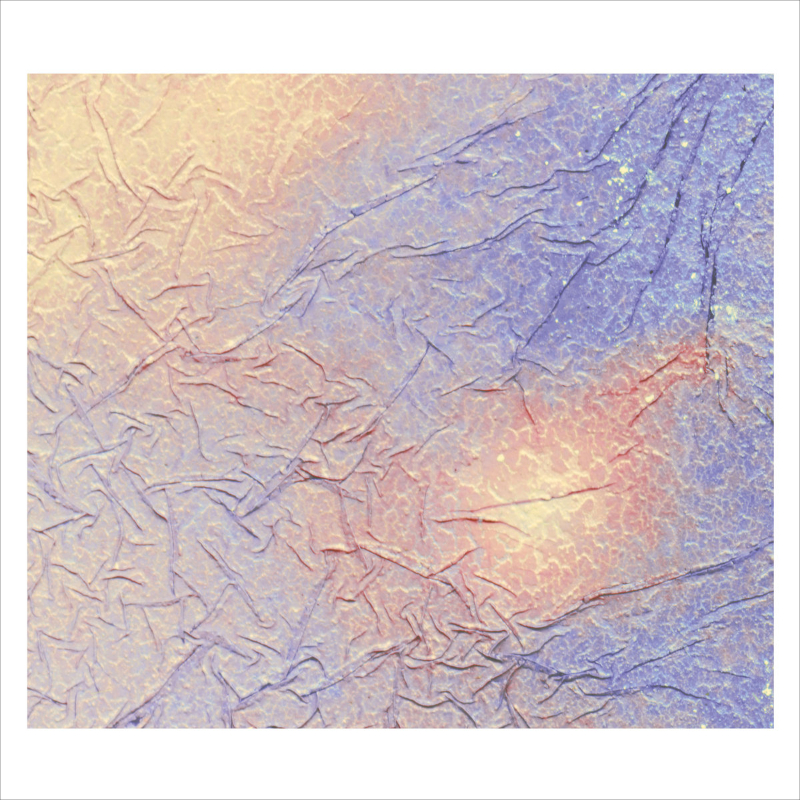
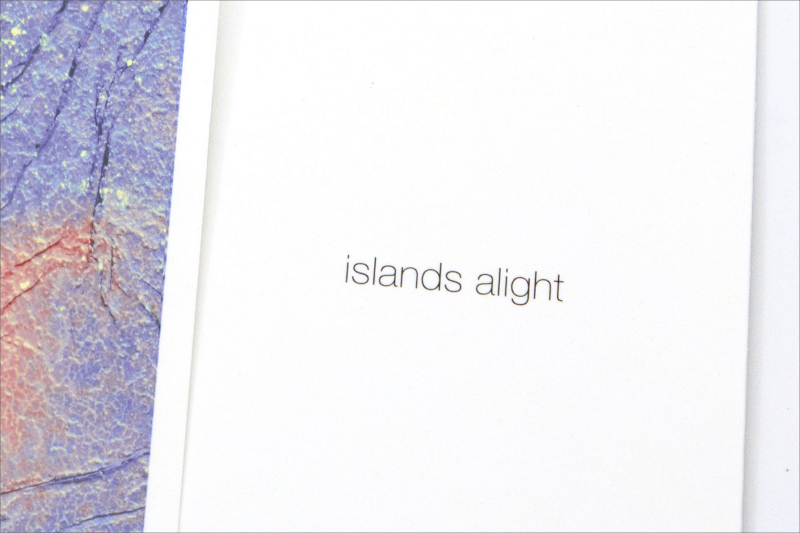
The cover follows the same sense of restraint. The original photograph is transformed until color, material, and folds become its dominant features. With only a few elements, the image suggests change and fragility. Its connection with the record is immediate precisely because of its sobriety.
The most interesting quality of this album lies in the way Murray manages continuity. Duration makes minute transformations perceptible. The music demands concentration, yet soon reveals a very clear internal scale. A detail that initially seems marginal can acquire prominence several minutes later. A pulse can change its function through a simple shift in context. In this way, Murray builds tension using limited means.
Melody retains a decisive role. The harmonies possess the controlled melancholy already present in his previous work, but here they are exposed differently to rhythm, bass, and effects.
The production follows the same principle. Definition is high, the detail carefully handled, and depth meticulously managed. The technical work maintains an evident musical function. Murray uses control to give the individual elements autonomy and to make small differences in weight and intensity perceptible. Even in the densest passages, the sound remains clear and readable.
Such rigorous control also entails an element of risk. Some passages display a highly regulated timbral continuity, leaving less room for the unexpected. Yet this choice is entirely consistent with the character of a record that demands time and a willingness to engage with slowness. Its idea of movement develops through persistence and internal variation. Some listeners may find this discipline severe. It is also the point at which James Murray expresses his concept of composition most clearly.
Trust in the listener therefore becomes central. The record offers few explicit signals and allows meaning to emerge through duration. Some elements gain importance when they disappear. Others appear almost motionless, yet change their function through a new rhythmic relationship. Complexity presents itself with great discretion.

Complexity presents itself with great discretion ::
This makes Islands Alight a significant work within Murray’s discography. It brings together melodic sensitivity, an interest in electroacoustic material, precision in sound design, and a rhythmic investigation developed with particular depth. The influence of dub history expands the tools at his disposal and shapes his treatment of space, pulse, and the studio. The ambient dimension continues to inform his sensibility, in keeping with the open and undogmatic definition Murray himself has always preferred for his music.
The result possesses a particular strength because it avoids the need to announce its change. Islands Alight works as an internal development. Elements that have long been present find a different proportion and produce new consequences. Murray knows his own language well and modifies its rules with precision.
The title itself contributes to this impression: two words containing ideas of light, heat, exposure, and a mental geography reduced to a few signs. The environmental anxiety identified by the artist adds another layer of tension. Murray allows it to operate beneath the surface of the work. The beauty of the record often arises from this caution, from its ability to suggest a problem through form rather than turning it into a declaration.
Islands Alight works as an internal development. Elements that have long been present find a different proportion and produce new consequences. Murray knows his own language well and modifies its rules with precision. ~Mirco Salvadori
After repeated listening, the maturity of the project becomes clear: this is the work of a musician deepening his own vocabulary and changing the way it behaves. The rhythmic component opens new possibilities, the attention to detail preserves its coherence, and the emotional dimension finds a more physical balance. Islands Alight seems to define a precise phase in his artistic trajectory.
Murray’s poetry emerges from his control of material and his trust in time. A small number of decisions can transform an entire passage. A sound acquires meaning through position, duration, and memory. This precision gives the record an intense yet measured presence.
Islands Alight is one of the most accomplished works of James Murray’s recent career. A focused, patient album, capable of expanding his research through rhythm, space, and studio transformation. Murray’s voice remains perfectly recognisable and here finds a new substance.
Islands Alight is available on quiet details. [Bandcamp]






![[2View] Maps and Diagrams’ beneath still stars (handstitched*) & returning light (Home Normal)](https://igloomag.com/wp/wp-content/uploads/2026/10/maps-and-diagrams-returning-light-beneath-still-stars_feat-75x75.jpg)