




Multiple active listens never feel like a chore, and are instantly rewarded by the lavishness of the sounds and the cleverness of the compositions, bringing together awe, humor, and bewilderment. And what else can we ask of experimental music?
This aesthetic of contrast between composite lumps of sound and silence
From Switched-On Bach to countless orchestral sound libraries promising to be hyper realistic, the history of electronic music’s mimicry of and liaison with classical spans over half a century. Most of the time, this relationship has manifested in two clear-cut ways: imitation and reinterpretation. A frequent intention is to make electronics act like the expansive (and expensive) organ of the orchestra or chamber ensemble, trying to sound as close as possible to the “real thing,” such as in a lot of pop music and soundtracks; but on the other (more intriguing) hand, electronic composers have also looked back at classical to reinterpret it through new technologies and sensibilities: the aforementioned 1968 study of baroque on the Moog synthesizer by Wendy Carlos, or Tomita’s Snowflakes Are Dancing (1974) performing the impressionistic romanticism of Debussy, all the way to recent takes on minimalism such as Erik Hall’s half-acoustic-half-electronic recreations or, to take it to the extreme and to a more underground angle, composermodel’s MF18M, an excellent all-midi, trance-infused rendition of Steve Reich‘s Music for 18 Musicians.
A glaringly underrepresented style however is the manic use of the orchestra in works such as Luciano Berio’s 1969 Sinfonia, or Pierre Boulez’s Dérive 1 (1984), or what one might call the the final boss in this most-chaotic “genre,” Karleinz Stockhausen’s Gruppen (1955-57), for three orchestras (yes, three). Save for some pieces (like the title track), Ervin Omsk’s latest Der Saal tobt’(“The Hall in uproar”) is closer to these works than to, say, an extreme decomposition of club music. The opening track, “Memo Grisaille,” makes it instantly clear: isolated clusters of sound straddling between strings, brass, and pure electric glitches come and give way to silence, before they start interacting in a complex and wider tapestry of sounds.
This aesthetic of contrast between composite lumps of sound and silence recurs throughout Der Saal tobt, and the whitespace makes each sonic assault all the more flavorful. Every pseudo-instrument is crafted to be as full and satisfying a sound as possible: in “Echt jetzt” (“seriously…?”) hyper-speed delays make each percussive atom resonate more like held notes than bells or beats. When actual long-held synths do appear, like in the following “Greller Block” or in “Offenes Feld” (“Garish Block” and “Open Field” – maybe opposites?) the drones still appear unstable, as if they were about to implode and, after a second of tension, explode back into shards of colour. Which happens in between tracks anyway.
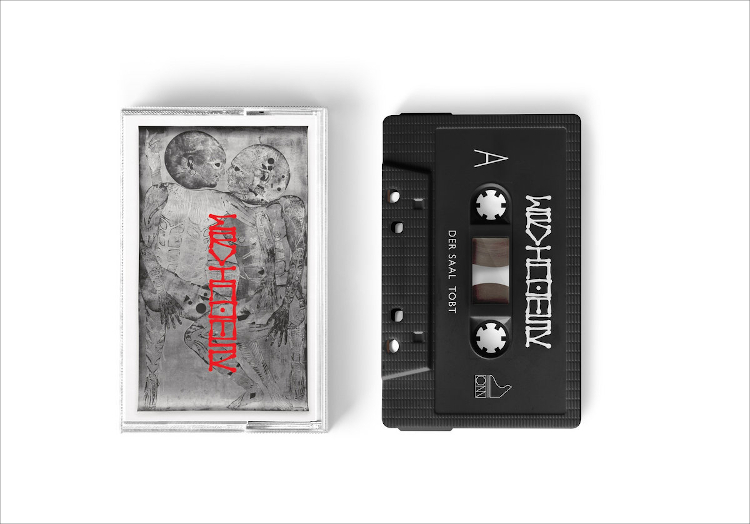
A simple industrial piece to a positively jarring experience ::
Interestingly, the title track (and single) of the album is somewhat of a different affair. It is probably the only piece with a clear rhythm–if syncopated to excess–played by airy synths with tones bending sharply like glissandos rather than drum samples. This attention to original sound design turns the rhythm from what could have been a simple industrial piece to a positively jarring experience: why am I nodding along to this? How come my body recognizes the pace? This more rhythmic approach comes back in “Nicht senden doch senden” (“do not send send anyway”), mixed in with everything else, from the glitchy delays to the bent pitches, before the closer “Beim besten Willen” (“with the best will in the world”) harkens back to the opener and to XX century atonality with the full-on orchestral stirring bringing the record to a full circle.
It’s hard to find any obvious point of comparison in contemporary electronic music, if not maybe some of Nathan Ho’s serialist work or Rashad Becker’s Traditional Music of Notional Species; but where Becker’s “Dances” and “Themes” sounded like linguistic attempts at communication from an alien civilisation, Ervin Omsk’s compositions are impressionistic and expressionistic, conveying a much more holistic content. While the first reaction to an album like this could very well be “how the hell was this made,” especially for someone who dabbles in making experimental music–the press release mentions manipulated recordings of an alto recorder and pure synthesis, but there just must be more!–something that distinguishes Der Saal tobt from a lot of technical or academic-leaning avant-garde electronics is its allure, and the persuasiveness with which it leads the listener further in. Multiple active listens never feel like a chore, and are instantly rewarded by the lavishness of the sounds and the cleverness of the compositions, bringing together awe, humor, and bewilderment. And what else can we ask of experimental music?
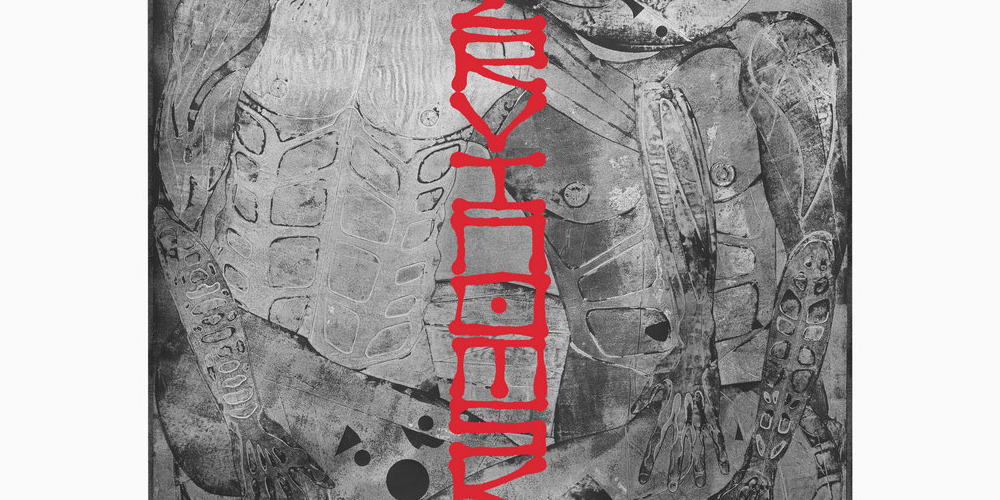
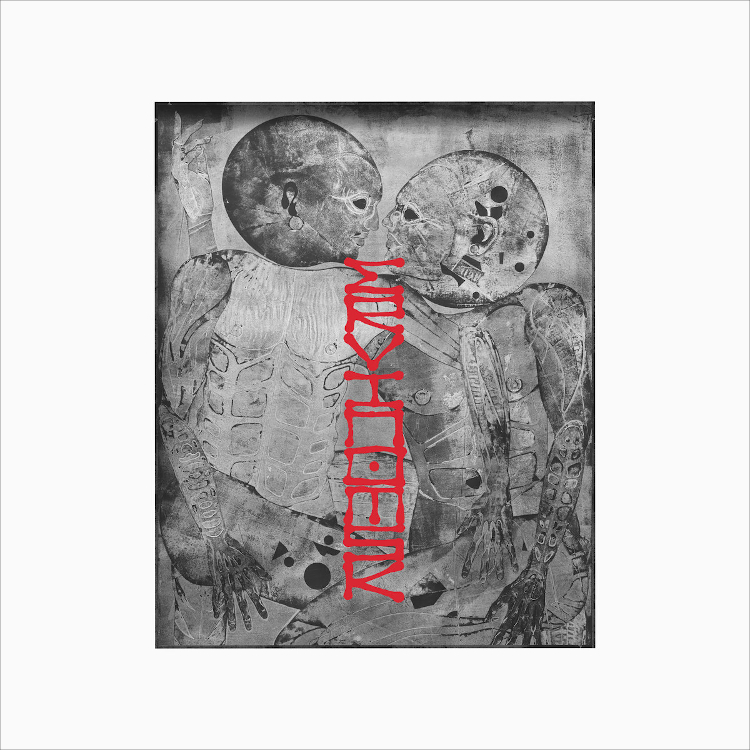
Der Saal tobt is available on Orange Milk. [Bandcamp]