





Everything about how Folextrusion reaches you feels fragile, and that fits. This is music about the point where something solid starts to give, and it asks you to sit inside that point for close to an hour without rushing toward the collapse. Hexalyne has spent years perfecting the build. Plenty of producers can build something solid. Very few know how to take it apart this slowly, this carefully, and leave you wanting to hear it break again.
The same codebase executing in new ways
Hexalyne doesn’t really make standalone albums. Sorin builds systems, and each release reads like the next state of the same machine. Scillocsenports laid down the recursive foundation on Evel in 2024. Isoconicase cracked it open on a tiny Noided Media cassette run, rhythm turning into texture. Xetercyneaal, the 2xLP on Evel earlier this year, locked everything into harder, faster drum design and a fifty-minute closer that felt earned rather than indulgent. He works quickly, almost relentlessly, and yet nothing sounds rushed. One listener on the Bandcamp page put it plainly: this guy must never sleep. Folextrusion lands less than a year after Xetercyneaal and doesn’t reset anything. It picks up the thread and starts carving into it.
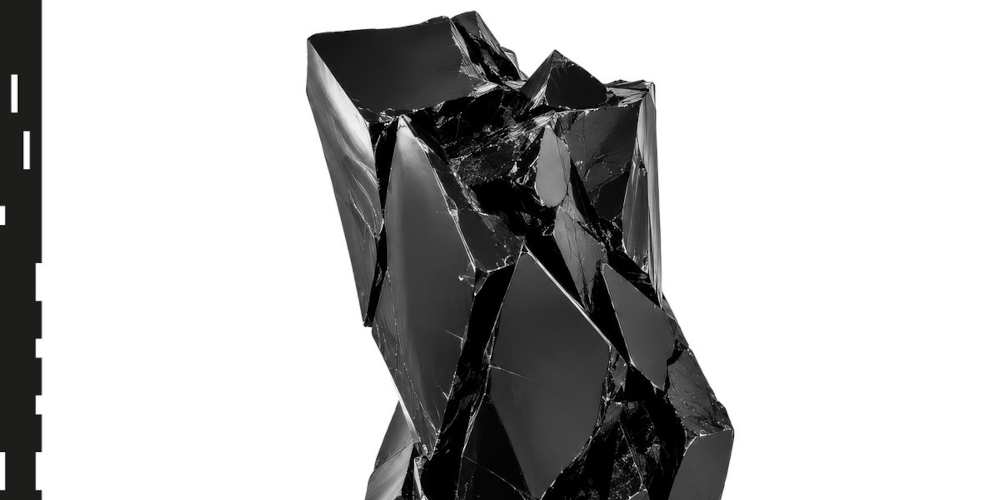
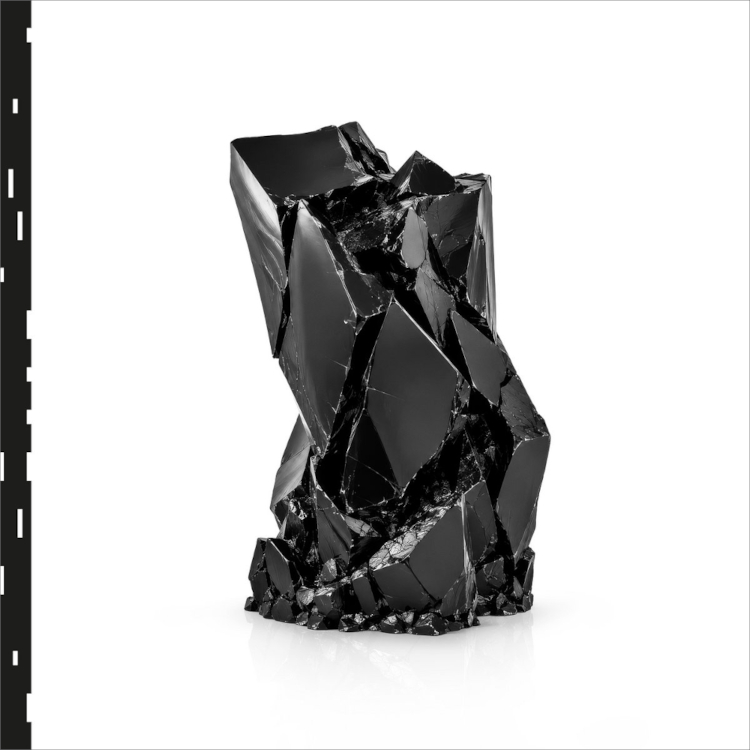
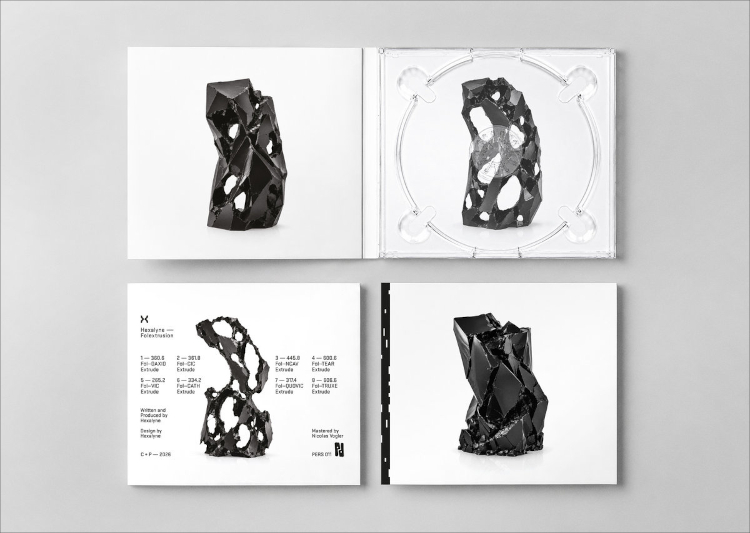
This time the home is Perspektif, a small independent label out of Brussels focused on lush electronic music, with a roster that includes Nixtrove, cause_effect and Alp Emre. The physical edition is a limited CD, professionally duplicated by Digiclic in Lyon and shipped untracked from Belgium, which tells you everything about the scale and the care involved. The artwork is a single black monolith, cracked and faceted, standing alone on white. No text fighting for attention, no busy design. It leaves the complexity to the music, where it belongs.
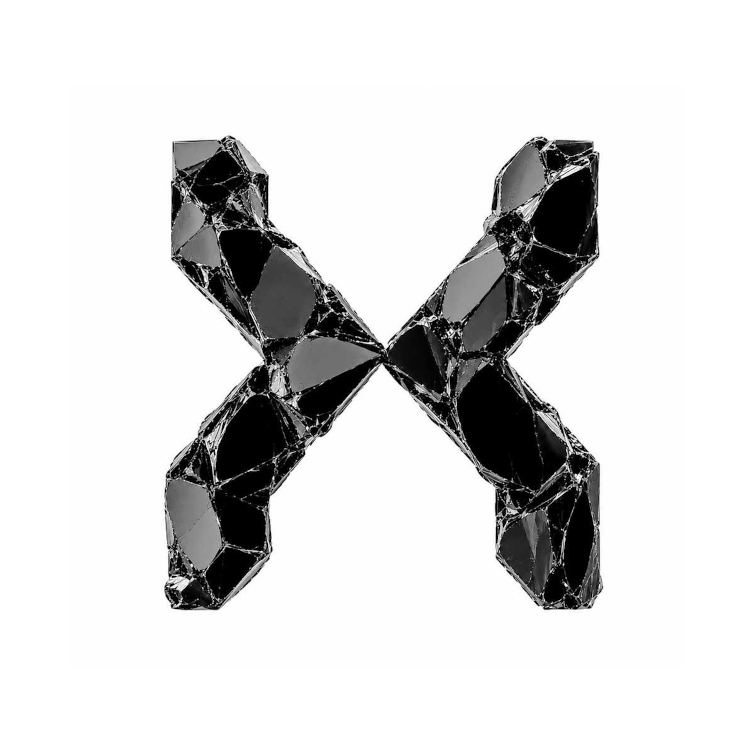
The naming scheme is where things get fun. Every Hexalyne record has one. Scillocsenports had its “Scill” prefix, Isoconicase its “-onicase” endings. Here, every track opens with “Fol–” and closes with “Extrude,” with a cryptic code wedged between them. Take a stab at it and the logic starts to show. “Fol” reads like foliation, the geological term for rock that forms in thin, stacked layers, which suits a record built around a monolith being worn away. “Extrude” is the opposite force, material being pushed out of a shape. Each track is a layer being forced out of the stone. Look at the middle codes and Sorin’s own description of the album, voids and cavities eating into a solid structure, starts appearing in the titles. “NCAV” looks a lot like concave, a hollow. “TEAR” is a rupture. “CATH” could be cathode or cathedral, both fit. “VIC” mutates into “QUOVIC” two tracks later, the same code with something grafted on, like a cavity spreading. And the closer, “TRUXE,” reads almost like “extru” scrambled, the word itself breaking apart right where the album says the structure finally collapses. Maybe none of that is intentional. With Hexalyne, ambiguity is part of the design, and the titles behave exactly like the music: fragmented, shifted slightly each time, the same codebase executing in new ways.
“Fol–DAXID Extrude” opens abruptly. No ambient runway, just straight into what Hexalyne does best, glitch sounds and rhythms that keep morphing and reshaping themselves without ever settling into a loop. If you’ve followed his catalog, it feels like walking back into a room you know, except the walls have moved.
“Fol–CIC Extrude” is the standout, and the surprise. Sorin’s beats usually run fast and dense. This one slows down into a low sub and a hip hop rhythm with real swing, glitch hop more than anything. It calls back to Autechre’s Peel Session 2, “Gelk” specifically, that heavy, patient low end with fractured percussion stepping carefully around it. The tone is warmer than anything on Xetercyneaal, and the space between the hits does as much work as the hits themselves. It’s fresh ground for him, and it sets a mood the rest of the record keeps returning to.
Patterns fracturing, familiar shapes lose coherence ::
“Fol–NCAV Extrude” and “Fol–TEAR Extrude” pull back toward familiar Hexalyne territory, faster drums, tighter edits, rhythms that feel like they’re constantly being re-cut while they play. “TEAR” runs past ten minutes and uses every one of them, the structure slowly loosening the way his own notes describe, patterns fracturing, familiar shapes losing coherence. The drum design carries over from Xetercyneaal, those sharp, laser-like snares and digital clicks, but here they sit inside more air. The cavities are audible.
“Fol–TRUXE Extrude” closes the record at just over ten minutes, ambient passages trading places with faster tracking until it’s hard to tell which one is holding the other up. It’s Sorin exploring his own playground with more confidence than ever, comfortable inside a sound he has spent years building, and willing to let a concept shape the structure instead of the other way around.
Everything about how Folextrusion reaches you feels fragile, and that fits. This is music about the point where something solid starts to give, and it asks you to sit inside that point for close to an hour without rushing toward the collapse. Hexalyne has spent years perfecting the build. Plenty of producers can build something solid. Very few know how to take it apart this slowly, this carefully, and leave you wanting to hear it break again.
Folextrusion is available on Perspektif.