






God Is Everything You Are Not is built from voice, MicroKORG synthesis, a microphonic soundbox from LeafAudio, and field recordings. Seven pieces, just under 36 minutes. The release notes describe grief approached as passage rather than narrative, and that framing holds, this record puts you inside the duration of something rather than telling you it happened.

Voice-forward, inward-facing, unconcerned with visibility
Fort Evil Fruit is a small Irish imprint that consistently operates in spaces most labels avoid, quiet, uncomfortable, structurally unconventional work sitting between sound art and song. Elika Ostrov fits that context without friction. Outside of this release there’s very little information available on her, which feels appropriate given how the record presents itself: voice-forward, inward-facing, unconcerned with visibility.
God Is Everything You Are Not is built from voice, MicroKORG synthesis, a microphonic soundbox from LeafAudio, and field recordings. Seven pieces, just under 36 minutes. The release notes describe grief approached as passage rather than narrative, and that framing holds, this record puts you inside the duration of something rather than telling you it happened.

“Candy Apple Pie” opens things and it’s the track that pulled me in first. Her voice carries the whole weight of the piece, sitting on top of what sounds like lightly bitcrushed synth underneath. There’s something almost melodic about it, almost settled. One of the warmer moments on the record, which catches you off guard given what the album is called.
From there things get quieter and darker. “Kapu” sustains that shift without forcing it—the synth texture recedes further into the background noise and the grief the album orbits starts to feel more present, less described. It doesn’t announce itself.
None of these pieces follow any conventional structure. Rhythms don’t materialize. Nothing locks in. The whole thing sounds loosely assembled, and that’s the point, the album is designed to feel like something you’re moving through rather than observing. Background is the compositional choice, not a byproduct of it.
The title track runs 16:45 and arrives at the end like a separate document entirely. Ringing ambience opens it, sustained long enough that it starts to accumulate into something disorienting. Running underneath that is a static interference noise, the exact frequency you’d get from a phone sitting too close to a receiver, that ticking electrical feedback. That specific texture generates most of the tension in the piece. Ostrov speaks throughout but the audio is reversed, her voice present and completely inaccessible at the same time. You hear her talking for the full duration without understanding a word. Then, toward the end, the audio flips forward and you can actually hear her. Sixteen minutes of building toward a moment it never telegraphed.

That ticking electrical feedback ::
The closest reference points for the record’s overall aesthetic are somewhere between the warped loop logic of Dat Politics, the peculiar stillness of Boards of Canada at their most unsettling, and the indie-adjacent vocal sensibility of Noriko Tujiko. Ostrov shares certain instincts with all three without directly resembling any of them.
The reverse-to-forward reveal on the title track stays with you after the record ends. Grief made audible as a structural decision, not a theme. Experimental electronic music has always found its most interesting moments when artists stop treating it as a genre and start treating it as a method. The tools shift, tape gave way to DAWs, DAWs gave way to modular, modular gave way to whatever hybrid setups artists are running now, but the impulse underneath stays the same. Find a way to make the listener feel something the conventional song structure can’t reach. Ostrov is working in that tradition without announcing it. The MicroKORG and the LeafAudio soundbox and the reversed vocals aren’t chosen for their novelty. They’re chosen because they do specific things to time and memory and presence that a guitar and a verse-chorus wouldn’t. That’s what keeps this corner of music alive, artists who use the tools as extensions of the idea rather than the idea itself. God Is Everything You Are Not is exactly that kind of record.
God Is Everything You Are Not is available on Fort Evil Fruit. [Bandcamp]

Related posts ::
 Amélie Nilles :: A croqué le fruit étrange (Planisphère)
 Salvo Beta :: Evil Against Evil (Someoddpilot, CD)
 Gangster Computer God :: Gangster Computer God (Heterodox) — [concise]
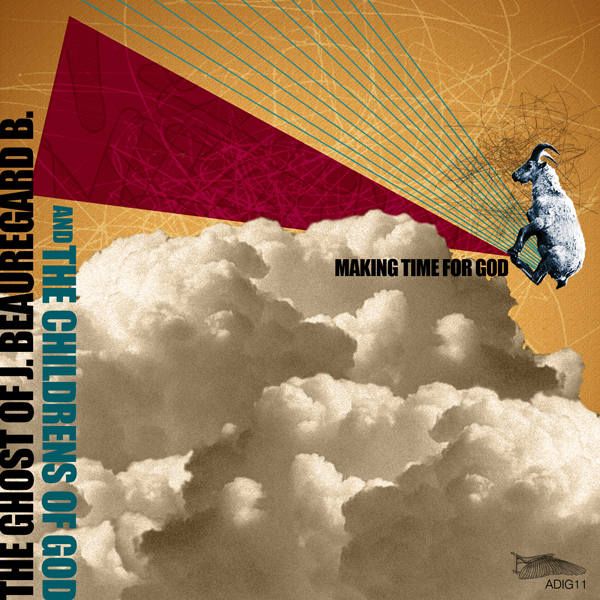 The Ghost of J. Beauregard B. and The Childrens of God :: Making Time For God EP (Adjunct Audio)
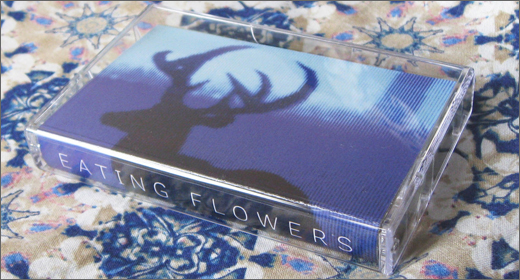 Eating Flowers :: God Was A White-Tailed Deer (Reckno)




![[2View] Nekomachi/no wonder • なるほど & tsubai/ilulissat (Perceptual Tapes)](https://igloomag.com/wp/wp-content/uploads/2026/10/nekomachi-no-wonder-tsubai-ilulissat-tapes_feat-75x75.jpg)