




Kid Bucle, either knowing or unknowingly, takes a lineage built from futurism, tek-funk, broken machinery and the pleasure of the unexpected, then subjects it to contemporary pressure until something new and now begins to emerge.
Contemporary electronic art: vast, physical and breathtakingly detailed
I have humbly decided that this extended player affords me a slightly self-indulgent opportunity to locate myself within a lineage of which I can only ever claim to be a fragment. Or at least, the Incompleteness is so good, it’s triggered a reflective expression. Regardless, here we are.
By the latter half of the 1990s, the UK underground party scene had become a sprawling ecosystem of overlapping futures. We were listening and dancing to top-tier releases from Underground Resistance, Jeff Mills, Transmat, Aril Brikha, The Jedi Knights, Dave Angel and, inevitably, Aphex Twin; elsewhere tracing the Detroit lineage through artists such as Drexciya, Dopplereffekt, Stasis et al, while the years around the turn of the century brought everything from Legowelt to LA Synthesis. Ian O’Brien, and Swayzak into our mixes. Alongside all this, an apparently endless procession of mutations and crossovers moved between techno(s) and house(s)—much of which would later be flattened, retrospectively packaged and homogenized beneath the convenient umbrella of tech house. But our lived reality was considerably less tidy than the history books might suggest. Genres were still adventurous and porous. Scenes were still arguing with themselves. New sounds arrived before anyone had decided what to call them.
And beneath the increasingly polished surface of the decade’s mainstream culture, something else was happening. The countercultural and artistic momentum inherited from earlier generations had not disappeared; it had dispersed. As the millennium approached—with all the absurdly romantic anxiety of a fabricated timestamp promising either technological transcendence or digital collapse—another current began to gather force. For those of us becoming desensitised to the necessary but increasingly familiar four-to-the-floor grammar of house and techno, another possibility was emerging: a renewed electro futurism that felt less like revival than reactivation.
There were already telling fractures in the beat. Breakbeat had changed the landscape. Broken beat, trip hop and electronica had widened the vocabulary. And when we went out, we wanted something fast, digital, electronic and funky enough to make the body move without requiring it to march. Something that excited the central nervous system and that spoke to the parameters of our escapist fugue states. UR003 was a mainstay.
“Incompleteness doesn’t feel incomplete because of any lack. It feels beautifully. incomplete because it understands that electronic music itself is unfinished—that the machine still contains possibilities not one of us has properly accessed yet.” ~Will Wonks
Such electro became cool again because, for a while, it seemed to offer an escape from the routine of clubbing routines. The second generation unwittingly arrived carrying the DNA of the pioneers but operating within a newly expanded electronic landscape. Carl Finlow. Anthony Rother. Sons of Slough. Scopex Records. Tipper. Spacetime Continuum all flirted with or championed nu-skool electro. As well as a million other unsung operators, each extending and corrupting the signal. Their work reimagined the pioneering futurism of Kraftwerk alongside the electro-funk detonations of Bambaataa, Hashim‘s Al-Naafiysh, Juan Atkins‘ Cybotron and Soul Sonic Force, YMO, Thomas Dolby, Moroder, and on. The result was not a revival. It was a reprogramming: a music that understood its ancestry while refusing to remain obedient to it.
And that mattered because the consequences extended far beyond electro itself. That late-90s emergence contained the seed of the genre hybridisation we now take for granted: the willingness to let one vocabulary contaminate another, to treat genre less as a boundary than a component. Twenty-five years later, the descendants are everywhere. From glitch, Vapourwave, Chiptune, and experimental sound design pursued almost for its own sake, through braindance and Drill into the innumerable hybrid forms that followed, the electronic underground has become increasingly less concerned with preserving distinctions than discovering what happens when those distinctions are deliberately ignored.
Of course, in the end there are not really two seasons of electro music—before and after, old and new. There is only the thread and the evolutionary impulses across it. A single, constantly mutating continuum that survives precisely because it is repeatedly pulled apart and reassembled as we explore, as we progressively commit to a healthy artistic development, backed up against an almost cataclysmic regression as a total species.
That evolutionary thread remains alive now in the work orbiting labels such as CPU, Frustrated Funk, Analogical Force, Lunar Disko, Semantica; artists such as Annie Hall, Fleck E.S.C., Plant 43, Scape One, and here, the numerous entrants within the Science Cult ecosystem—my apologies to the innumerable others omitted here in the interests of eventually getting to the point. What connects them is not simply a sound. It is a commitment to beats and textures as an ongoing unfinished technology; to the idea that electronic music can still be strange, physical, funny, brutal, sophisticated and forward-facing all at once. That it remembers its roots as we subjectively forget.
Any sufficiently deep study of art eventually reveals two competing pulses within the creative whorl. One is inheritance: the necessity of what has come before, its vocabulary and accumulated possibilities. The other is departure: the impulse to misuse that vocabulary in order to discover what else it might become. Both are necessary because both ultimately serve the same purpose—to express what is, right here, right now.

Then there are the anomalies.
The pioneers who, for a brief period at least, appear to operate without discernible reference points; artists whose internal cosmology is so singular that influence becomes difficult to map until everybody else catches up. Aphex Twin is an obvious example for our purposes. Such figures are rare. They are timestamps rather than trends. Archetypes, if you like: creative appearances through which something enters the culture and leaves a mark durable enough to outlive its moment.
It is not for me to say here whether Kid Bucle (aka Valencia, Spain-based Malsum — Ibrahim Pedernera Martinez) belongs amongst such company. Nor, really, is it the job of a review to make that kind of proclamation. No objective assessment can supersede direct subjective experience. But perhaps one purpose of this indulgent preamble is to establish the territory into which this Incompleteness release newly arrives—and to make it absolutely clear that the effort being expended here is inspired entirely by the music itself.
Because finally, this is about the music. Nothing else.
Incompleteness then, is a forward-facing kick in the proverbial: a prototypical experimental experience that moves in, out, around and through what we might loosely describe as electro’s most progressive potential. It does so without sounding particularly interested in protecting the borders of electro in the first place. There is a bias towards increased tempo and a natural disposition towards the collapse of genre itself—for want of a better term, post-genre. The constituent elements of electronic music are all present, but they have been liberated (obliterated?) from their traditional obligations. Tops and bottoms. Breadth and depth. Width and height. Rhythm, texture, melody and impact are scattered across the stereo field like components from several different machines forced to cooperate.
The programming is scattergun, intricate and frequently exhilarating. The digi-breaks are unapologetically funkapolian. Yet beneath the technical complexity lies an innate musicality: atmosphere, timbre and cinematic texture are not decorative additions but structural components. This is music with a stank-faced sense of awe about it. One listen’s partly in admiration and partly in disbelief that someone has managed to keep so many moving parts from tearing the entire thing apart, whilst still landing in majesty and beauty. Art that hits the spot in the listener it appeared at in its creator.
“Parasitos” opens the EP with precisely that tendency towards atmosphere. Broken electronic architecture stutters and strafes, evolving and mutating through vaguely Eastern folk motifs, tearing bass and binary science. Dust-and-musk textures collide with braindance-adjacent chopped Amen snares, occasionally summoning the restless imagination of early (Sony) Tipper without ever settling into anything near imitation. It is a beautifully brutal dalliance between effort and instinct, a near-perfect amalgam of technical obsession and artistic purpose. This is an electronic wonk at work inside the digital framework of contemporary electronic production—and every decision appears to have enduring consequences.
“Space Feedback” is something else again. Nothing feels absent. Nothing feels superfluous. Every bolt and bough appears to have been considered, as though a bomb is being meticulously dismantled, tenderly rebuilt and then deliberately detonated anyway. It is perhaps the purest embodiment of everything this review is struggling to describe with far too many words. Broken electro structures buckle against stuttering, hard-funked woob bass; summer-warm pads provide unexpected emotional oxygen to create clean air between the mechanical clanks and insectoid impacts. The sheer finesse here is delicious. Music more than worth the cost to both composer and audience.

This is, arguably, quite simply, a classic in waiting.
Title track, “Incompleteness,” opens with something approaching a Villeneuve-ian majesty. Monumental synth grandeur and bubbling acid stabs occupy an immense cinematic space before the next wave of thundering rhythm begins to tenderly pound both inside and outside the implied loop. Formation and collapse coalesce in abandon. Systems establish themselves only to be interrupted by their own malfunction. It is difficult not to hear the labour in the work—not in the sense of something overworked, but because the time, technique and attention are inscribed directly into the sound. Whether innate or learned is beside the point. The skill is unapologetically on display.
It is an extraordinary piece of contemporary electronic art: vast, physical and breathtakingly detailed.
“Decipher” takes the closing-credits position and, true to the spirit of the EP, refuses merely to repeat what has gone before. The opportunity to say something different—to demonstrate range, shade and alternative possibility—is grasped with both hands. Thundering, rolling tribal rhythms rumble beneath high-octane strings and expansive pads, while percussive refrains and double-time synthesizer arpeggios build further cinematic dimensions around the forming rhythms. There is a wonderful sense of musicality here, almost of scoring: the feeling that the music is accompanying images we have not yet seen.
And perhaps that is the achievement of Incompleteness as an apparently single release set among the routines of too many others. It understands the continuum without becoming trapped by it. Its references are not a museum of influences but raw material. The past is present only insofar as it can still be made useful. Kid Bucle, either knowing or unknowingly, takes a lineage built from futurism, tek-funk, broken machinery and the pleasure of the unexpected, then subjects it to contemporary pressure until something new and now begins to emerge.
There is rare bravery in that. There is serious technique. More importantly, here there is absolute joy. The glory of art in full effect.
Incompleteness doesn’t feel incomplete because of any lack. It feels beautifully. incomplete because it understands that electronic music itself is unfinished—that the machine still contains possibilities not one of us has properly accessed yet.
This EP is an unequivocal 10/10 proposition.
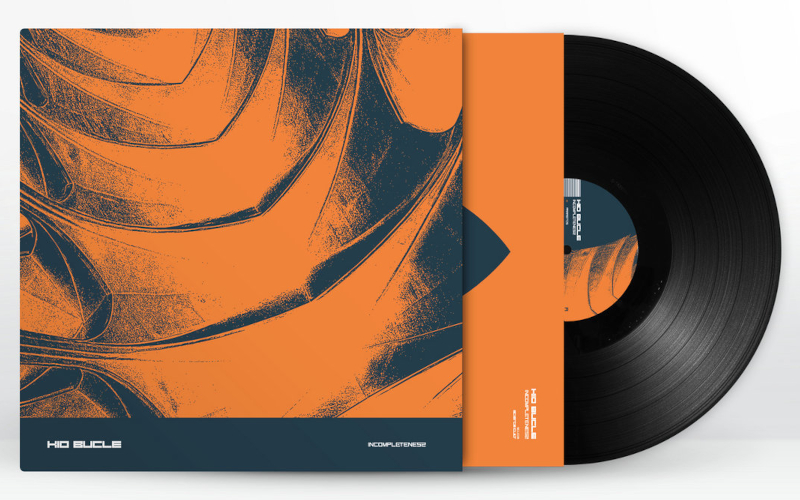
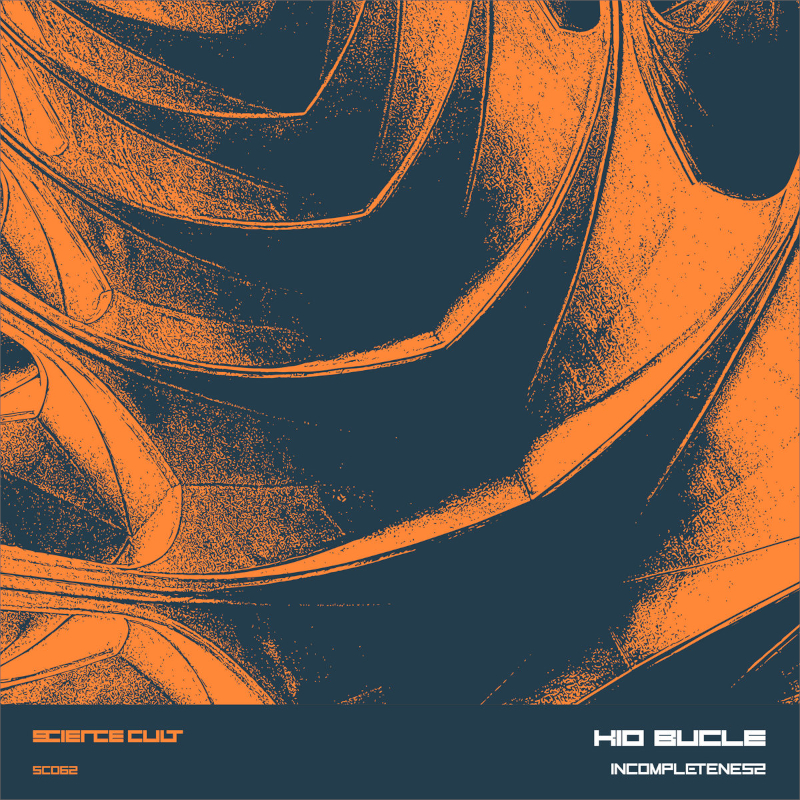
Incompleteness is available on Science Cult. [Bandcamp | Vinyl]




![You Us We Them :: memoryleaks (([||])) (CONDU||T)](https://igloomag.com/wp/wp-content/uploads/2026/09/you-us-we-tem-memoryleaks_feat-75x75.jpg)