





Aura leans more toward the hip-hop beat era than straight IDM, experimental in spirit, with enough left-field nuance that it resists being filed simply as instrumental hip-hop. It’s a document of a producer figuring out his own DNA in real time, two decades before anyone thought to look back and call it influential.
Hip-hop’s rhythmic backbone and IDM’s appetite for texture and abstraction
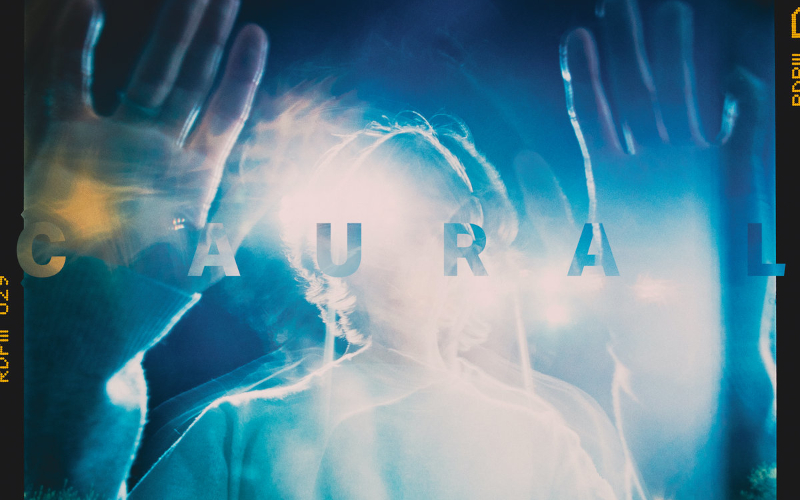
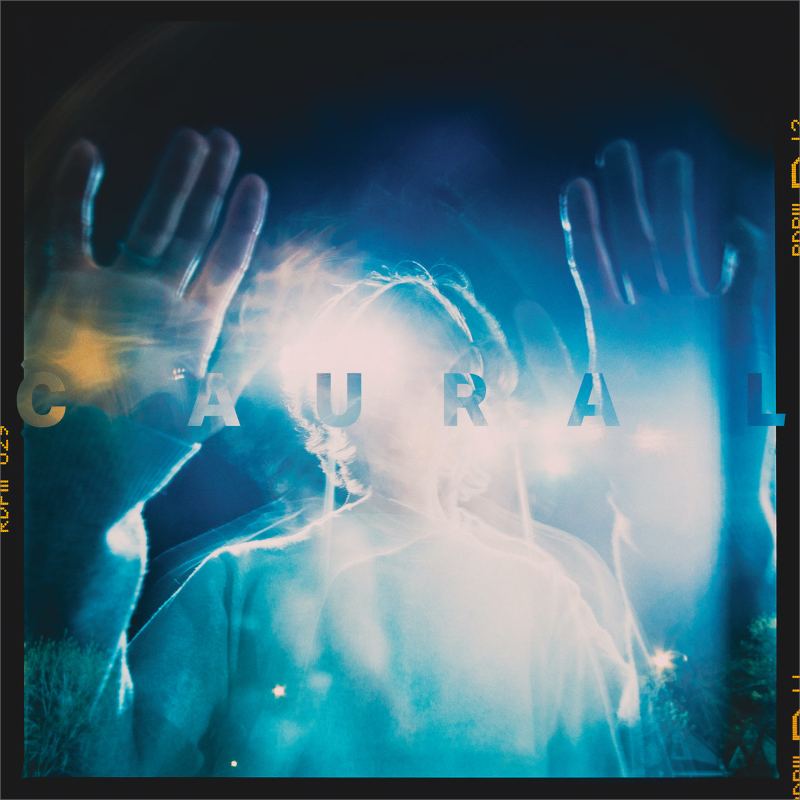
Zachary Mastoon began fusing his disparate musical influences in 1999 with what became his signature instrument: a Yamaha SU700 sampler. Trained in jazz under avant-garde giant Anthony Braxton and steeped in Javanese gamelan during a semester at sea, Mastoon arrived at NYU in 1997 and began carving out a sound under the name Caural—pronounced like “coral,” that fused Prefuse 73 and Daedelus-styled production with his own jazz and funk background. A CD-R of his first four compositions found its way from a coworker at the turntablism label Asphodel Records to the head of Töshöklabs, and his debut, Initial Experiments in 3-D, landed there in 2000. He soon moved to Chicago’s Chocolate Industries, releasing the Paint EP and Stars on My Ceiling—his critical breakthrough, across 2001 and 2002. Aura, his first new collection in 20 years, gathers unreleased material and compilation-only tracks from that exact window: 1999 to 2003, the turn-of-the-century moment when underground hip-hop and boundary-pushing IDM were still figuring out where their borders met.
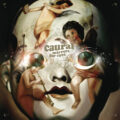
This is less a new album than a remaster of recovered fragments, sketches pulled from scratched CD-Rs sitting alongside tracks that had simply been lost to time. Aura is introduced as old-school in the best sense, sitting closer to Prefuse 73 and early Wagon Christ than anything resembling abstract, glitch-heavy IDM. The compilation opens uniquely with “Local Radio (Interlude),” glitched and brief, which is exactly the right way to introduce material like this. The beats throughout are unhurried and patient, built on organic drum hits—whether sampled or played live, the texture feels human, and that’s what keeps the whole thing sounding fresh more than two decades later. The entire release is sequenced to feel continuous, almost like a megamix or mixtape, with each track bleeding into the next rather than standing as isolated statements.

“Photograph” is a clear standout, paired with an interesting accompanying video. The production has a nice old-school jazz bass swing running through it, and there’s something here that recalls the early productions of the Dust Brothers during their work with Beck, that same loose, crate-dug warmth applied to a beat that never feels rushed. “Soundtrack for Endings” follows and is one of the most different tracks on the record. No real beat here, just field recordings, soft ambient notes, and mysterious low-end tones drifting underneath. It functions as an interlude, but there’s something about it that settles the whole record—a moment of stillness placed deliberately between more rhythmically active pieces.
The release closes with “Krylon Psychology (Daedelus‘ Re-Cover),” a remix from Alfred Darlington (aka Daedelus), who occupies a parallel lane in this same lineage. Daedelus emerged from the Los Angeles beat scene around the same era Caural was active in Chicago and New York, eventually becoming one of the central figures at Low End Theory and a defining voice in the broader IDM-meets-hip-hop continuum that Mastoon was helping shape on the other coast. Having him close out Aura isn’t just a nice gesture, it’s a quiet acknowledgment of a shared history, two producers who were independently proving the same thing in different cities: that hip-hop’s rhythmic backbone and IDM’s appetite for texture and abstraction were never as separate as the genre tags suggested. Daedelus‘ remix stays dark and recognizably his own while still honoring the bones of the original, which is exactly what a closing remix should do.
Taken as a whole, Aura leans more toward the hip-hop beat era than straight IDM, experimental in spirit, with enough left-field nuance that it resists being filed simply as instrumental hip-hop. It’s a document of a producer figuring out his own DNA in real time, two decades before anyone thought to look back and call it influential.
Aura is available on Bandcamp.