






With the passing of Éliane Radigue, experimental music loses a quiet revolutionary whose patient, enduring tones transformed listening itself into an act of presence.
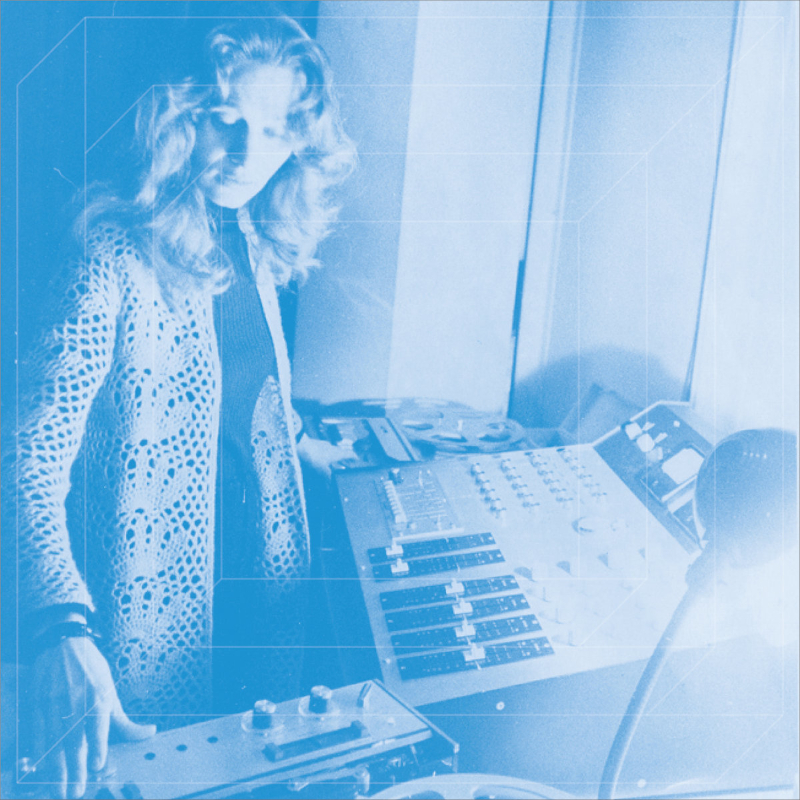
Éliane Radigue taught us how to listen
The passing of Éliane Radigue marks the end of one of the most singular and luminous chapters in experimental music. She leaves behind not only a body of work that reshaped how we understand sound, duration, and attention, but also a way of listening that continues to unfold within all of us who have been touched by her music. I did not know her personally, yet her work felt profoundly intimate to me. Through her patient tones and slowly evolving harmonics, she taught me the beauty of restraint and the quiet power of deep listening.
Born in Paris in 1932, Radigue came of age in a century defined by rupture and transformation. Her early studies in piano eventually led her toward the experimental currents that were reshaping postwar European music. In the 1950s she worked with Pierre Schaeffer and Pierre Henry at the Studio d’Essai, immersing herself in musique concrète. Those early experiences with tape manipulation and electroacoustic processes planted seeds that would later flower in her distinctive approach to long form composition.
In the late 1960s and early 1970s, Radigue began working with the ARP 2500 modular synthesizer. Unlike many composers who approached modular systems as vehicles for complexity or dramatic gesture, she pursued a path of radical simplicity. She would spend hours shaping a single tone, adjusting filters and oscillators with minute precision, allowing small variations in timbre to emerge gradually over extended durations. Her pieces were not concerned with melody or rhythm in conventional terms. They were meditations on vibration itself.

Works such as Adnos I, II, and III established her as a pioneering voice in drone based minimalism. These compositions unfolded over vast spans of time, often exceeding an hour, inviting the listener into a state of focused attention. What seemed static at first gradually revealed internal movement. Subtle shifts in overtone structure created waves of psychoacoustic activity that felt almost tidal. Listening became an act of surrender. The reward was a heightened awareness of sonic detail and the fragile interplay between sound and silence.
In the 1980s, after studying Tibetan Buddhism, Radigue composed her monumental Trilogie de la Mort, inspired by the Tibetan Book of the Dead. These works deepened her exploration of continuity and transformation. The music seemed to breathe. It shimmered and receded, evoking states of transition and contemplation. Spirituality in her work was never ornamental. It was embedded in process and intention. The act of listening became a practice of presence.
Later in life, Radigue shifted her focus from electronics to acoustic instruments, collaborating closely with individual performers. Her Occam Ocean cycle, begun in the early 2010s, consists of pieces written for soloists and small ensembles, each tailored to the unique voice of the musician. In these works, she carried her aesthetic of gradual evolution into the physical realm of strings, winds, and other acoustic sources. Long sustained tones continued to form the backbone of her language. The difference was that breath and bow now shaped the micro variations. She listened deeply to the performers, and in turn, they listened deeply to the sound itself.
Radigue’s compositional process was famously meticulous and slow. She often worked alone in her studio for years on a single piece. There was no rush, no concession to trend or market. In a culture increasingly driven by speed and spectacle, her commitment to duration and subtlety felt almost radical. She trusted that listeners were capable of patience. She believed that sound, given time, could reveal its own inner life.
For many of us, encountering her music was transformative. The first time I heard one of her long form works, I struggled at the beginning. The absence of dramatic change felt disorienting. But as minutes passed, something shifted. I began to notice small fluctuations, beating patterns, and spectral colors that had been invisible at first. The music taught me to slow down. It taught me to relinquish expectation and to meet sound on its own terms. Over time, that lesson extended beyond music. Patience became not just a listening skill but a way of being.
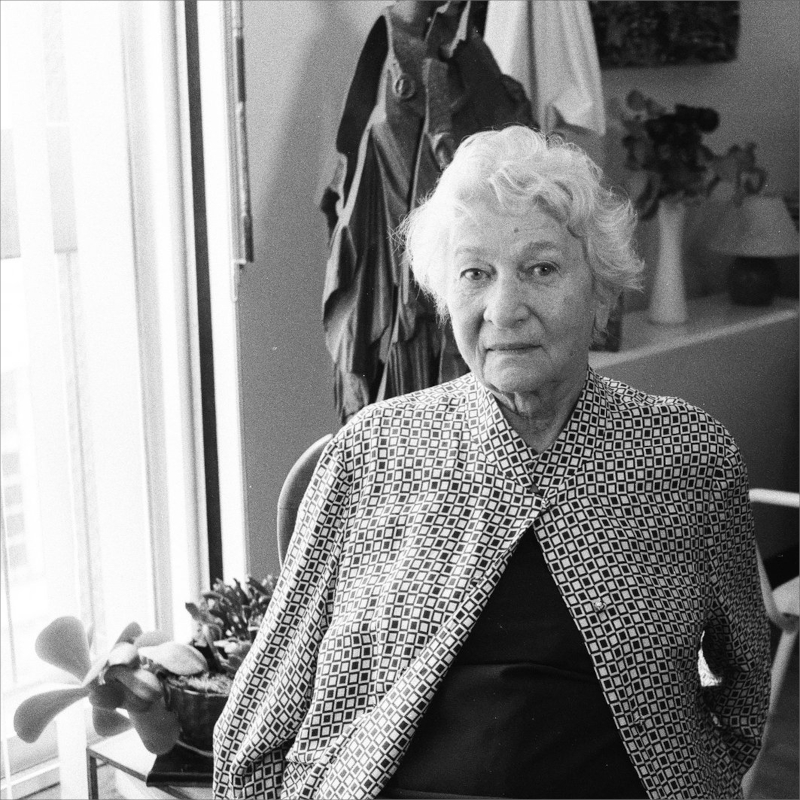
The woman who slowed sound ::
Her influence can be traced across generations of composers and sound artists who explore drone, minimalism, and immersive sound installation. Yet Radigue’s voice remains uniquely her own. There is a warmth in her tones, even at their most austere. They do not overwhelm. They envelop. They invite rather than command.
It is also important to acknowledge her role as a woman forging a path in a field historically dominated by men. Working with large modular systems in the 1970s required technical fluency and resilience in environments that were not always welcoming. Radigue navigated these spaces with quiet determination, never allowing her artistic vision to be diminished. Her success opened doors for others and expanded the narrative of who could shape the future of electronic music.
Her passing at the age of ninety four feels both inevitable and deeply saddening. Yet there is a fitting symmetry in the way her music continues to resonate. Her compositions were always about persistence, about signals that endure and transform. The tones she set in motion decades ago still vibrate in concert halls, galleries, and private listening spaces around the world. They continue to ask us to pay attention.
I did not have the privilege of knowing Éliane Radigue in person. But through her work, she felt like a patient guide. She showed me that music does not need to be loud or fast to be powerful. She demonstrated that a single sustained tone, carefully shaped and allowed to unfold, can contain entire worlds. She reminded me that listening is an active, generous act.
In remembering her, I return to those long arcs of sound, the slow bloom of harmonics, the gentle undulation that seems to stretch toward infinity. In that space, grief and gratitude coexist. We have lost a pioneering composer, a visionary of electronic and acoustic minimalism. But we remain surrounded by her vibrations.
Éliane Radigue taught us how to listen. That lesson endures.
Musique de notre temps (1976) is available on Transversales Disques and Trilogie de la Mort is available on INA GRM. [Bandcamp]

Related posts ::
 Algorithmic Art Assembly returns to Gray Area, March 26–28, 2026
 Stone and Worship — Primož Bončina and Phil Maguire :: Listening Together At This Place, In This Moment
 exm :: 2026 (Self Released) — [concise]
 MOSTRA Barcelona 2026 :: Fifth Anniversary
 P ͞h r ́ o n ͉̍ i m͈ ̙ a ̜ :: The Listening Layer (Clean Error)

![[2View] Masaya Kato :: Glass Anthimeria, SAVVAS METAXAS :: Magnetic Loops IV (Line)](https://igloomag.com/wp/wp-content/uploads/2026/07/savvas-metaxax-magnetic-loops-iv-masaya-kato-glass-anthimeria_feat-75x75.jpg)