




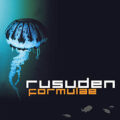
Rusuden’s M is an intricately crafted, archetypal IDM journey—precise, immersive, and timeless—where meticulous electronic textures balance playfulness, sophistication, and profound sonic presence.
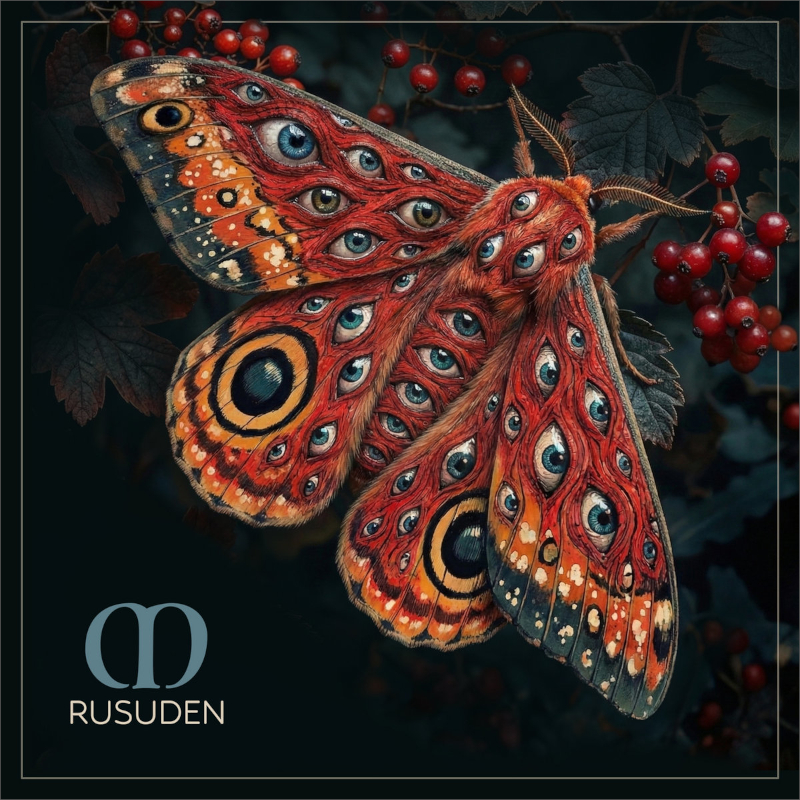
Auditory cartography of IDM realms
Words are delicate things. To write is to take them into consideration — to attempt communication while holding them tenderly, attentively. To use phrases and terms that point beyond themselves is an earthlike task: grounded, material, yet always gesturing toward something vaster. To do so within a musical timeframe now richer than ever — herstoried, genre-bombed, effervescent with excess — is to undertake something serious in the name of something fundamentally playful. Music. So here we go.
Rusuden (aka Justin Morgan) drops M on the world, and the world is better for it.
One of my favorite oversized terms is archetypal. Here we have archetypal IDM. The channel once dubbed “intelligent dance music” — a phrase now curiously self-conscious — no longer proposes that one must possess a certain kind of intelligence to make or enjoy it. We either enjoy it or we don’t. Nor must we be able to dance to it. That said, I have danced my way through “Windowlicker,” so there is room to move if you think you’ve got the groove.
What Rusuden presents here is a musical palette that would sit comfortably beneath a Warp Records–style production font: precise, spatial, assured. The execution is close to faultless. Rhythmically astute. Sonically both abrasive and tender by design. It reflects a whole pantheon of electronic stylisms — Kraftwerkian melody lines, Plaid-like rhythmic tessellations, trip-hop temperaments, widescreen electronica mood-states, modular pulses, and contemporary glitch architectures — and yet it reeks unmistakably of the here and now.
Layers speak where words falter ::
The 2026 of this session is not merely decorative; it is structural, guttural, visceral. The album coalesces into a finely tailored suit, glitteringly polished yet breathable, where one senses nothing is missing and nothing extraneous remains. Each texture feels placed with deliberation. Each absence feels intentional. There is depth without murk, complexity without clutter.
M is purposeful music. Wise without announcing its wisdom. Knowing without smugness. It feels both deeply informed and entirely present — music aware of its lineage yet unburdened by it. In an era saturated with sonic possibility, Rusuden has chosen restraint, precision, and clarity of intent. And in doing so, has made something quietly formidable.
Track-wise, we move first through “Synthetic Dawn,” our opening gambit. Fat bass plonks bounce and wobble over broken-beat digital chicanery. Tonal stabs tarry and parry against counter-melodies that feel both mischievous and exacting. It’s a beginning that absolutely reeks of class and sophistication — confident without peacocking, intricate without clutter. “Growth Without Permission” leans into what the promotional spiel calls the darker end of IDM. As it crunches out beatifically, it seems to step off its own precipice, stabbing into the ear like a spoke of intensity. There’s tension here — a kind of poised abrasion — yet it never collapses into noise for noise’s sake. Control remains absolute. “Watching the Observer” floats in concentric circles, spirals of sound dynamically texturizing the atmosphere it so neatly articulates. It feels architectural — tones rotating around an invisible axis — immersive without overwhelming.
Textures unfold, time becomes music ::
“Reality Leaks” posits warm spaces: soaking sunshine on skin, sweet harmonies drifting over drum-box breaks that land with softened edges. There’s air here, and generosity. A reminder that IDM, however cerebral its branding, has always harbored tenderness. With “Soft Invasion,” the archetypes of the form are dialed between naught and one and back again — binary poetics rendered tactile. It sounds almost seminal, as if it could have surfaced at any point across the last four decades of electronica and still felt apropos. “Cell Memory” steps in and out of four-to-the-floor territory, picked basslines and space pads enveloping the upper frequencies in fluid, meandering layers. The piece clouds and clears in cycles, like thought itself processing sensation.
Then come “I Remember Being Someone,” “Recursive Organism and “Late Stage Intelligence,” illustrating intricacy through apparent simplicity. Quite the undertaking. Here we find the bleep-and-plonk lineage of early Warp Records resonating clearly — the hypnotic minimalism of LFO, the dextrous warmth of Nightmares on Wax, and the masterful pulse of Richard H. Kirk’s Testone. Whether deliberate reference or osmosis, it’s damn fine to hear that lineage alive and metabolized rather than merely quoted.
The inevitable soft landing comes via the superior tek-funk of standout closer “Dreams That Remember You.” Reminiscent in spirit of UK pioneers LA Synthesis, this flowing, unfurling neo-wave synth pulse is delectable in its forward glide. And with what sounds like a textural nod to Yazoo — “Situations” sampled laugh flickering through the mix — I couldn’t imagine ending on a finer highest high.
For those who love melodic contemporary electronica in the style of newcomer Dee-Key, the profundity of Ndorfik, or early Enabl.ed, you’ll find yourself safe at home in the folds and fires of Rusuden’s very, very, very beautiful, intricate, dynamic, and deeply immersive album M. To traverse a path that readily rewards a person’s attention and patience, with a desire for repeated listening across its every finely crafted layers.
M is available on Not Yet Remembered. [Bandcamp]



![You Us We Them :: memoryleaks (([||])) (CONDU||T)](https://igloomag.com/wp/wp-content/uploads/2026/09/you-us-we-tem-memoryleaks_feat-75x75.jpg)