




By operating outside of the playlist protocol, Big Blood have once again given us something that goes beyond the test of temporary style. This is music for deep listening in the deep time of Deep Maine, and it shall abide.
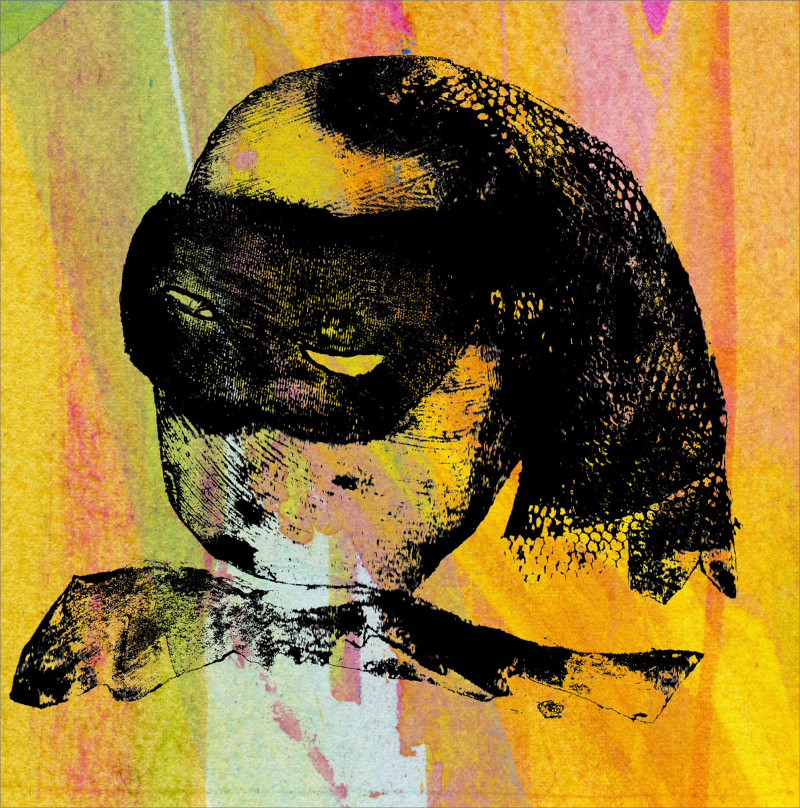
A real standout amid their deep catalog
It used to be that when I spent money on an album I would listen to it intently for weeks, even if it ended up being one I didn’t care for all that much. When I started checking out CD’s from the library as a teenager I could peruse more without having to worry about money. But since I had made the effort to get there on the bus, look for the CDs, and bring them home, I still ended up listening to them deeply and intently. I often pored over the liner notes and the lyrics as part of the experience. Then, when I started working for the library, I didn’t have to be as careful about what I picked and chose. I could take home as many CDs as I wanted. I found so many gems this way, but I also brought home a lot of things I never even listened to before I returned them. The process only accelerated as I became an online listener. Streams, downloads, YouTube all gave me access to more and more music that I continually hunted for, and the diversity of it all has been wonderful. Yet, over time it has also fragmented my attention. I still do listen to albums all the way, and I listen repeatedly to the ones that grab and hold my attention. But the practice of listening with dedication to even things I might not like as much immediately is much less.
Electric Voyeur by Big Blood does grab my attention immediately, but that’s not why I bring all this up. I bring it up because it is impossible to keep up with all the good music that is always coming out. It has to be enough to just step into the stream, and allow those things that need to reach me collect around me and give them more of my attention, instead of jumping around from thing to thing so much as the digital media would like me to do. I miss the way I used to give serious dedicated attention to albums when I spent money on a tape or CD when I first started buying music. I miss the way those albums would become soundtracks for months and years, not just a few days or weeks at most. Constant rotation was more constant before endless digital shuffles. The fight for focus is real!
A real family band ::
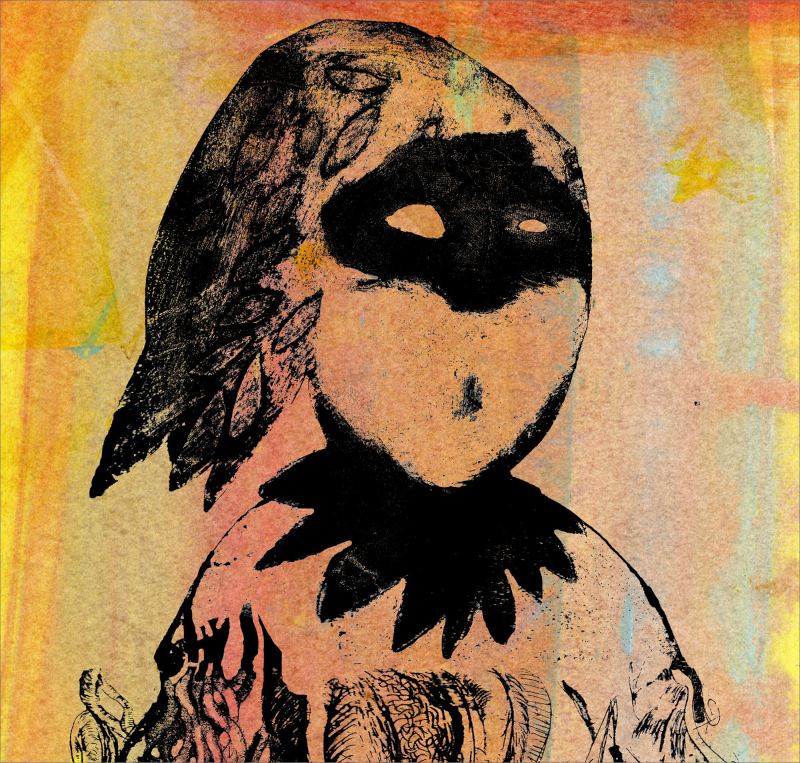
I also bring all this up because Electric Voyeur came out at the very end of 2024. It was thus outside the radar of peoples best of the year lists, and also missed out on some of the hype that comes with releases at the beginning of the year. Such considerations almost seem arbitrary now, but in the case of this album, I had to see it get swept under an avalanche of other releases. The exact timing of when it came out doesn’t really matter though, because Colleen Kinsella and Caleb Mulkerin have made something really timeless with this one, a real standout amid their deep catalog. As a musical duo and couple, they are a real family band these days as well, with their daughter Quinnissa playing with them now as well, featured on their previous album First Aid Kit. But she is absent from this effort. Perhaps that has to do with the fact that this very special effort was ten years in the making. As a listener, the least I could do was put in some time returning to it and listening to it straight through multiple times. Come back to it and listen again, then again.
The DIY spirit of independent underground music ::
When I say ten years in the making, I mean the making part literally. As in they made all the electronic instruments themselves (aside from one synth used one track) themselves. It is like something out of Make Magazine for those who remember it and the movement of Maker and Hacker spaces it helped to ignite. It is with the DIY spirit of electronic homebrewing as well as the DIY spirit of independent underground music that this album was forged.
Of this they write, “The parameters were simple enough in theory ‘can we make an album of only primitive electronics and vocals?’ on top of that we tried only to consult books and fellow builders for construction…. it is no easy task turning your back on the internets, and for sure there were many times cheating was necessary. If you’re interested in this sort of thing [the book] “Handmade Electronic Music: The Art of Hardware Hacking” by Nicolas Collins is an absolute must!” I concur heartily about Collins‘ book, and if he has heard this album, it must have been a pleasure to see the artistic results of what people are doing with his own work.
Listening, I can’t help but thinking of the silicon lifeforms forged in the studio of Bebe and Louis Barron and of their soundtrack to Forbidden Planet. Of the electronic music pioneers who made all their instruments from scratch, or reused test equipment or other gear never intended for making music in the first place as part of there set up.
Some of the Barron’s instruments were so fragile they burned out and died even while being played. The best they could hope was to capture them on tape before they had been overloaded. I wonder how much that happened to Big Blood as they worked on this album over the years, in between other great releases? How many instruments went to the graveyard of a junk bin? How many were resurrected in the form of getting their parts reused, like some kind of Frankenstein as a ring modulator or delay?

Their own quirky programming ::
The album starts off with a Turkish sounding melody on the title track. Little drums join it before it doubles in on itself in electric counterpoint. Then the voice. Remember, there are only homemade electronics and voice on this album. The voice is like a carrier tone over the airwaves, and the Turkish sounding melody is an interval signal that announces the sign on of a distant radio station. It lets me slip into an imaginal frame of mind that I can use to navigate the circuitry over the rest of the sixteen tracks. The piece ends with a bit of granular bit chopping before moving into something with a slow drum machine tempo. It could have been a pre-programmed beat, but you can tell it is not because it is just slightly off. Off enough that you know it is their own quirky programming coupled with the lyrical poetry.
The lyrics starts off at a house party on “Middle of a Party” and then goes on to a “Night Walk.” Pitter patters drift along into strange neighborhoods. The words are always part of why I return to the music of Big Blood. They are imagistic and surreal, yet also relatable, like dream transmissions I can find my own meaning inside.
“In the Night Sky” is a favorite song from this album and showcases Kinsella’s vocal abilities over a pulsating bed of lo-fi reverb laden electro gurgles as she chases shooting stars, here in the form of glittering percussive patterns.
Each piece is sequenced flowing one in to the other. “Electric Voyeur II” is an exercise in ring modulation and Joe Meekesque plitter plops. There are snatches of distortion and words that get cut-off before they complete, lending it a slight menace.
“For Real” is another gem, with a buoyant lofi beat and over top of it the only commercial synth on the album. This gives the piece an almost vaporwave sheen as the hiss of steam and laser like oscillations wave about, married to the hypnagogic lyrics with a vibrant charge. It’s also the longest song at close to six minutes. Most of the others are around two and a half to four or so minutes: in other words pop song territory. If so, I’d call this radiophonic pop fit for daleks and cybermen.
Yet, with just using voice and electronics, the voice is rarely treated with more than some reverb or delay. All the dalekesque distortion is saved for the music, though looping of tiny snippets of vox does occur on songs like “Bitter Choice.”
Disorienting and kaleidoscopic ::
I don’t know if they were consciously trying to conjure the old school era of tape music ala Perrey & Kingsley, or the production techniques of Joe Meek, the Barron’s or the experiments of the Radiophonic Workshop. Yet by making their own instruments they have gone down a route that takes us into that mode. And by writing songs, though experimental, it takes us more into the stranger side of pop, than the strictly avantgarde of other electronic pioneers. These pieces are at once disorienting and kaleidoscopic, yet with their weird beats and off kilter melody hooks, perfectly familiar, even as Middle eastern sounding scales reappear on songs like “Came to Life.” Meanwhile a poetry of utterance burns alongside the mutated machinery.
Big Blood have gifted their fans with two versions of the album, one completely instrumental. Listening intently to this version I can hear the sizzle of solder in the tracks and smell the ozone as modules explode.
By operating outside of the playlist protocol, Big Blood have once again given us something that goes beyond the test of temporary style. This is music for deep listening in the deep time of Deep Maine, and it shall abide.
Electric Voyeur is available on Bandcamp. [Original | Instrumental]







![[2View] Nekomachi/no wonder • なるほど & tsubai/ilulissat (Perceptual Tapes)](https://igloomag.com/wp/wp-content/uploads/2026/10/nekomachi-no-wonder-tsubai-ilulissat-tapes_feat-75x75.jpg)