





Perhaps this new ROTCORE strata marks Batista’s next transmission. Here, rot does not simply signify decay; it becomes a productive process, a way for sounds to break down, recombine, and regrow. In that sense, IDM(R)ot I treats glitch not as damage to be corrected, but as evidence of life inside the machine—an opening through which IDM can mutate, regenerate, and find another generation of forms to cultivate and explore.

Glitch becomes less an effect than a structural instinct
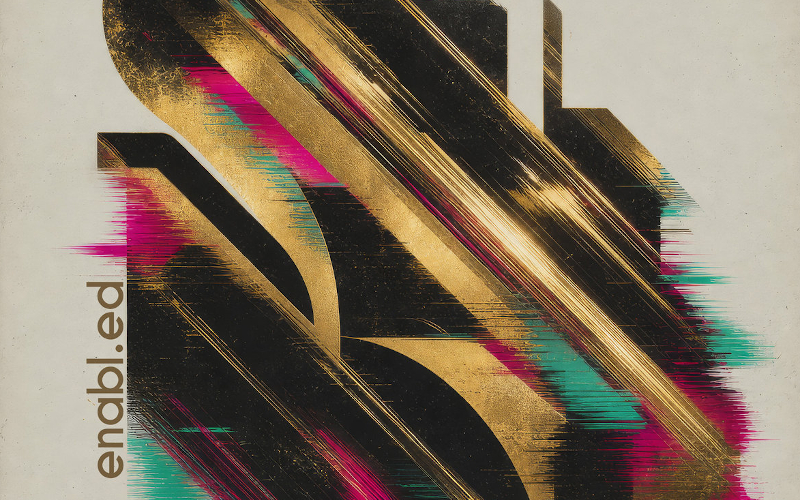
Clean Error label operator James Batista, a longtime IDM aficionado, continues to expand upon his enabl.ed moniker, a project that has spent years pursuing entangled electronics, glitch manifestations, and melodic fibers through another chapter, IDM(R)ot I. Detailed as ROTCORE, “developed to observe what happens to experimental music after its methods become part of a shared vocabulary,” Batista works at a high level of sonic fracture, clean errors, and digital misalignment, assembling a collection that “studies rhythm, synthesis, sequencing, sampling, digital processing, melodic behavior, structural irregularity, and intentional error.”
Surrounded by a familiar cast of sonic crafters we tend to gravitate towards—ie. Cephlon, Romanowitch, Suumhow, Vaag, exm, rRine, Foel, Yaporigami, ENV(itre), Dragon, among others—enabl.ed finds its footing in disjointed rhythmic structures, where fifteen tracks lurch, stutter, flutter, and settle between lullaby tones and sharply articulated beats. Opener “initiate.rot.heirloom” immediately establishes this elegantly fractured language, allowing clipped rhythms and tiny digital disturbances to sit alongside softer melodic gestures. Batista’s sonic voice develops with remarkable consistency, even when the machinery catches on a few speed bumps, from the minuscule electro-entanglement of “rot.protocol\_113” to the roughened, shuffled beauty of “Reverb of a dead catalog.”
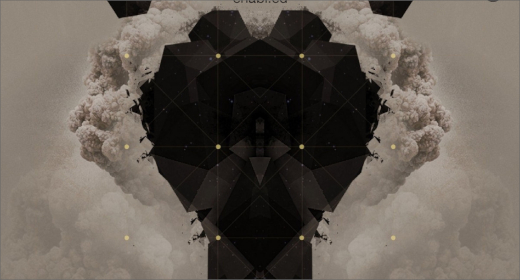
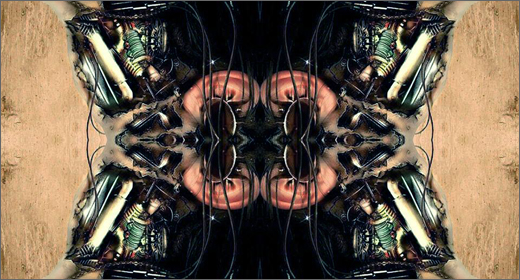
Clean Error Records announces ERR101: enabl.ed — IDM(R)ot I, the next release in the label’s catalog and the beginning of a project examining the changing state of IDM through its history, production language and technological inheritance.

Glitch becomes less an effect than a structural instinct throughout the album. Ambient threads seep through “time-stretched memories,” where audible fragments seem suspended just beyond recognition, while “There are ghosts in the sequencer” digs into micro-textural repetition, letting clicks, granular debris, and sequencing artifacts accumulate into their own strange atmosphere. Earlier IDM signifiers (ie. Arovane, Phonem, Plone) surface across “Machine Empathy,” and “Failed Futurism,” yet each track pushes those familiar forms through enough processing, interruption, and rhythmic skew to keep them unstable. Melodies appear, fracture, loop, and mutate rather than simply resolve.
Closer “Every genre contains its own extinction” hints at an even more pronounced shift in enabl.ed’s signature. Orchestral strings emerge amid organic glitch scurries in the background, creating a grandiose bookend unlike Batista’s earlier sound sculptures. What begins as digital fragmentation gradually opens into something more melancholic and cinematic, occupying an intersection between soundtrack music and IDM while remaining distinctly interstellar, tactile, and absorbing.
Perhaps this new ROTCORE strata marks Batista’s next transmission. Here, rot does not simply signify decay; it becomes a productive process, a way for sounds to break down, recombine, and regrow. In that sense, IDM(R)ot I treats glitch not as damage to be corrected, but as evidence of life inside the machine—an opening through which IDM can mutate, regenerate, and find another generation of forms to cultivate and explore.
┌───────────────────────┐ │ R O T C O R E │ │ ERROR > IMITATION │ │ MUTATION > MEMORY │ └──────────┬────────────┘ │ ░▒▓████▓▒░ //│\ /// ERROR \\ //// BLOOMING \\ GENRE_CORRUPTION : 87.2% RHYTHM DECOMPOSITION : 74.8% MELODIC STABILITY : 41.3% ARCHIVE DEPENDENCY : CRITICAL NOSTALGIA SATURATION : HIGH ERROR VIABILITY : ██████████
IDM(R)ot I is available on Clean Error. [Bandcamp]