


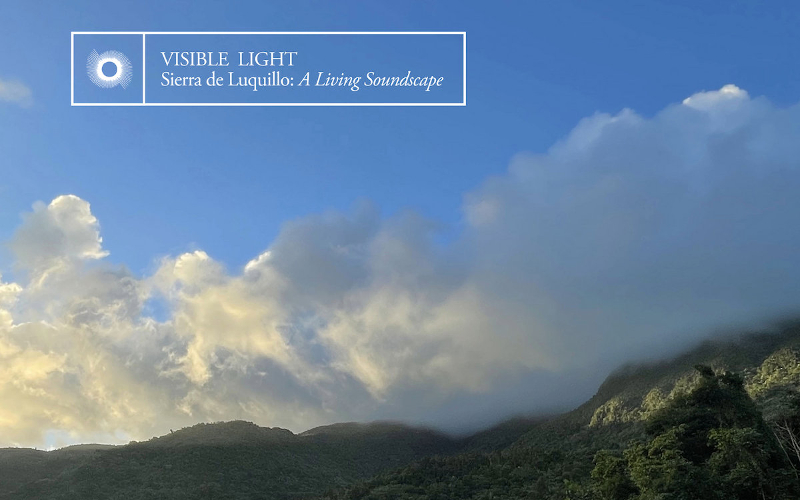


Visible Light did not try to produce an exact sonic replica of El Yunque, but rather focused on the aspects that impacted the musicians the most, just as a landscape painter can highlight aspects of a landscape that a straightforward photo cannot communicate as well.
“An act of ecological connection”
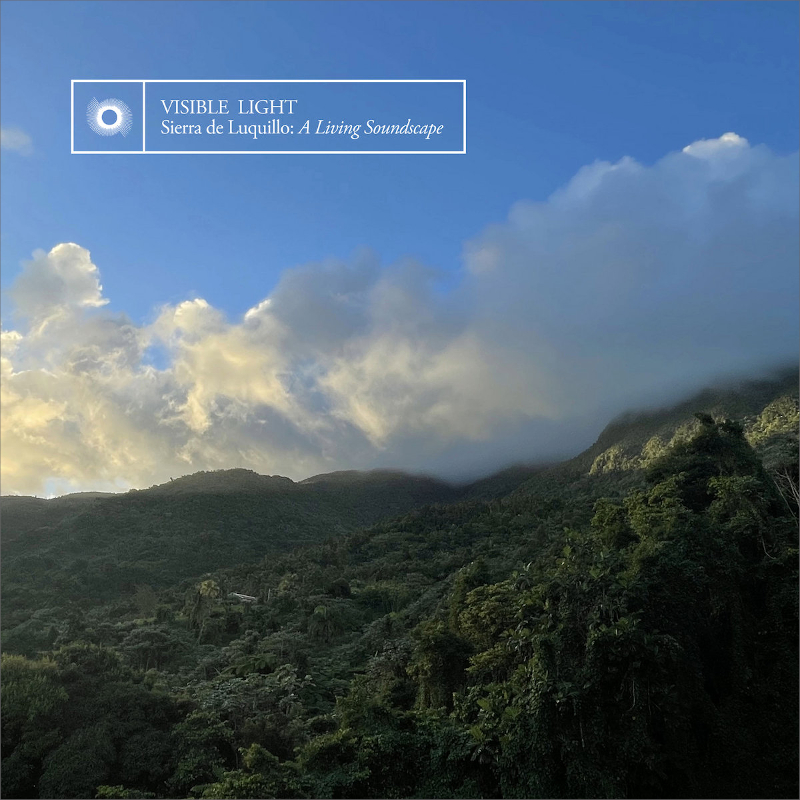
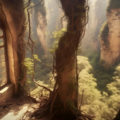
Located on the slopes of the Sierra de Luquillo Mountains in northeastern Puerto Rico, El Yunque National Forest is the only tropical rainforest in the U.S. National Forest system. At almost 29,000 acres, El Yunque is one of our smallest national forests, yet it is also one of the most biologically diverse. For example, El Yunque hosts 250 different species of trees—about as many as are found throughout all our other national forests combined. Among other rare species, El Yunque provides one of the last remaining habitats for the critically endangered Puerto Rican Parrot. It also houses 13 of the 16 known species of the coqui frogs that Puerto Ricans have adopted as a symbol for themselves and their island. Yet a 2018 biological study found that global warming has reduced El Yunque’s arthropod (insect) biomass 10- to 60-fold, which in turn has led to corresponding declines in the lizards, frogs, birds and other creatures that feed upon these insects. Stunningly beautiful yet profoundly vulnerable, El Yunque serves as both a magnetic tourist destination and the home of the Indigenous Taino peoples’ chief god Yucahn (Yokahn).
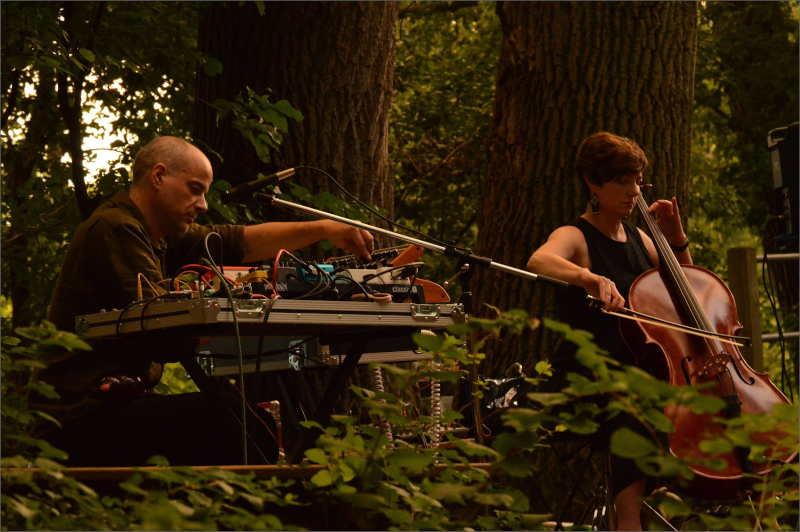
In February 2025, Minneapolis-based duo Visible Light visited El Yunque. Stunned by what they saw and heard, Amy McNally (cellist) and Matthew Hiram (sound artist) recorded many hours’ worth of nocturnal soundscapes in the forest and then shaped their own musical compositions in response. As Matthew Hiram wrote on his Substack, “the music was created in collaboration with El Yunque, as an act of ecological connection.” To me the resulting four-movement album feels like one extended meditation or deep listening event; it becomes difficult to tell where the natural sounds end and those of the human musicians begin. The album sounds almost like an acoustic version of the forest bathing contemplative nature walks that Japanese practitioners have introduced to the world.
Calling the listener to pause and reflect ::
And when Visible Light says they collaborated with El Yunque to make this music, they really mean it. In addition to the human instruments of cello, Moog synthesizers, rosewood alto flutes, sidereal gongs, brass singing bowls, and more, the voices of crickets, coqui frogs, and many other animals sing out on the album. And so do the voices of the plants themselves, captured by sensitive electrodes fitted to the plants’ leaves that pick up tiny electrical vibrations that are sent by MIDI to be processed and complemented, as Hiram has done on his solo albums like 2024’s Yucca Music.
Sierra de Luquillo begins with “La Oscuridad” (“The Darkness”), a more than 17-minute composition that is the longest on the album. Nocturnal keynotes of insects and coqui frogs take center stage, warmed by subtle cello and synth textures, calling the listener to pause and reflect on the peaceful beauty of wild places like El Yunque, to let it lighten and expand our souls. Later in the track the cello melodies sound almost in a call and response progression with the nocturnal animal voices, reminding me a bit of jazz musician and philosopher David Rothenberg’s famous duets with humpback whales on Whale Music.
The next track, “Música de las Plants,” foregrounds plant voices. It begins again with the nocturnal sounds of coquis and insects, but now they sound closer, as if the listener’s ear is right up against the plants from which they are calling. Cello and synth melodies emerge and evolve subtly, almost like clouds passing in the sky above the forest. Then we start to hear the resonant hums converted from the bioelectrical signals sparking through the leaves of the plants. Developing slowly, the music moves at the more deliberate pace of the forest, not the heedless speed of the human world. Singing bowls add an ethereal, shimmering, almost spiritual layer to the processed plant vibrations. And even with all this emphasis on plant voices, those of animals remain foregrounded throughout, highlighting their importance and agency.

Creating a tranquil, meditative, and spirit-expanding atmosphere ::
“La Tormenta” (“The Storm”) focuses on a very common event for this tropical forest: rainfall, which it receives more than 6 meters (20 feet) of annually. On this track rumbling thunder and steady rain accompany the voices of coqui frogs, crickets, and other insects. I appreciate the percussive detail of individual raindrops colliding with leaves that emerges. Tasteful use of gongs extends the listener’s consciousness wider and deeper into the forest, helping focus our attention on darker aspects of the soundscape and how they resonate with our own inner spiritual depths—storms also roar within us at times, sometimes terrifyingly so, yet as with the outer rains in El Yunque, our own inner storms ultimately purify and renew us. I love how the coquis’ froggy voices sound almost joyous during the rainfall, reminding me of how the Prophet Muhammad described frogs as praising Allah with their croaks and cries.
“Medianoche” (“Midnight”) closes the album. Here the insect and frog voices sound quieter, and the human synths and cello take center stage. The instruments do a lovely job expressing some of the uncanny, liminal quality of the midpoint of the night, which also holds the seeds of the dawn—a juxtaposition the listener can experience clearly on this track. There’s also a bit of a wistful feel to the cello, starting to bid farewell to this lovely wild and sacred place where even the local Indigenous Taino peoples did not traditionally dare to dwell for long. Rosewood flutes seem to express a kind of voice I wish we heard more of in the field recordings: the abundant bird life of the neotropics, complementing the cello in a lively back and forth that sounds like a vocal exchange between actual frogs and birds. The resulting warm sounds interspersed with heavy silences reminds me of how real animals listen to each other and to us just as much as we do them. Creating a tranquil, meditative, and spirit-expanding atmosphere, “Medianoche” makes for a lovely ending to this album.
In the end I think Sierra de Luqillo does a great job of encouraging deep listening that can in turn cultivate a feeling of ecological connection, ideally leading the listener to practices of care and preservation. The compositions feel specific to this Puerto Rican place, with keynotes of frogs and insects and rain. Yet they also help the listener hear the importance of the natural places we inhabit wherever we are through newly attuned, more attentive ears. I also appreciated that Visible Light did not try to produce an exact sonic replica of El Yunque, but rather focused on the aspects that impacted the musicians the most, just as a landscape painter can highlight aspects of a landscape that a straightforward photo cannot communicate as well.
Sierra de Luquillo: A Living Soundscape is available on Bandcamp.





![You Us We Them :: memoryleaks (([||])) (CONDU||T)](https://igloomag.com/wp/wp-content/uploads/2026/09/you-us-we-tem-memoryleaks_feat-75x75.jpg)