



Mastered and recorded at Elektronmusikstudion (EMS) in Stockholm between 2024 and 2026, I Det Vassa Ljuset is based on close-miking of organic materials such as wood, metal, stone, and glass. These recordings have then been processed and transformed into software instruments that can be played live. Released on her own label Istid Records, I Det Vassa Ljuset is available digitally and on cassette.
Timbre found in physical objects
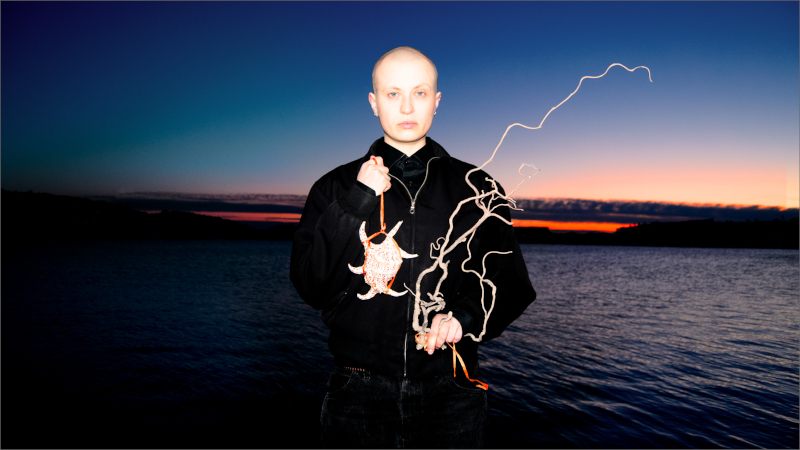
Vera V Almgren delivers I Det Vassa Ljuset (In The Sharp Light), a debut album that operates entirely in the realm of sound design and field recordings. Born in Eskilstuna, Sweden in 1995, Almgren is a composer and sound artist who works with the inherent texture, percussiveness, and timbre found in physical objects. Her music often follows a suggestive and dreamlike logic, forming imaginary soundscapes where threads are formed between past, present, and imaginary places. Mastered and recorded at Elektronmusikstudion (EMS) in Stockholm between 2024 and 2026, the album is based on close-miking of organic materials such as wood, metal, stone, and glass. These recordings have then been processed and transformed into software instruments that can be played live. Released on her own label Istid Records, I Det Vassa Ljuset is available digitally and on cassette.
I’ve always enjoyed field recordings for what they are, interesting to hear them as raw material, but even more compelling to hear them under effects later. But field recordings also have a place as strategically placed elements that tell a story or paint a picture. Field recording as a compositional tool has a long history in electroacoustic music, dating back to musique concrète pioneers like Pierre Schaeffer and Pierre Henry in the late 1940s. The practice involves capturing sounds from the environment, whether natural or man-made and using them as building blocks for composition. What makes field recordings powerful is their inherent narrative potential. A creaking door, rustling leaves, or the resonance of struck metal all carry associations and evocations that pure synthesis can’t replicate. When used strategically, they ground abstract compositions in a tangible reality, even as they’re processed into something unrecognizable. Almgren‘s approach here leans into that tension, the recordings are close-miked, zooming in on tactile sonic details, and then transformed through processing until they occupy a space between the familiar and the alien.
Field recording as active composition ::
It really is a work of abstract art, and it’s done very well here. Almgren works with spatial placement in multichannel systems, zooming in and out on tactile details. The production technique of close-miking is crucial to understanding this album. Close-miking: positioning a microphone very near the sound source, captures details that wouldn’t be audible in a normal recording environment. The grain of wood, the friction of metal on metal, the resonance of glass, these micro-details become the raw material. Once captured, Almgren processes them into playable software instruments, which allows her to perform and manipulate them live. This isn’t just field recording as passive documentation; it’s field recording as active composition. The transformation process likely involves granular synthesis, time-stretching, pitch-shifting, and spectral processing, techniques that break sounds down into their component parts and reassemble them in new ways.
It is a very mature listen throughout, so it’s not for the average listener, but for those who are curious to hear it, it’s great. I’m not one to describe sounds here, especially those of field recordings, as there are lots of various sounds in this release as Vera runs these natural sounds through sound effects. The album unfolds across six tracks, ranging from the brief opener (9:06) to the sprawling “I Det Innersta Rummet” (8:07). The ritualistic dramaturgy Almgren is known for comes through in the pacing and structure.
For listeners familiar with the electroacoustic tradition — artists like Eliane Radigue, Luc Ferrari, or the Swedish pioneers who worked at EMS in the 1960s and 70s: I Det Vassa Ljuset will feel like a natural continuation of that lineage. If you’re coming to electroacoustic music for the first time, I Det Vassa Ljuset is either going to hook you or lose you within the first ten minutes. Almgren doesn’t compromise. The work is what it is, meticulous, atmospheric, and entirely unconcerned with accessibility.
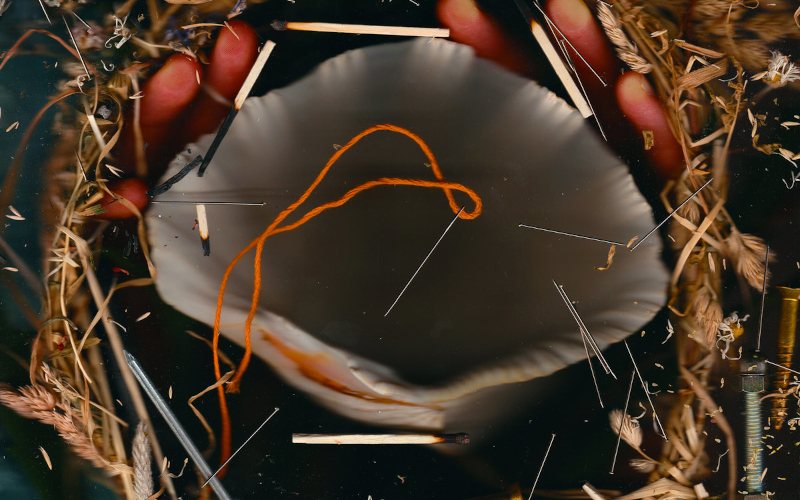
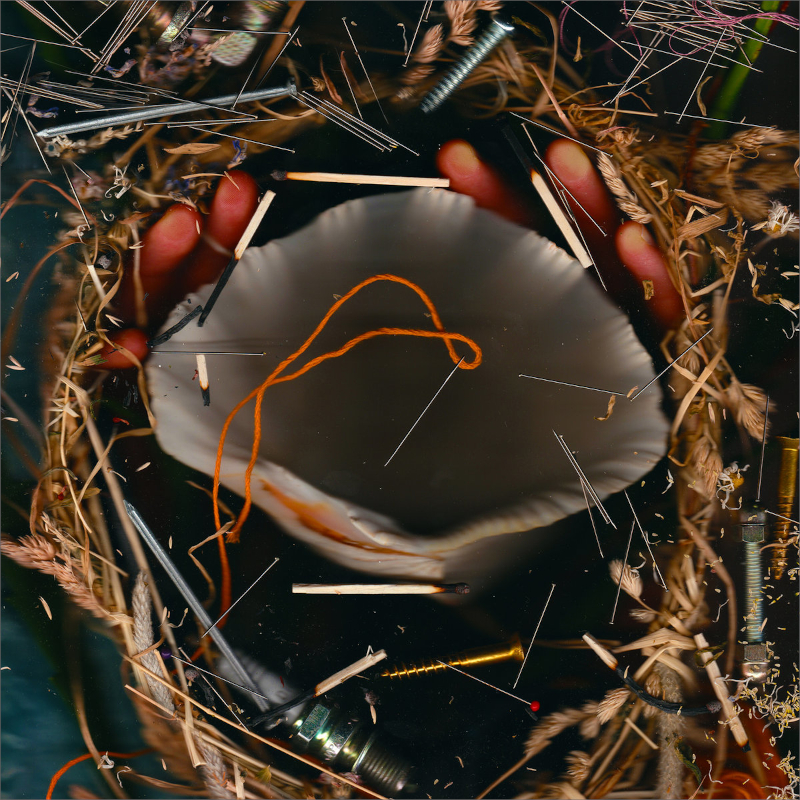
Photo by: Touka Wiston
I Det Vassa Ljuset is available on Istid. [Bandcamp]