

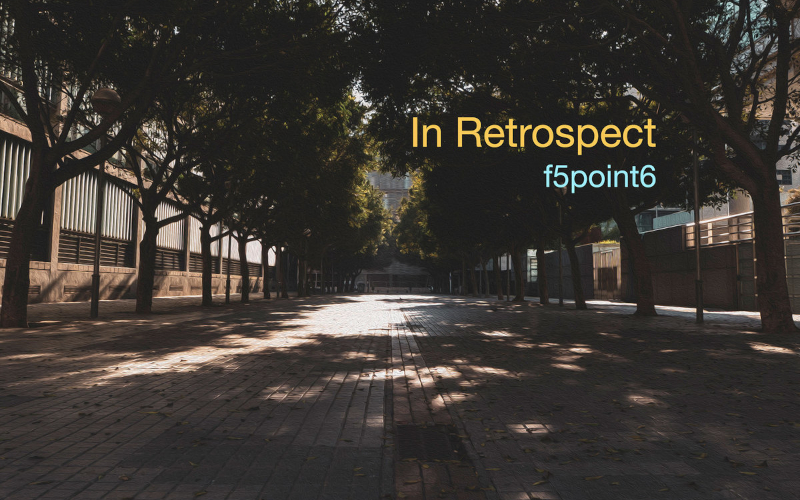


In Retrospect possesses a strength that exceeds the format of the celebratory compilation. It is a work of reordering and, at the same time, of renewal, a point of concentration from which the music of f5point6 emerges clearer, more self aware, more profound.
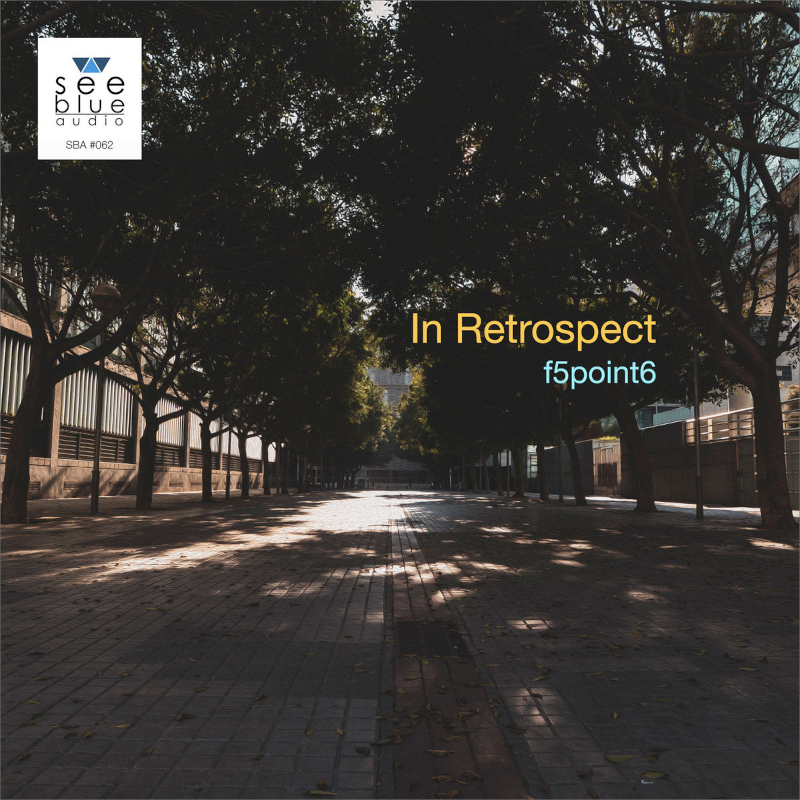
Distant layers coexist and illuminate one another
With In Retrospect, f5point6 makes a gesture that concerns time even before sound. The album gathers material born across different years and arranges it as a single current. From this perspective, the anthology form matters. What asserts itself in the listening is its narrative compactness, the ability to hold together different eras of his writing within an emotional arc that is firm, shadowed, and ever shifting.
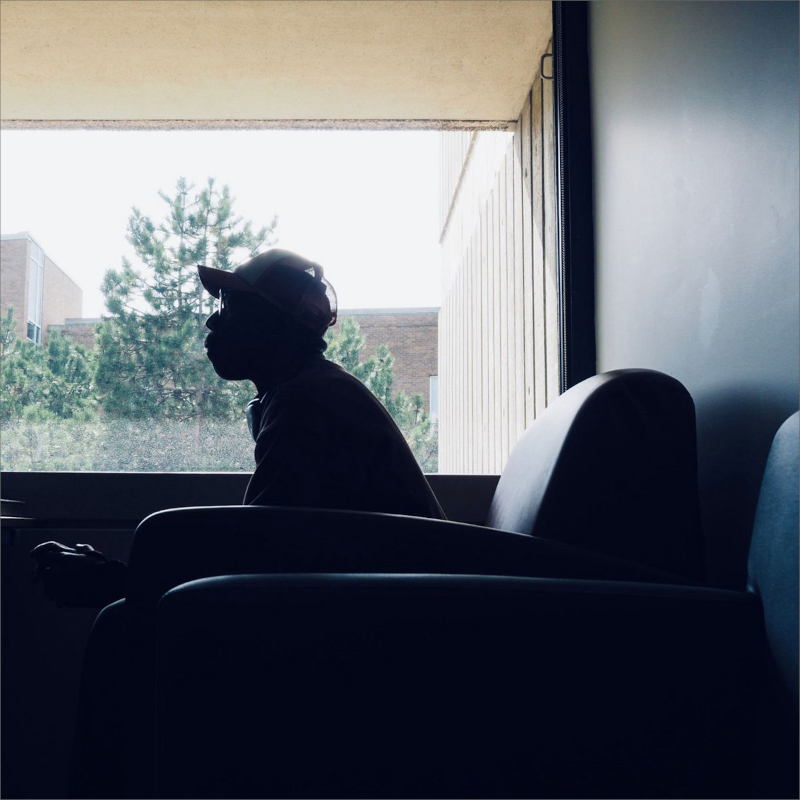
R. Cleveland Aaron understands well the weight of the image and the discipline of the gaze. His work as a photographer and visual specialist leaves its traces here, because every sonic page seems built with a rigorous sense of framing, of the edge, of the distance between foreground and background. Timbres emerge like figures lit by a sidelong light, reverberations act as perspectives, the smallest details carry the force of a decisive gesture. This is why the album conveys the feeling of an inner cinema, a film without a screen and yet rich in withheld images, in backlit landscapes.
The writing of f5point6 has always held a dual vocation. On one side, the attraction of the beatless expanse, of the wide landscape, of rhythm withdrawn and replaced by a more secret motion. On the other, a tactile curiosity toward microsounds, light fractures, oblique inserts, near jazzy traces that brush against the ambient fabric and alter its inclination. In Retrospect keeps these impulses together with rare naturalness. The journey moves from cosmic shadows to nearly aqueous veils, from meditative suspensions to sudden material densities, and yet every passage feels necessary. One senses the hand of an author who, over time, has learned to recognize his own language without stiffening it, allowing it to flow and open itself to new margins.
The value of the remasterings should be read precisely within this logic. Here the past is brought back to temperature, set in motion again, led toward a present capable of receiving it without picturesque nostalgia. Aaron listens again to his own path and restores continuity to it, as though each segment had now found a clearer bearing, a texture more closely bound to the whole. What emerges is a listening experience that eludes simple chronology. One enters instead a personal geology of sound, where distant layers coexist and illuminate one another.
Alive, alert, exposed ::
Most striking of all is the relationship with quiet. In much contemplative electronics, rarefaction leads toward an elegant inertia, often seductive, at times sterile. In Retrospect chooses another path. Even when the air thins and the melodic line grows slight, beneath the surface a continual microcirculation is at work. Small internal motions, peripheral vibrations, subtle currents, almost imperceptible frictions keep the material from becoming mere sonic décor. The listening remains alive, alert, exposed. Every portion of the album seems to hold a slow mutation, a pressure working from below and transforming the landscape little by little.
This subterranean vitality coincides with the project’s most persuasive quality. Aaron knows how to create immersion, and he does so without indulging in pure envelopment. His surfaces remain porous. They invite entry, then ask for attention, tact, and a willingness to wander. There is always an offscreen space that calls a further threshold, a detail just to the side that reorients the meaning of the journey. From here also arises the album’s cinematic dimension, entrusted to the quality of its emotional editing. In Retrospect proceeds through apparitions and refluxes, through slow shifts of scale, through dissolves that seem to think of time as a pliant substance.
This collection also reveals a precious element: trust in process. Every chosen track bears the sign of a stage, of a continuous apprenticeship, of a practice nourished by detours and discoveries. The overall impression is of an artist observing his own itinerary with lucidity and measure. The past remains alive because it remains unfinished, still available to generate a future. The new final piece reinforces this feeling, opening a further line and suggesting that the narrative continues beyond the perimeter of the album.
For this reason, In Retrospect possesses a strength that exceeds the format of the celebratory compilation. It is a work of reordering and, at the same time, of renewal, a point of concentration from which the music of f5point6 emerges clearer, more self aware, more profound. Aaron works in shadow, and from shadow he draws a decisive part of his fascination. His sonic architectures hold melancholy, science fiction, distance, a longing for nature, an attraction to elsewhere and to its intermittent signals. All of this takes shape with mature restraint and leaves, in the end, a lucid sensation: that of having crossed an inner atlas where time is heard as a mobile substance, a dark water crossed by slow glimmers. In Retrospect looks back with severe grace and still continues to move forward.
In Retrospect is available on See Blue Audio. [Bandcamp]

Related posts ::
 f5point6 :: Clinical Trials (See Blue Audio)
 f5point6 :: A Matter of Light and Depth (See Blue Audio) — Video premiere
 f5point6 :: The Shuttle Leaves At Midnight (See Blue Audio)
 f5point6 :: A World Within Our World (See Blue Audio) — Video premiere
 Rhombus Index + f5point6 :: Mutual Expression (See Blue Audio)