


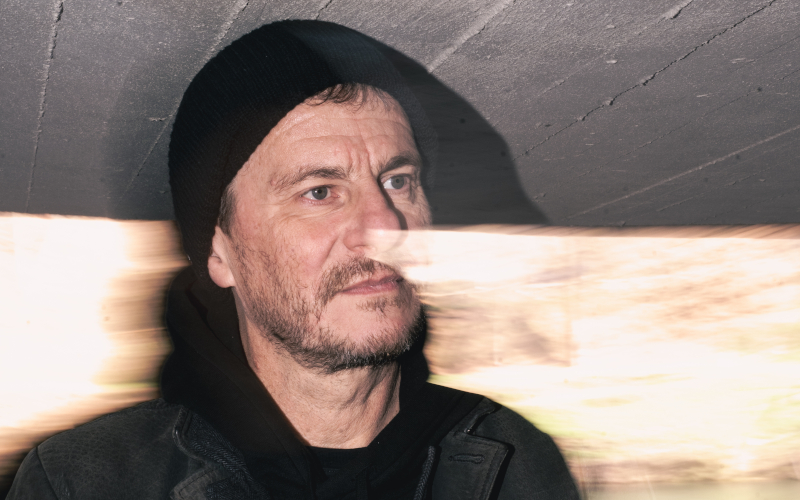
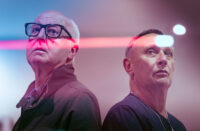
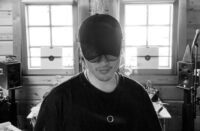
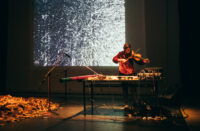
At the intersection of architecture and sound, Paolo Dellapiana explores how space, light, and material become instruments, composing experiences as meticulously as buildings themselves.
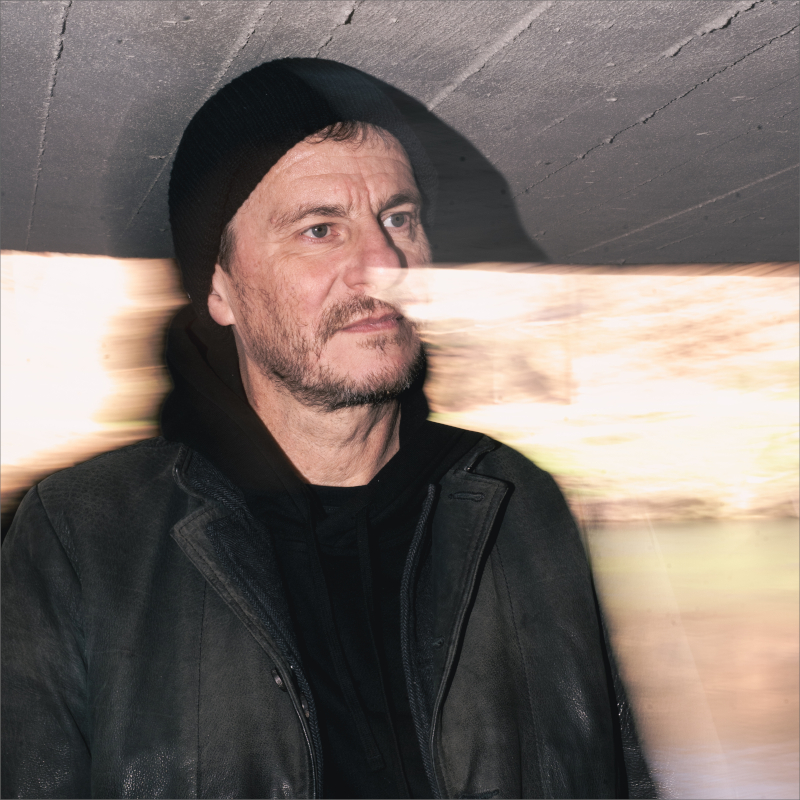
Architecture, sound, and human experience
There is an ancient kind of knowledge that dislikes separating the hands: the very care that measures a threshold also listens for a resonance. Paolo Dellapiana works precisely at that meeting point where space becomes phrasing and music turns into construction: the architect who thinks in proportions, weights, light, and duration; the musician who seeks rhythm, density, voids, frictions, and lets the unforeseen find its form. In this conversation, I try to follow him along a single continuous thread: designing as one composes, and composing as one inhabits.
Between the patience of architecture, which remains and demands responsibility, and the volatility of sound, which vanishes, yet can leave the deepest traces, Dellapiana describes a practice made of thresholds, pauses, and breathing materials. And in the background, his history with Larsen: a discipline all his own, closer to instinct than to protocol, where every cable, every knob, every beam of light is a moral choice before it is an aesthetic one.

Mirco Salvadori / Igloo :: When you design a building, at what point do you realize you’re already composing, not metaphorically, but as a real choice of rhythms, pauses, densities, thresholds?
Paolo Dellapiana :: Designing a building is astonishingly comparable to composing a piece of music. It starts with the “commission,” almost always present in architecture, and often present in music too (a soundtrack, for instance). Then comes the overall idea, dictated by first sensations, and finally the deepening phase, where rhythms take shape—both sonic and spatial—pauses made of silences and voids, densities of sounds, vibrations, sonic volumes or material volumes, tangible physical elements; thresholds of environmental change in architecture and emotional change in music. They truly are two crafts that feed each other in a marvelous way.
Architecture works with time differently than music: one is meant to last, the other to slowly vanish. Between these two natures, where do you feel more responsible: leaving traces, or leaving experiences?
Paolo Dellapiana :: Responsibility (you put it perfectly, this is exactly what it is) has equal weight in both. It’s true: architectural time is vastly dilated, and the physicality of a building carries a mass, literally, that looms and asserts itself undeniably. But, for example, a poor piece of music disappears quickly, yet it’s also a missed occasion, a betrayed opportunity, and therefore no less charged with responsibility. I always hope to leave, in architecture, traces that give rise to moving experiences, and in music, experiences so intense they leave a trace.
As an electronic researcher, what are your most reliable “data:” measurements and protocols, or the body (fatigue, breath, listening, reaction)? And how do you make them coexist without betraying either one?
Paolo Dellapiana :: The more years pass, the more I realize I rely, ever more convincedly, on instinct. Measurements and protocols increasingly slide into the background in favor of immediate sensation, inspiration, the body’s reaction, understood as a symbiosis with contingency. There’s always time and a way to fit things into protocols. Not that protocols aren’t helpful, on the contrary, they often get me out of a jam, helping me bring clarity to the instinctive mess.
How much of your electronic work is the construction of instruments (or systems), and how much is, instead, a work of subtraction: removing functions, removing automatisms, removing “conveniences” to reopen possibility?
Paolo Dellapiana :: Starting from the second idea: for years now I’ve used almost exclusively instruments that cannot store presets. Everything is entrusted to physical patch cables, knobs to turn, switches to move. Every convenience is excluded, and every time I put my hands on the system, infinite possibilities open up, and what already existed gets dismantled forever. Building my systems (not the instruments, i wouldn’t know how) is the widest horizon you can face (sometimes too wide). It’s all incredibly alluring, but I have to be careful not to get lost.
In architecture, light is material. In your performances, light also becomes a device, almost a partner. What truly interests you about light: its ability to orient, to control, or to reveal what was already there but we didn’t know how to see?
Paolo Dellapiana :: You’re right: in my performances, light is material and a partner to sound. Laser light, in particular, is truly substance, almost touchable. My laser performances of recent years draw and orient saturated surfaces in space, in a very “architectural” way. In 2026, instead, I’ll present a performance based on a single beam of light that will “try to reveal” something, or someone. It’s a surprise I’ll premiere for the first time in a few weeks here in Turin.
Sound, unlike drawing, doesn’t stay still: it invades, filters, pierces through. How do you relate to the idea of “limit,” foundational for an architect, when you work with a material that, by definition, escapes boundaries?
Paolo Dellapiana :: In my view, the more intense a drawing is, the less it stays still, and behind the drawing, in my case, a construction stands out dynamically. Likewise, a very defined sound establishes perceptual and emotional limits; it has its own narrative, an aspect i pay enormous attention to even during the most extreme improvisations. For me, sonic narration must be the “limit” imposed by a sound that is effectively composed and shaped. Naturally, narration is then subject to the listener’s free interpretation.
From timbral ideas to form ::
Mirco Salvadori / Igloo :: Have you ever designed a space thinking first about its “timbre” and only afterward about its form? If so, what concrete decisions came from that (materials, heights, voids, paths)?
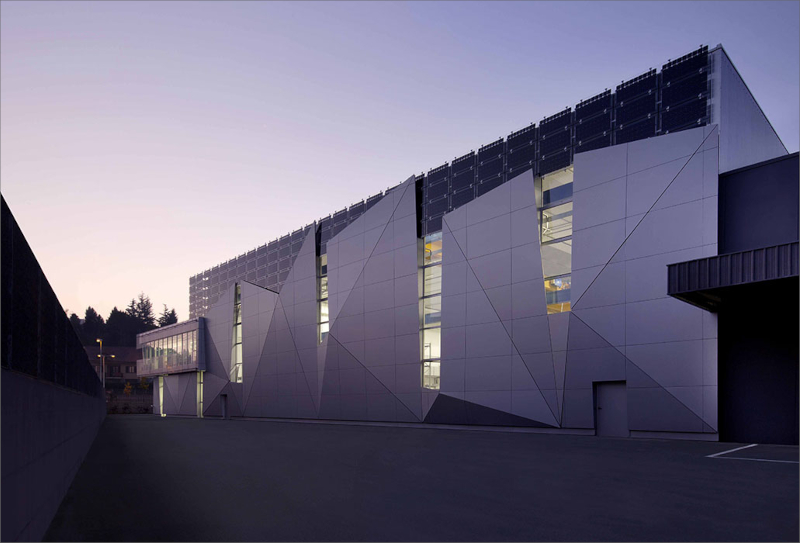
Paolo Dellapiana :: Absolutely. The initial concept of a design includes many elements, including the “timbre” of an idea. The choice of materials and spatial proportions is tightly connected to the timbre of an architectural project. Building materials have a huge impact on a place’s atmosphere, just as spatial proportions can profoundly mark the user’s perception of the space itself. Berlin’s Kraftwerk comes to mind, a striking example of how proportions and materials (in that case, the old structure of the power plant) overwhelm anyone who enters.
Your electronics often feel like an “operative architecture”: modules, connections, flow choices. What seduces you about modular systems: the possibility of control, or the possibility of losing control intelligently?
Paolo Dellapiana :: Modular systems are a bottomless well: you can get lost in an instant, for better or worse. I love extending the concept of modularity to an entire setup composition, whatever the nature of the instruments. As you know, the world of “magic little sound boxes” is my favorite, also when applied to electroacoustic instruments like accordion or bass. As for control: the more i feel i have it, the more I’m actually at the mercy of sonic events. It’s a beautifully drifting fate.
In your musical path, where does composition end and where does improvisation begin? And above all: what must be prepared in advance so that the unforeseen becomes truly fertile and not just an accident?
Paolo Dellapiana :: Preparing the setup is fundamental: choosing the little devices defines the “timbre” you mentioned earlier and is, in itself, true composition. Familiarity with their buttons, cables, selectors is the fertile ground for an improvisation that is felt, instinctive, passionate, and almost never accidental. “Accident,” of course, is always around the corner, and often it’s a positive surprise; in my opinion, the more positive it is, the less random it is, if you let yourself be carried, without reservation, by instinct.
In Impro Brain Sound Pod with the great Martina Bertoni, a performance i attended at the Teatrino of Palazzo Grassi, here in Venice, the idea of performance was also spatial (that “cone” that hosts and concentrates). When you stage such a clear device, are you seeking protection, discipline, or a way to let the intimacy of listening emerge in a public context?
Paolo Dellapiana :: Protection and discipline, no, neither is really mine. I’d say rather a shared intimacy; said like that it sounds like an oxymoron, but in reality it’s a performative intimacy directed toward the audience. Right at Palazzo Grassi (and it also happened in Turin, hosting Lori Goldston and Fabrizio Modonese Palumbo in the pod), the luminous bubble sometimes overflowed into the audience, inviting them to enter, participate.
In that same performance, processes tied to body/mind response come into play (neurofeedback, parameter control, etc.). What truly interests you there: the aesthetics of the result, or the ethical question of who “plays” whom?
Paolo Dellapiana :: The aesthetics of the result is the primary target, but I’d extend the concept of aesthetics to how it is obtained: through the use and interpretation of brainwaves captured by the neurofeedback headset i wear. Aesthetics understood as an artistic phenomenon expressed through the neurological electrical vibrations of whoever is performing.
Looking at your overall work, what is the “thesis” you’ve been carrying forward for years, the one that returns even when you change instruments, bands, contexts, and what is, instead, your private heresy, the thing you do against your own thesis?
Paolo Dellapiana :: The thesis is, without a doubt, to emit a continuous flow, twisted and intertwined, but still a flow that, starting from the artist, involves the listener and binds them in the ecstasy of performance. I imagine coils that surround, engage, wrap around, shake, cradle, sometimes crush (light, luminous surfaces, repeated drones, sonic blades).
Larsen is a name that evokes a physical phenomenon: feedback, return, uncontrolled resonance. How much does that metaphor resemble you today, and how much does it weigh, as a promise you must always keep?
Paolo Dellapiana :: It still resembles and represents us a great deal. I think it’s in our DNA, and it never weighs on us if anything, when we drift away, we feel uneasy and are immediately drawn back, like by an existential magnet. Droning sound remains our perversion, even if we’ve learned to fragment it and articulate it a lot while keeping its hypnotic nature. I have to confess: when we started following this instinct, we never imagined the term “drone” would come to mean anything other than a sonic bourdon. The fact that it now calls to mind autonomous flying machines with military purposes repels me.
After decades and many incarnations, what still makes a “Larsen” piece: a certain relationship between melody and noise, a studio ethic, a way of being on stage, or a specific idea of community?
Paolo Dellapiana :: All the concepts you listed, thank you for the impeccable reading! Even today, after almost 30 years, we cultivate that particular relationship between articulated melody and noise, and between static, hypnotic sound, matured through a very personal studio practice. Inevitably, with the passing of years, the way of being on stage has changed, as have each of us, but it’s part of a physiological maturation (read: aging). Even our idea of community (we were often reproached for playing more for ourselves than for the audience on stage) has evolved, yet it maintains remarkable cohesion despite all this time.
You’ve moved through ambient, dub, “lounge” forms, rockier moments, nearly chamber-like episodes. What protected you from the risk of mannerism, becoming a band that quotes itself?
Paolo Dellapiana :: Maybe our shared tendency to get bored easily with repetition pushes us to elaborate, interpret, reinvent, and therefore not be too self-referential, while still maintaining a marked identity. We often found ourselves commenting on new material by saying, “Beautiful, but too Larsen.” It’s a kind of protective, self-critical threshold.
Your collaborations aren’t simple features: they often feel like grafts that change the group’s physiology. What criterion helps you recognize a necessary encounter, as opposed to one that’s merely desirable?
Paolo Dellapiana :: Distinguishing the desirable from the necessary is a great challenge! Personally, if i did that when choosing instruments, I wouldn’t have so many apparently “useless” magic little boxes that later proved fantastic. Here too, instinct plays a decisive role. When, at the beginning, we wrote to Michael Gira, it was a kind of game/caprice driven by the immense fascination the Swans had for us. Was it necessary or desirable? I can’t answer, but the results were still audible just last night in the rehearsal room.
For you, has Turin been an identity or a logistical base? In other words: did the city give you a sound, or did it give you the conditions to find your own?
Paolo Dellapiana :: Both. I agree: more than giving us a sound, Turin pushed us to find one. Personally, as you may know, i travel a great deal, and the comparison between the Turin atmosphere (including the legacy of the magical ’80s we were lucky enough to live firsthand) and the places i frequent (Berlin and London first, Norway and Finland, Japan) has truly suggested a lot.
The arrival of Little Annie as vocalist and author shifted the center of gravity: what happens to a band historically “sonic” when words are no longer ornamental but structural?
Paolo Dellapiana :: Interesting, and not easy. Before Little Annie we made an album with Jarboe (ex-Swans) in 2006, so Annie wasn’t the first voice we faced. With Annie, though, we established a deep relationship not only professional but personal, and that influenced the sonic aesthetic result even more. I can say with certainty that we met each other halfway: the center of gravity moved on both sides, ours toward a more “song” format, and hers toward a more repeated, minimal lyric, with a structure closer to our drones than to her typically intricate, highly structured vocal weavings.
Composing space: sound shapes architecture ::
Mirco Salvadori / Igloo :: The more instrumental phase (and then the new openings) seems to say: “we can change skin without changing nerves.” For Larsen, what are the nerves: rhythm, texture, attitude, discipline, irony?
Paolo Dellapiana :: Without hesitation: the nerves are us, the drum section of Il Bue and his glockenspiel, Fabrizio’s guitar and viola, and my sound boxes with accordion and highly personalized effects. These elements, even in continuous evolution, are the physical structure. Through rhythm, texture, attitude, discipline, irony, we sew our skin, heavily tattooed and scraped, to keep the parallel alive.
The XXL project with Xiu Xiu is also a discourse on multiple identities: when you work in a “double” (a band inside the band), what do you learn about Larsen that you wouldn’t have understood staying only “Larsen”?
Paolo Dellapiana :: The XXL experience was illuminating for me. Working (especially) with Jamie means measuring yourself against his compositional “madness,” far more pronounced than ours. I’ve always had a personal inclination toward the kind of brilliant madness you can meet in life, and from Jamie i learned to abandon myself even more to pure instinct. It was a powerful push in that direction, and I’m extremely grateful. I’m also sure that both Fabrizio and Il Bue fully share this.
You’ve released on labels with strong mythologies and demanding audiences. How much did dialoguing with such highly connoted catalogs affect your freedom? Did they orient you, or make you more stubbornly independent?
Paolo Dellapiana :: As you know, our second album REVER was produced in the studio by Michael Gira and then released by Young God Records in 2002. After spending 10 days in a room with Uncle Michael, everything else is pure poolside relaxation. I say it with deep gratitude: Michael worked us over so hard he forced us to draw out all our freedom and independence (at the time, brilliantly guided by his charming yelling). After that fantastic experience, i don’t think a label’s catalog could even begin to orient us. Still, we’re very proud to be in excellent company, entirely independent.
In a group that lasts, time is also the management of friction: aesthetic, personal, organizational. What have you learned about “good” conflict, the kind that doesn’t break, but sharpens?
Paolo Dellapiana :: No doubt: the long management of a group includes everything, and let’s be honest, when personalities age, it rarely gets easier. Across the albums that followed one another, many aesthetic aspects of our production have been sharpened, and we’re fully satisfied with that. Conflict that only breaks (in the broadest sense of the word) and doesn’t sharpen, we’re no longer willing to tolerate it. Allow that to people on the threshold of 60!!
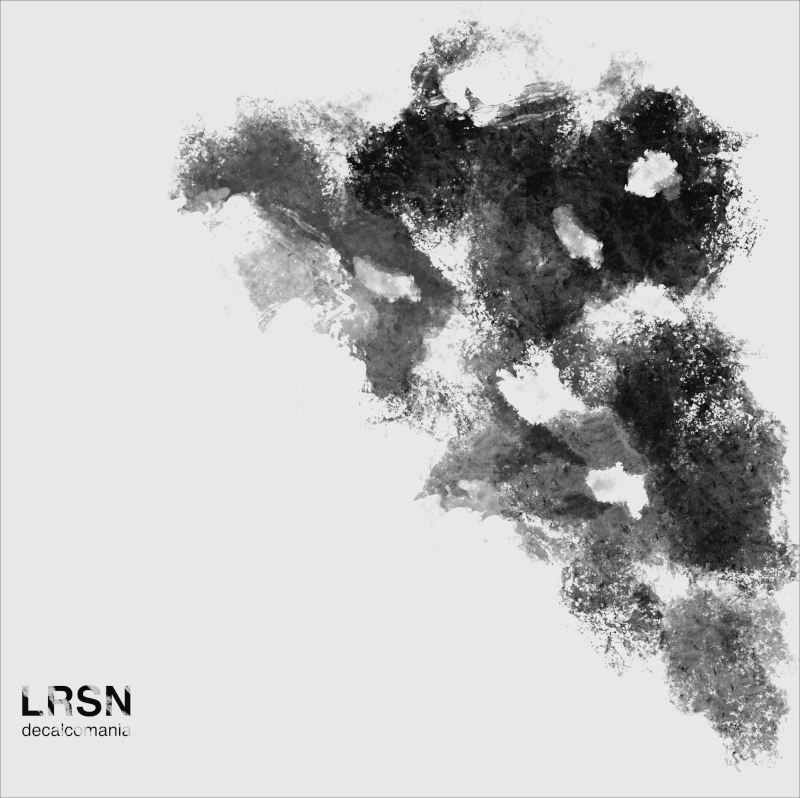
Decalcomania was born from a series of sketches later completed by William Basinski: what did you recognize in your materials when an external gaze organized them and made them definitive? Did it return a sharper image of yourselves, or force you to confront an unexpected distance from your own language?
Paolo Dellapiana :: It’s a long and interesting discussion, I’ll try to be as effective as possible in a synthesis. Billy’s return, at first, surprised us, with an apparent distance that felt fairly unexpected. But it was only a brief disorientation: in reality Billy did turn everything inside out, but above all he precisely enhanced many typical characteristics that, in our drafts, whether because of the raw nature of the material, or because of some of our own shortcomings, didn’t emerge particularly from the pool of stems we sent him. He didn’t mince words, and i deeply appreciate the work he did, violent and respectful at once. He shook us, bringing out the best, I’d say.
Basinski isn’t only a producer: he also plays sax in some places. What’s the difference between a producer who organizes and a producer who enters the sonic fabric as a physical presence? Where does the piece’s authority change?
Paolo Dellapiana :: In my opinion, the piece’s authority doesn’t change. The presence of his sax (i must say, much debated among us) is a further element of organization and direction; it doesn’t undermine the typical nature of our textures. It’s rather an “anomalous” but coherent interpretation. It was a completely unexpected surprise, but when you give someone carte blanche, it’s beautiful when they take it and make full use of it.
There’s a declaredly surprising aspect: you say certain solutions surprised even you. What was the most radical surprise: a change of language, a change of emotion, or a change in the perception of your historic “brand”?
Paolo Dellapiana :: As you noticed, the sax is the most unexpected element. It isn’t our favorite instrument, it had never appeared in our music, and it will surprise our audience. That said, i’m the first to love unexpected novelties that add a mark to our historic brand, always with respect. And in my view, that’s exactly the case with Billy’s sax.
The record brings in lounge, ambient, dub, electro, and “classic” Larsen vibrations, yet it aims at a coherent hypnosis. How do you build that hypnosis: through layering, repetition, subtraction, or micro-shifts almost imperceptible?
Paolo Dellapiana :: Hypnosis is perhaps the central theme of our history, and it’s always at the center of attention. Beyond the base of layering and repetition, i think adding more or less marked novelties is comparable to a gradual increase in hypnotic attraction. It’s like progressively increasing the electric current in a magnet, capturing more and more, and always through different mechanisms.
The Turin–Los Angeles–New York supply chain (recording, mix, mastering) feels almost like a narrative geometry of sound: what did shifting the technical center of gravity so far give you, concretely, and what remained irreducibly “Turinese”?
Paolo Dellapiana :: Now i’ll say something obvious: i think leaving home is always, in any case, good for anyone. I physiologically need continuous comparison with other realities, and i physically need to travel. Technically, even if age rusts me a bit, i keep absorbing everything i see, especially Billy’s work and that of his engineer Gary, and Plotkin’s mastering technique. I’m talking about technical action in service of an artistic result. Irreducibly Turinese, i don’t think there’s anything: in a triangle, each vertex exists in function of the other two, and their sum is always 180°. I like to think that in Los Angeles and New York our collaborators, too, absorbed something from Turin.
Exploring architecture through auditory perception ::
Mirco Salvadori / Igloo :: This is the first album on Erototox Decodings and, at the same time, the last with Roberto Maria Clemente in the historic line-up: what relationship is there between a label choice and a transformation of formation? Is it a change of house, or a change of skin?
Paolo Dellapiana :: No, there’s no link between the two changes. Also, through Erototox Decodings the DECALCOMANIA vinyl and the digital download are coming out. With Important Records we’re still on excellent terms, so much so that, as soon as possible, the CD might come out too, in the name of continuity. We can say we have two homes. The band line-up changed because the artistic (and human) collaboration no longer had reason to exist, and preserving the last quarter of one’s existence (assuming an average life of eighty-something years) seems to me a duty, for my part, and i wish it to all parties.
The tracklist reads like a small novel of mental states (“This Is Only A Test,” “The Distress Lounge,” “The Entanglement”…). When you title, are you describing what the music does, what the music suffers, or what the music hides?
Paolo Dellapiana :: In our history we’ve followed different concepts for titling tracks. On this album we synthesized not only what the music does, more or less evidently, but also the caverns of the collaborative path with Basinski, anything but linear. In other cases, like the XXL albums, we veered toward playful lexical happenstance.
If Paolo Dellapiana, as an architect, had to imagine an organism of welcome and sharing built first and foremost with sound, not as atmosphere, but as a structure that holds and distributes relationships, what rules of access, what thresholds, what acoustic materials, what zones of silence, and what “rights of listening” would you design so that the place remained human, and not merely efficient?
Paolo Dellapiana :: A beautiful theme to think about! I’d avoid precise rules, because, as i mentioned, discipline isn’t exactly my world. No closures and no constraints. I like to hope for getting lost, both in the wall of sound and in the subtlest vibration, reacting with conviction to stimuli that are also physical (i adore low frequencies, the ones that knot you up inside). And then let’s talk about it gladly, without treating each other badly, though. These days “not treating each other badly” seems almost superhuman and not very efficient, but I’m not giving up.
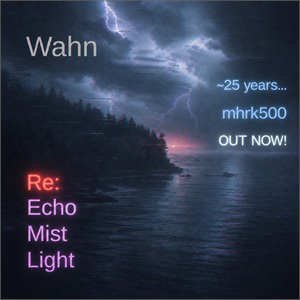
Decalcomania is available on Erototox Decodings. [Bandcamp]