


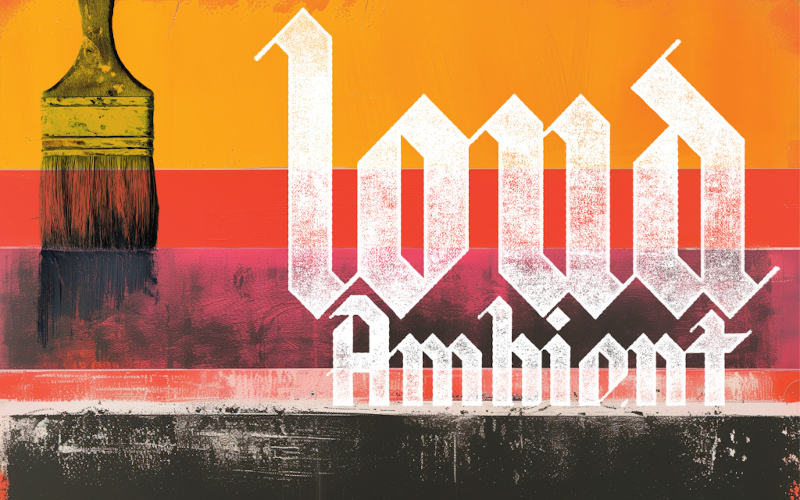
The Black Dog’s Loud Ambient channels the raw, methodical energy of ’90s British electronica, translating Sheffield’s margins—abandoned factories, council estates, and urban rhythms—into music that moves both mind and body. With a renewed love for classic drum machines and a disciplined architecture of arpeggio and bass, the album fuses ambient immersion with dancefloor rigor, proving that old-school craft can still feel urgent and alive.
Old school not as a pose, but as muscle memory
In The Black Dog’s vocabulary the phrase smells of the workshop: ’90s Warp, an architecture of beats built for head and feet, a lineage that lines up Bytes, Spanners, Parallel and reiterates how British electronica learned early to speak in its own voice, between bleep and abstraction, without asking anyone’s permission.
Old school means staying faithful to the method, not the museum. Sheffield has a moral latitude more than a point on the map. Here the periphery isn’t a backdrop; it’s raw material: shuttered factories, council estates, buses cutting through suspended neighborhoods. The Black Dog have always listened to these margins, daily surveillance, political disenchantment, and translated them into music, holding together rhythmic discipline with a gaze that won’t settle. Not agitprop, rather the watchful conscience of those who know where they come from.
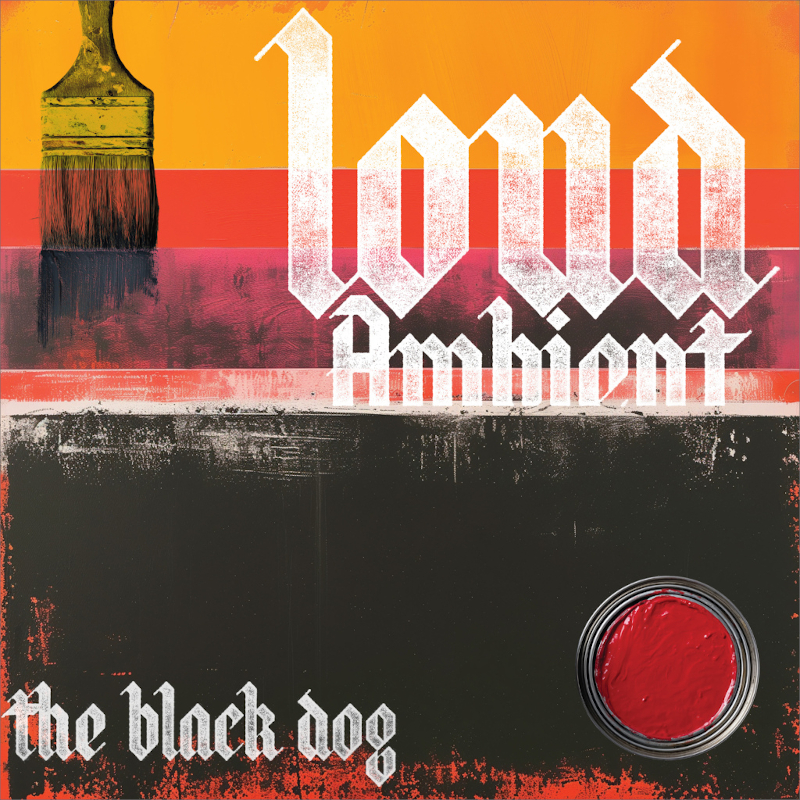
Loud Ambient arrives November 21st on Dust Science and carries a title that short-circuits expectations: “ambient” spoken out loud, without velvet, with an explicit intention to return to the dance floor. The stated fuse is immersion in Rothko’s color fields: surface, blend, scale. From there, a sequence of tracks that stand on their own yet speak the same language, like canvases sharing a room.
The trio admit they’ve fallen back in love with the 909, 808, and 707: old tools, yes, but polished here for the present. The sound breathes through broad harmonic chambers; its rhythmic architecture speaks to the body more than to language. Arpeggios, clean, set like inlays, at times almost granitic, form the framework; the bassline bears the load, elastic and straight, with that UK cadence that can lean dubbwise without slipping into haze. Patterns lock like beams while the reverbs open the space. It’s music that occupies the room and sets it in motion, without overloading.
“They Came For My Head” opens, and it’s a manifesto: dry percussion, synthetic currents under pressure, an arpeggio that tightens the weave and then lets it go, while the bass underlines the step. Later “Working Class Sabbath” does exactly what the title promises: a secular ode to the day of rest at the end of a real week, between rust and neon; the groove is square, the melody descends by steps, the sub pulses like an old community-hall woofer. “Checking, Counting & Repeating” returns to discipline, a cerebral march that invites the body to keep time. “Rumination Romance” opens to feeling without losing rigor. It closes with “Pamphlet,” a title with the air of a flyer from another era, as if to remind us that every dancefloor is also a temporary assembly.
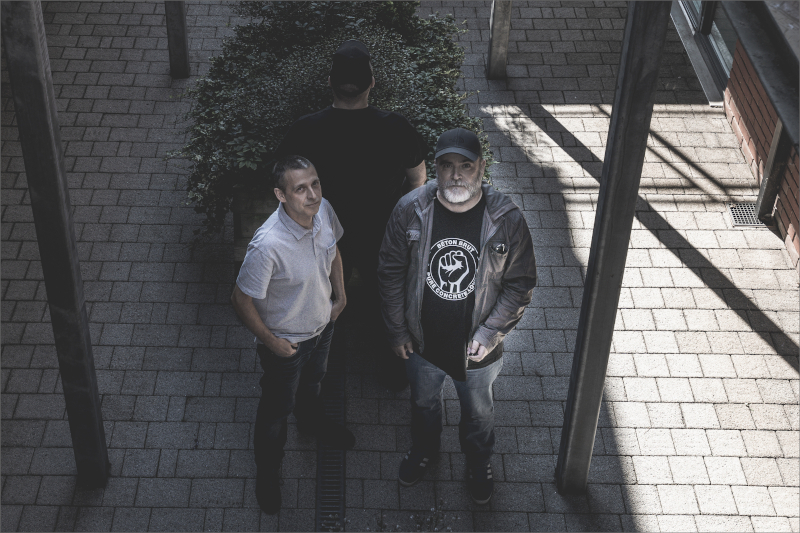
The Black Dog shapes rhythmic modernity ::
There’s a thread back to the years when these sounds were first heard: club rooms in semi-darkness, speakers perched on improbable stands, the shock of discovering the machine can be more human than the human when it finds the right tempo. Loud Ambient recovers that rigor with the maturity of those who know how to subtract. It speaks a classic grammar: kick, kick, kick; a slicing snare; hi-hats drawn taut like wire, yet bends it toward a present of wide colors and details that stick.
No nostalgia, plenty of gratitude. Old school here is an ethic of making: choose a few elements, make them sound right, leave air between the notes. Arpeggios become handrails; the bassline, the flooring you stand on. And when the structure opens, it isn’t sugar that comes in, it’s light. A return to the floor with sleeves rolled up, no special effects, with the faith that the Architecture of Rhythm still suffices.
Read the titles and you’ll catch another Black Dog constant: social reality as compass. Loud Ambient doesn’t shout slogans; it stands with those at the margins, those who keep tally, keep watch, and start again to make the day add up. The music centers the body yet keeps the mind lit: that’s where arpeggio and bass stop being ornament and become structured, where you dance to remember, not to forget.
In an age of endlessly scrolling playlists, an album with a spine this tight feels almost like an act of resistance. A considered sequence, faith in the long form, timbral coherence that doesn’t rhyme with monotony. Loud Ambient is a full room that stays ventilated, a return that uses the memory of the past to sharpen the present. And if Old School means fidelity to a certain way of building, then yes: school’s still in session, and the bell rings in four-four.
November is here. The speakers are there; so is the floor. The rest, as ever, is decided by the step.
Loud Ambient is available on Dust Science November 21, 2025. [Bandcamp]




![[2View] Nekomachi/no wonder • なるほど & tsubai/ilulissat (Perceptual Tapes)](https://igloomag.com/wp/wp-content/uploads/2026/10/nekomachi-no-wonder-tsubai-ilulissat-tapes_feat-75x75.jpg)