




Beyond Fine Lines belongs to that line of works that ask for trust. It should be received in half light, at the right volume, allowing the frequencies to work upon the body. Its intensity grows through sedimentation. Each listening opens new folds: a frequency that first escaped notice, a held breath, a sudden accent, a harmonic current crossing the sound field like an omen.
An electric vault, subtle, almost lunar
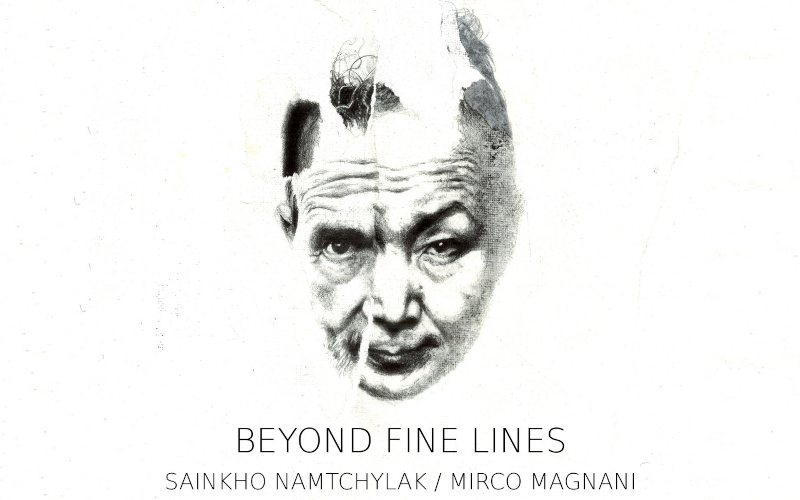
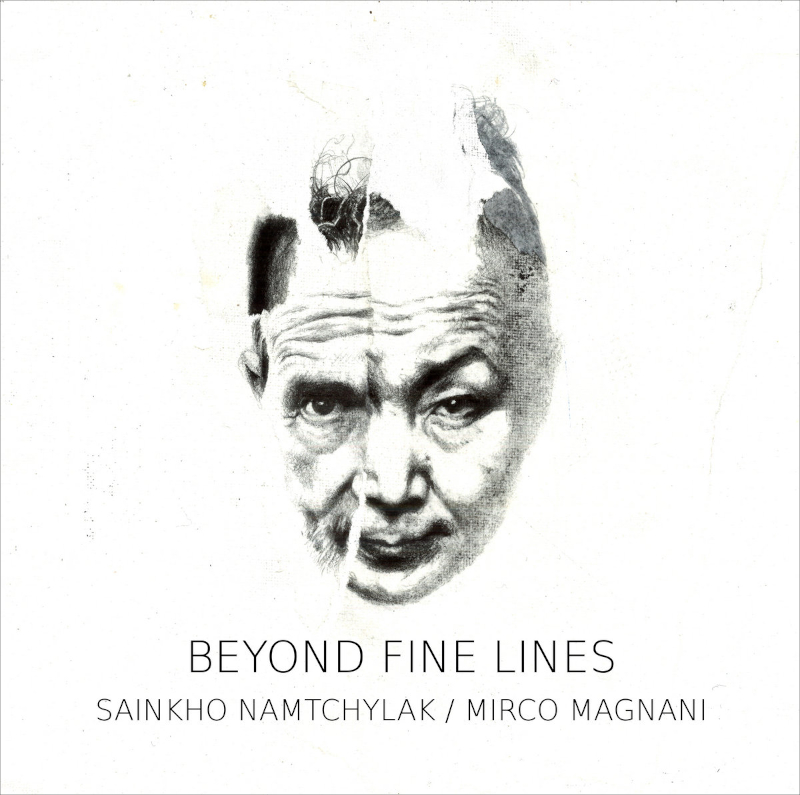
With Beyond Fine Lines, Sainkho Namtchylak and Mirco Magnani trace a vertical movement, an assured act of listening, one that seems to rise from the dark depth of the voice before opening into an electric vault, subtle, almost lunar. The cover already suggests the method: a face surfacing through subtraction, white matter, graphite, erasures, a presence that appears at the very moment it gives itself over to emptiness. Something similar happens within the record. Sainkho’s voice arrives from an inner geography that knows snow, desert, drum, breath, discipline, ecstasy. Around it, Magnani builds a mobile body of sound, made of low currents, electronic filaments, distant tolling, sudden luminous openings, tiny digital residues shining like metallic dust on the skin of silence.
The meeting point between the two possesses a rare quality, because it is born from a relationship between fully formed temperaments. Sainkho brings with her Tuvan overtone singing, Siberian shamanic wisdom, free jazz, oral poetry, nomadic memory, that ability to turn the mouth into bow, stone, animal, blade of air, consoling mother, warning seer. Magnani summons his long practice as composer and producer, a vision shaped through Minox, sound theatre, electronics, visual arts, conceptual works and that idea of independence which, in Berlin, has found workshop, method, listening. Beyond Fine Lines lives precisely within this double fidelity: on one side, the primal body of the voice; on the other, an acoustic environment patiently chiseled, able to receive every mutation and let it flow.
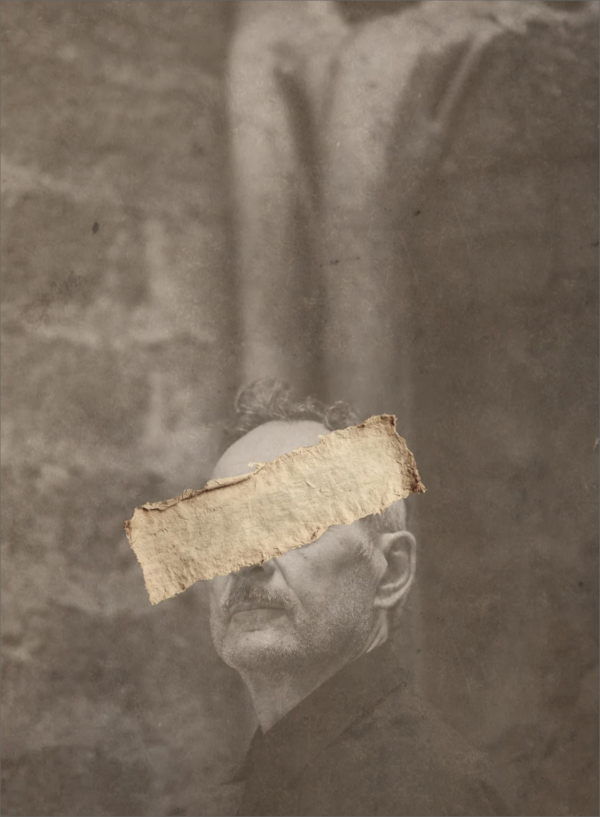
Searching within vibration for a physical truth ::
The album breathes like a nocturnal organism. It advances through pulsations, veils, frictions, glimmers. The music avoids decorative effect and seeks a moral temperature. The low sounds seem to come from a psychic underground, the synthetic textures stretch and withdraw, the word emerges at times like a fragment of diary rescued from the wind. Sainkho crosses these landscapes with a freedom that carries the rigor of daily practice. Her register can become childlike, feral, guttural, lunar, or take on the gait of a narrator who has seen empires, migrations, wars, loves and seasons pass before her. Every utterance bears the mark of an entire life spent questioning the limit of song, searching within vibration for a physical truth before an aesthetic one.
Magnani works with striking finesse. His sound architectures have grain and breath, a gathered density, an almost artisanal care for detail. Every noise, every echo, every blade of frequency contributes to an underwater dramaturgy and finds its precise function. Electronics become sensitive matter, thought, tactile environment, mental landscape. At times it feels like a city seen from afar after the rain, at others like a laboratory lit in the night, or an empty theatre where the cords of the spotlights still vibrate. The production gives depth to the voice and also challenges it, offering dark surfaces, oblique trajectories, backdrops where breath gains weight and silence becomes figure.
The poetic core of the record turns around hope, war, love, death, rebirth, wounded beauty, the slow step of consciousness. These are large, risky words, handled with nakedness, given to the music like warm stones. Sainkho sings and speaks with the force of someone who considers the voice a responsibility. Her language moves between English, Russian, phonemes, pure emissions, resonances of chest and skull. In certain passages the syllable becomes a private rite, in others a blade of light cutting through the mass of shadow. Meaning arrives even when significance blurs, because the record communicates through fibre, air, vibration, tremor. The voice thinks, the sound listens, time slows down.
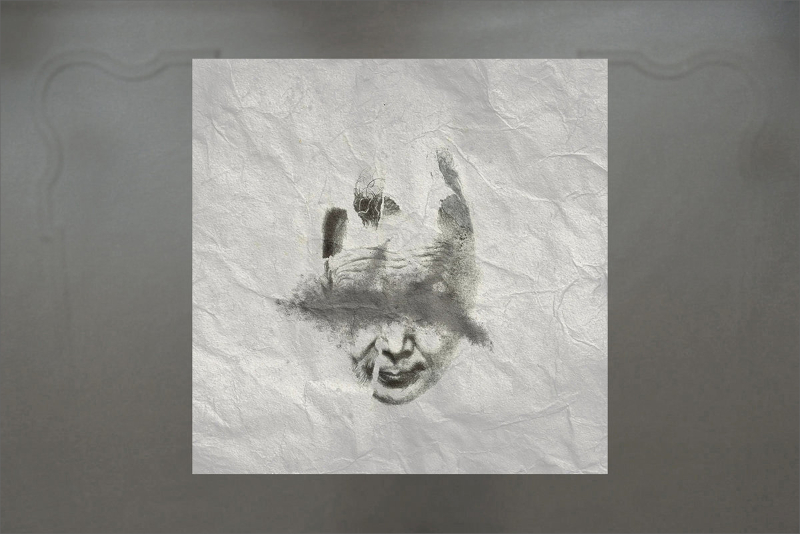
Seeking in breath what global noise consumes ::
Its composure is equally striking. Even while touching extreme themes, Beyond Fine Lines preserves a severe, almost classical discipline in the way it arranges fullness and emptiness, surges and returns, word and pure vocality. Magnani knows how to await Sainkho’s gesture; Sainkho knows how to push the composition toward unexpected zones. The result carries a rough, dry beauty, crossed by an austere tenderness. It is a record that looks at our time and moves through it with a lateral step, seeking in breath what global noise consumes. Its force comes from the choice to trust the smallest detail, the long vibration, the sound that ripens slowly like an ember.
In the end, what lingers is the impression of a necessary work, capable of joining two creative solitudes into one plural voice. Sainkho’s visionary Siberia and Magnani’s alchemical Berlin find an accord that belongs to the present and at the same time preserves a distant memory. Beyond Fine Lines speaks of fragility and tenacity, exposed bodies, red leaves, autumnal light, lives changing form. Above all, it speaks of singing as the last human pact, of sound as an act of care, of listening as a form of resistance. An intense, profound album, engraved into the subtle matter of breath, where every vibration seems to say that beauty, when guarded with courage, still knows how to open the future.
Beyond Fine Lines belongs to that line of works that ask for trust. It should be received in half light, at the right volume, allowing the frequencies to work upon the body. Its intensity grows through sedimentation. Each listening opens new folds: a frequency that first escaped notice, a held breath, a sudden accent, a harmonic current crossing the sound field like an omen. Beyond the rhetoric of easy contamination, the work finds a form of deep alliance. Tuvan tradition becomes living energy, electronic research becomes future memory, singing becomes an instrument of knowledge, the record becomes a passage between matter and spirit, wakefulness and dream, fear and desire for light.
Beyond Fine Lines is available on Undogmatisch / Fluid Audio. [Bandcamp]








![[2View] Maps and Diagrams’ beneath still stars (handstitched*) & returning light (Home Normal)](https://igloomag.com/wp/wp-content/uploads/2026/10/maps-and-diagrams-returning-light-beneath-still-stars_feat-75x75.jpg)