


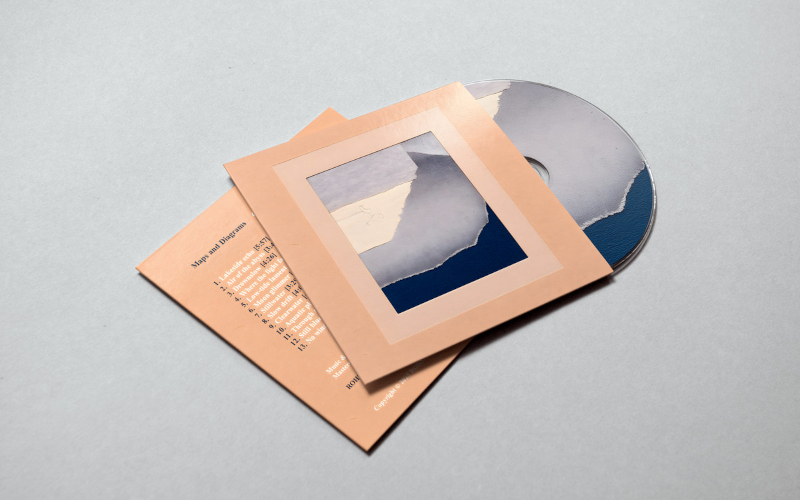



With Clearwater, Maps and Diagrams (Tim Martin) crafts a hypnotic meditation on erosion, decay, and the quiet instability of sound. Blurring the line between ambient composition and sonic disintegration, the album drifts through fractured loops and dissolving textures, revealing beauty in impermanence and space.
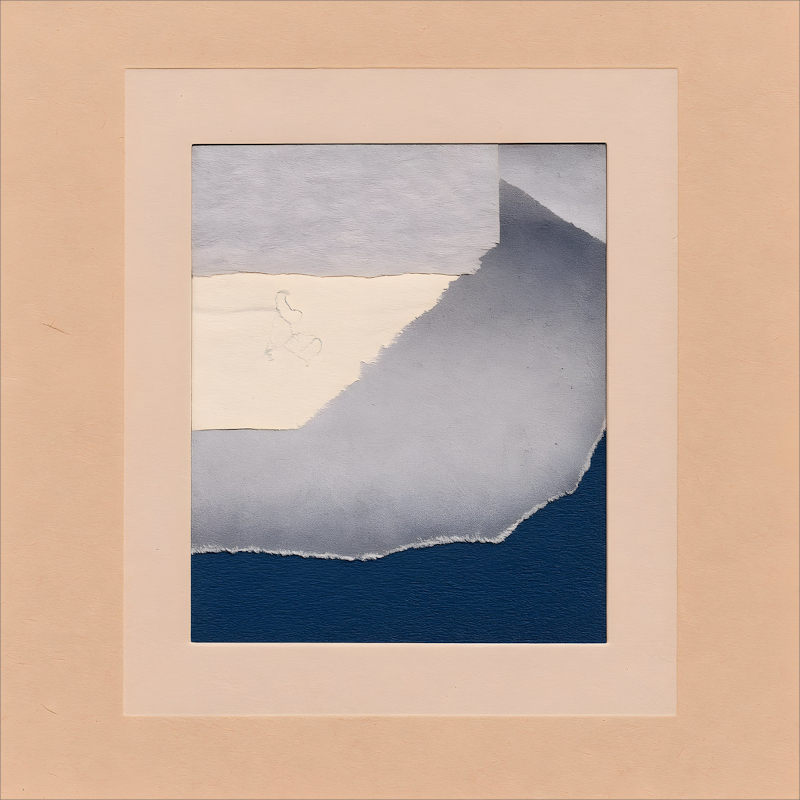
Soundscapes shaped by gentle decay
With Clearwater, Maps and Diagrams (Tim Martin) delivers an engrossing study in erosion, loop, and decay. Far from a conventional ambient record, this latest work embraces fragmentation and instability—channeling minimal composition and sonic collage into something remarkably alive. Across its dozen-plus tracks, Clearwater is less about structure than about the spaces between, the slow sliding of textures and motifs as they fade, reemerge, and morph.
From the opening “Lakeside Echo” onward, you sense an artist deliberately questioning melody itself. Fragments surface, fleeting tonal gestures, shimmering clouds of white noise, processed hums and then dissolve into abstraction. This unfolds in your ears; Clearwater demands you lean in, to catch passing glimmers. The album’s loop-based logic ensures that repetition is never static: every cycle shifts subtly in timbre, pitch, or context. The feeling is one of gradual mutation, as sounds corrode internally, revealing hidden detail.
Some moments feel almost tectonic in their slow unfolding. On “Air of the Abyss” and “Where Light Falls,” micro-variations accumulate until what began as a simple pattern becomes an entirely different landscape. There’s a deep sense of weight and inertia, yet also motion; like watching sediment settle, layer by layer, under shifting currents. In “Low-Tide Lament,” a plaintive line hovers amid crackling textures, pulling toward melody without ever fully arriving. The title track “Clearwater” brings both openness and tension: the sonic canvas widens, yet the internal logic remains taut, balancing clarity with veiled complexity.
Echoes fade into resonant stillness ::

The fractured nature of Clearwater represents a conscious distancing from earlier Maps and Diagrams releases: here, melodic structures aren’t polished or complete, but eroded, collapsed, reconstructed. As the Rohs! Record’s press notes suggest, Clearwater is “fractured … with a conscious emphasis on eroded melodic structures.” Yet that fracture is precisely its strength. The album’s field of sound becomes a terrain in flux, alive and porous.
Production and mastering are superbly judged. Andrea Porcu’s work allows the delicate textures to breathe: quiet elements emerge with intimacy, louder passages never lose clarity. The spatial dimension feels real; some textures feel pinned close, others float in depth, giving the impression of a carefully layered sonic architecture. The choice to use minimal formal composition allows chance and micro-variation to dominate, and those decisions pay off. The album never becomes slick or overdetermined; instead it remains fragile and slightly fissured, an album you return to and discover new slivers of sound with every listen.
Historically, Maps and Diagrams has been prolific—over 45 releases across solo and collaborative projects since 2001, and appearances on many respected labels. That versatility and history gives Clearwater weight: this is an artist who knows form, who has worked across ambient, electro-acoustic and drone realms, now deliberately dismantling his own norms. In that sense, Clearwater feels both a continuation and a rupture.
Clearwater is a voyage in negative space—a shifting sonic terrain that rewards patient attention. For listeners drawn to abstract ambient music that fractures, breathes, corrodes, and surprises, this work stands as a resonant triumph.
Clearwater is available on ROHS!. [Bandcamp]






![[2View] Ma Haiping/Velocity Unlocked & Various/Structure Series 3 (Molecular)](https://igloomag.com/wp/wp-content/uploads/2026/10/structure-series-3-feat-75x75.jpg)


![[2View] Nekomachi/no wonder • なるほど & tsubai/ilulissat (Perceptual Tapes)](https://igloomag.com/wp/wp-content/uploads/2026/10/nekomachi-no-wonder-tsubai-ilulissat-tapes_feat-75x75.jpg)