


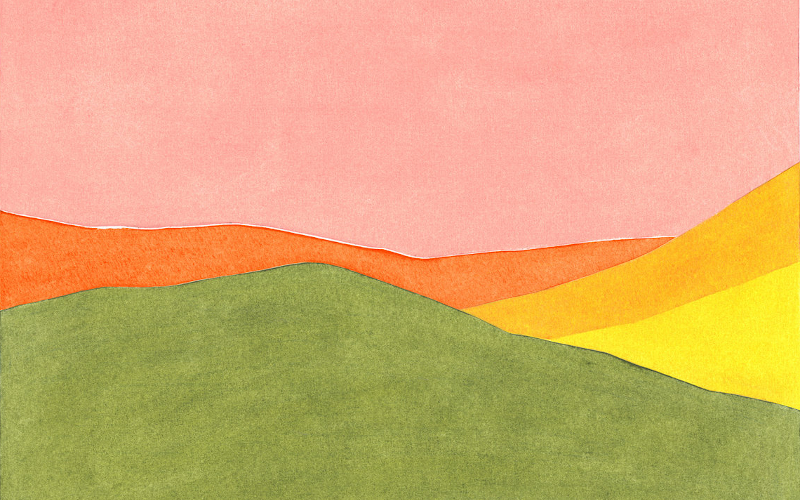
Once Was Ours Forever is an album that asks for nothing but offers so much. It’s a buen retiro built from the light of things once held. Nash doesn’t aim for effect, he moves toward the truth of small gestures.
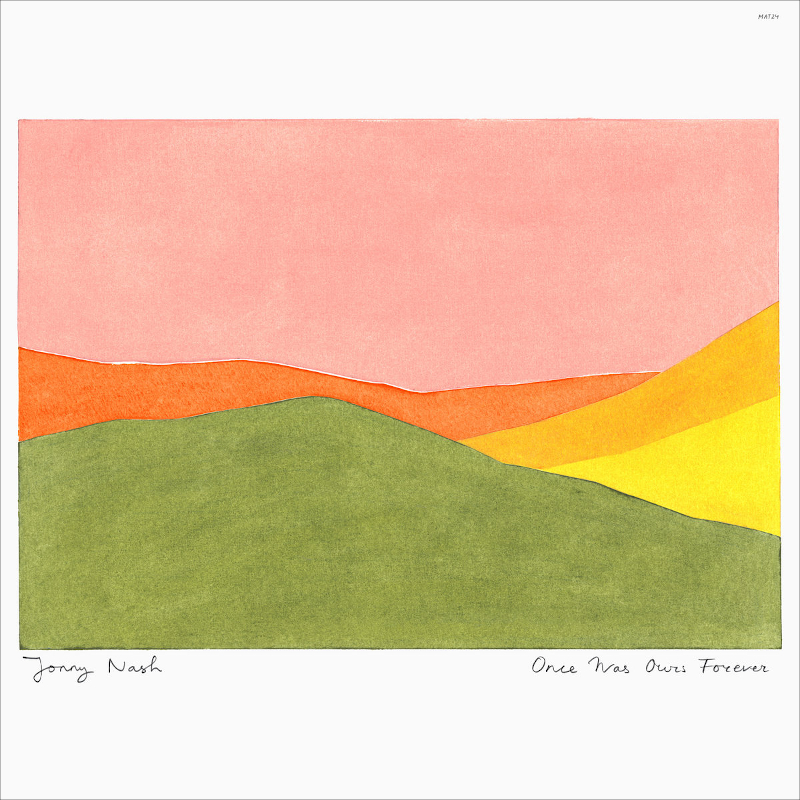
A necessary album. A refuge. A quiet act of love.
My earliest memory of Jonny Nash dates back to the 2017 Venice Art Biennale, where the French Pavilion was transformed by artist Xavier Veilhan into an extraordinary recording studio called Studio Venezia. It was an immersive installation conceived to host live performances by a rotating cast of musicians, enveloped in acoustically perfect architecture designed specifically for the space. The constant flow of curious visitors and the unpredictability of these improvised sessions made for a singular sonic atmosphere.
Nash immediately stood out to me, not as a figure embedded in the ambient-electroacoustic tradition that dominates much of the genre, but as someone orbiting quietly beyond it. His sound spoke in a different language: low-definition landscapes painted in warm hues, where filtered light trickled through strings and E-Bow, each note breathing slowly, with compassion.
That moment eventually gave birth to Postcards From Nowhere, released on Nash’s own label, Melody As Truth, and featuring Gigi Masin on piano. A deeply evocative work, yet it felt more like the beginning of a larger journey, a slightly ajar doorway to a sonic elsewhere that Nash would go on to explore patiently and with remarkable consistency.
Luminous, aching complexity ::
That “elsewhere” takes full form in Once Was Ours Forever, a record that reveals itself in all its luminous, aching complexity. Arguably the most mature and cohesive entry in Nash’s discography, the album feels like a gentle invitation to return to lost places. There’s a diffuse memory running through these compositions, a nostalgia stripped of melancholy. The title itself speaks of a once-shared moment now beyond reach—but there is no lament here, only quiet beauty.
The opening track, “Blue Dragonfly,” instantly sets this suspended state in motion: a fragile fragment, barely breathed into existence, like the flutter of wings in the air. Nash works with transparency, negative space, and stillness. Each note feels like a touch that vanishes before it can be held. “Dusk Can Dance” guides us into the slanted light of twilight, where Shoei Ikeda’s saxophone weaves through the slow, deliberate guitar like a blurred dance with no defined shape. It’s in this piece that Nash subtly introduces ambient jazz influences not as quotations, but as suggestions. His references are never overt; they linger like traces in a dream.

A hypnotic spiral ::
“Bright Belief” carries echoes of an imagined America, refracted through distance and contemplation. An electric pastoral floating on a bed of arpeggios and delay weightless, yet grounded. Then comes “Walk The Eighth Path,” the most enigmatic moment on the album: a hypnotic spiral, a meditative journey that invites repeated listening.
The album’s emotional core beats strongly in “Rain Song,” featuring the whispery, spectral vocals of Satomimagae. Here, rain becomes a living presence, a sonic body that grazes the listener without ever truly soaking in. This is Nash at his most elusive, where the unsaid carries more weight than words, and composition borders on apparition. “Angel,” with its measured spirituality, continues this dialogue between the sacred and the everyday. Nash achieves something rare here: contemplative music that avoids sentimentality. Instead, what he offers is lucid, intentional, and resonant.
The final triptych: “The Way Things Looked,” “Close To The Source,” and “Holy Moment,” finds his guitar layering into near-shoegaze textures, never noisy or overwhelming, but dense with emotion. Each melody becomes a trail, each pause an invitation to slow down and look more closely. And when the album closes with “Green Lane,” just over two minutes long, it feels like emerging into a quiet clearing at the end of a long walk: not an epilogue, but a gentle return to essence.
Once Was Ours Forever is an album that asks for nothing but offers so much. It’s a buen retiro built from the light of things once held. Nash doesn’t aim for effect, he moves toward the truth of small gestures. With this work, he reminds us that music can still be inhabited as an interior space, a truce, a memory that doesn’t demand relieving but simply to be welcomed.
A necessary album. A refuge. A quiet act of love.
Once Was Ours Forever is available on Melody As Truth. [Bandcamp]