




Sacred Drift is an enjoyable listen, and the clicks, reminiscent of the click-hop movement that emerged in the early 2000s from artists like Microstoria, Pimmon, and early Matmos, bring back those familiar click sounds that add curiosity to glitch textures of an ambient piece.
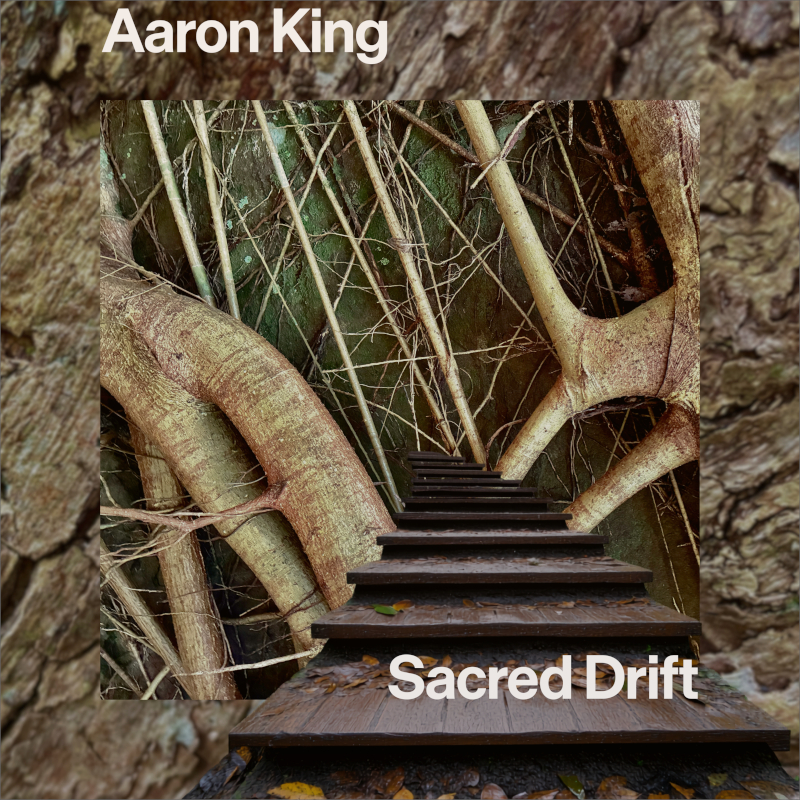
Scratchy percussion, clicks, cuts, and glitch textures woven quietly throughout
Aaron King—formerly known as Anodyne Industries, had been making electronic music privately since 1996, but began releasing publicly under the Anodyne Industries moniker in 2010 with The Gateway EP on IDMf Netlabel, spending years crafting deep, bass-heavy IDM, drum and bass, and dubstep out of Oakland, California before eventually finding his way into more ambient and experimental territory. His early work on IDMf Netlabel built a reputation for technical, bass-driven productions with a cerebral edge. With Sacred Drift, released on Glitchpulse Records, this is King operating in a quieter, more textural space.
Sacred Drift is exactly what the title suggests—ten tracks of ambient drift held together by scratchy percussion, clicks, cuts, and glitch textures woven quietly throughout. Think early Mille Plateaux releases, the kind of output that defined the German label’s approach to microsound and glitch in the late 90s and early 2000s, where artists like Vladislav Delay, Oval, and Alva Noto were dissolving rhythm into texture and letting silence carry as much weight as sound. King works in that same tradition here. Each one of these tracks flows within each other’s sound design aesthetic, it just works, and King keeps it that way purposely to have a cohesive flow throughout.
Lo-fi ring modulations passing through deep basslines ::
There really isn’t a method here of impression in the way some ambient records try to pull in the listener. These are crafted very lovingly instead. A standout track for me was “The Fire,” the sound design literally uses basses and sub bass patterns along with delayed filters and lo-fi ring modulations passing through deep basslines that go forward and backwards. What it creates sounds like a simulation of fire starting. It’s actually fascinating because you can hear it and it paints a picture. The entire track tells a story, and fused field recordings in the back add character not only to this track but to others as well. “Birth,” the track that follows, is also another interesting one as it builds, the sequencing of these two tracks together feels intentional, a narrative arc embedded in the sequencing.
King doesn’t find a way to be different or surprise the listener. He keeps them engaged with the clicks and cuts instead. The record is never predictable with its ambient textures, keeping the listener in suspense and curious while maintaining the same glitches and tones for percussion throughout. “Next” follows and ties into the others as if they are one, using the same sounds but different stop techniques, giving the listener space to experience the ambience and atmosphere alongside the glitch stops happening in between. What this technique does is create a breathing quality to the record, a push and pull between sound and silence that keeps the listener anchored without ever settling into a groove.
You’re not going to hear many steady rhythms here. Sacred Drift is intended to be a more freeform listen, take it as is. For those more accustomed to rhythm being introduced in this type of style, this will be an adjustment. But it’s an enjoyable listen, and the clicks, reminiscent of the click-hop movement that emerged in the early 2000s from artists like Microstoria, Pimmon, and early Matmos, bring back those familiar click sounds that add curiosity to glitch textures of an ambient piece. Sacred Drift doesn’t announce itself loudly. It just settles in and stays there.
Sacred Drift is available on Glitchpulse. [Bandcamp]