


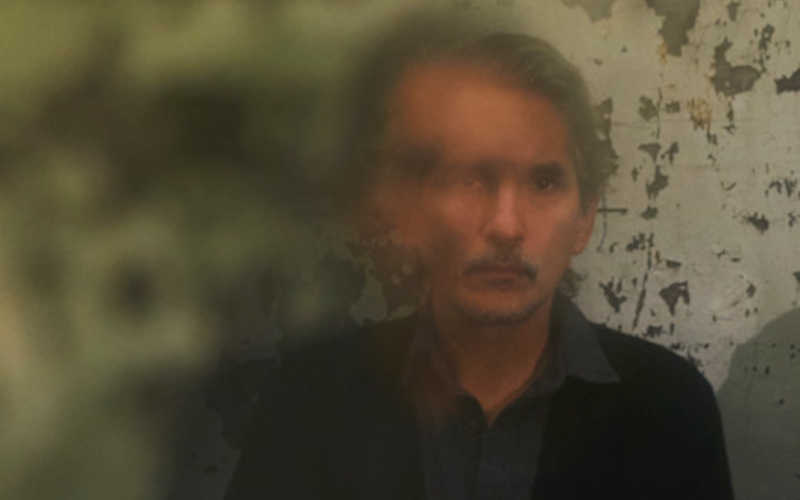



Abul Mogard charts a deeply personal and evolving sonic journey with the launch of his label Soft Echoes and new album Quiet Pieces. In this interview, he reflects on his creative process, from analog roots to a sound that seeks transcendence through texture and time.
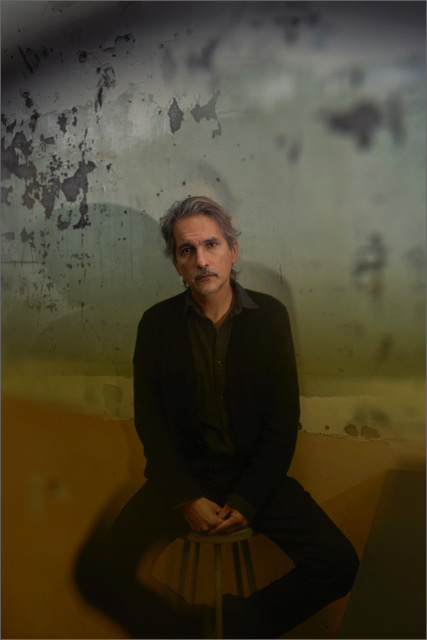
A singular path through sound, emotion, and memory
In an era where ambient music often treads familiar ground, Abul Mogard continues to carve a singular path through sound, emotion, and memory. With the launch of his new label, Soft Echoes, and the release of Quiet Pieces, Mogard invites us deeper into a world shaped by introspection, analog textures, and slow-burning resonance. In this rare interview with Mirco Salvadori for Igloo, the elusive composer reflects on the motivations behind starting his own imprint, the evolution of his sonic language since his earliest DIY recordings, and the deeply personal processes—both technical and emotional—that culminate in his latest work. What emerges is a portrait of an artist quietly but insistently seeking transcendence through tone, time, and texture.
Mirco Salvadori / Igloo :: Soft Echoes is the name of your new record label, launched with an album that quite literally vibrates with the tremor of a recurring echo. Where does the need to have your own label come from?
Abul Mogard :: It’s something I’d been thinking about for a while. I wanted a way to release my own music while retaining all the rights, and release it when it felt right.
Igloo :: Your 2012 self-titled CD-R, made with just a Farfisa, a Moog, and samples, first introduced me to your sound. Now, surrounded by majestic drones, I wonder: what powerful energy has driven your evolution over these thirteen years, from that modest start to such grand sonic heights?
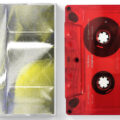
Abul :: I’m glad you still remember that first release. That album actually came out first on cassette via the VCO Recordings label. Then, following an idea by Marja de Sanctis, we made that limited edition CD-R at home, burned on my computer, with a plexiglass cover and a DIY wooden frame.
Igloo :: The music on it was indeed more minimal than what I’ve been making recently. It came out of a time spent in the studio using music as a kind of therapy during a difficult period. Some tracks started as solo improvised recordings, others were based on older unused sketches I processed through machines I had either built or recently acquired.
Abul :: Over the years, I think the music has become more complex. I began using modular synthesizers more extensively and exploring deeper treatments. The sound has become what it is now through continuous development and work.
The energy has mostly come from those who’ve supported the work over time. Without them, I’m not sure i would have continued along this path, to be honest. The sound itself comes from a practice of ongoing experimentation, being curious with new tools and materials, and being influenced by music i didn’t know before. It’s a process that hasn’t stopped.
“Memory, time, the tension between stillness and friction. The process felt more like discovery rather than deliberate construction, and perhaps that is where the sense of ascent comes from.” ~Abul Mogard
Igloo :: I’ve been immersed in Quiet Pieces for some time now, and it’s hard to remain objective—its sound blurs vision and dream, drawing the listener into a deeply personal journey. Where have you taken us this time, and what is the soul of this album that resonates so profoundly with those who wander through its vibrations?
Abul :: Thank you for the beautiful description of your feelings while listening to the record. As with all the previous albums, there was no defined plan. It took shape gradually, simply by working on it, smoothing and refining little by little, like sculpting something out of stone.
This album is made of both new and old ideas. Some go back more than ten years, like “In a studded procession,” which I composed in 2013 and released in a more primitive form on a digital compilation that same year, called Sequence7. I was particularly attached to that piece and always felt it had more potential. In 2015, during a residency in Stockholm, I kept developing it using a large Serge modular synth, but it still did not feel finished. I kept returning to it over the next decade, until i reached this version, which finally felt complete.
Other tracks went through similar journeys, with many earlier versions, collages, and fragments from other pieces coming together. I think that every time I make a new album, I try to raise my own bar, or at least reach a point that feels equal in depth to what came before. I worked on this one to the point of finishing it last year, only to reopen and rework it again in the autumn, until it held the connection you speak of. For me, that connection, that sense of depth, is essential. Without it, a work remains unfinished.
I don’t know exactly where the album takes the listener. I don’t think it is for me to say. But I do try to make a space where something new can unfold, and where the listener might encounter their own meanings inside the sound.
Igloo :: One word increasingly associated with your work is: drones — drones that here strike and overwhelm in cascading waves. Can you reveal what they are, who they are, and what role they play in the narrative of this transcendental experience?
Abul :: I think I’m drawn to these so-called drones, long, sustained textures I can enter and be immersed in. They offer a space where time bends and things unfold slowly, almost imperceptibly. Perhaps their role is to shape the emotional arc of the piece, though I hadn’t consciously considered that until now.
That sense of depth, is essential ::
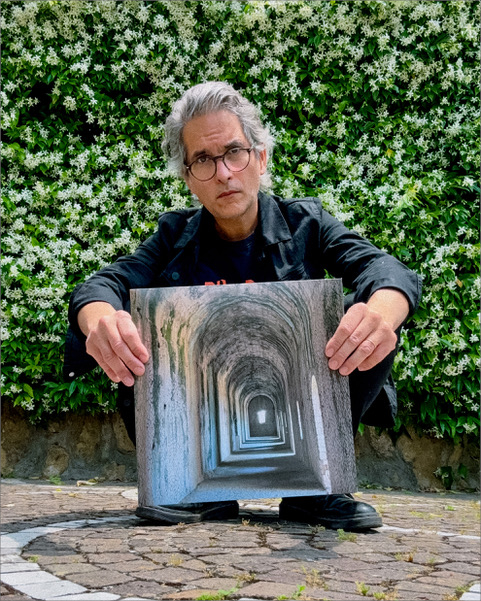
Igloo :: A brief technical aside for the tech-savvy readers out there: your relationship with West Coast synthesis, specifically your use of the Serge modular system in the album’s third, overwhelming track.
Abul :: Yes, as I mentioned, in 2015 I spent a week at EMS Studio in Stockholm, a place with several studios and some truly remarkable equipment. On the recommendation of an old friend, a Danish artist called Goodiepal, I booked time with the Serge modular system. I had never used it before and barely knew of it. To make the most of it, I brought a few musical ideas I could develop with the synth, including the MIDI file for “In a studded procession.”
I spent a day arranging the piece on the modular while still learning how it worked. Like conducting an orchestra, I assigned each melodic line to a different oscillator or sound source, layering and overdubbing until I found a sonic palette that felt right. I had hoped to recreate the entire track with the Serge but in the final version I blended the sounds created at EMS with some original recordings from 2013, later overdubs made with my own modular rig, now including several Serge modules, and some new string sounds drawn from samples on a 78rpm record I found in the attic. That collection once belonged to my late uncle, the elder brother of my father.
Igloo :: Combining your uncle’s old 78rpm records with modern studio sounds creates a choral narrative, like two figures meeting in dense sound to form a new language. What was this experience like, and how did you bring these distant elements into conversation?
Abul :: This album grew from the encounter between old and new, something different from any previous work. I started with some quiet, unfinished pieces that i kept returning to, feeling they deserved to be completed. While working on these, I found that collection of 78rpm records that belonged to my late uncle. I began sampling small fragments and processing them through the machines in my studio. At first, i wanted to create a project around them.
“This is what I love about using samples. They bring something unpredictable, a dialogue with something beyond my own creation.” ~Abut Mogard
But slowly, some of these sounds found their way into the original quiet pieces instead, adding exactly the character they needed to feel complete. In some cases, I merged elements from two distinct compositions and added samples that brought a new depth, something missing before. It can be moving to hear sounds that must be recorded around eighty years ago within music created today.
The conversation between old and new came through trial and error. Sometimes forcing it did not work and felt unnatural, but other times I found the right balance. For example, “Constantly slipping away” was created quickly, in a way that reminded me of my earliest work, as a long improvised take on modular synths. Adding a small sample from those old records gave it an unexpected melody that carried the piece somewhere new. This is what I love about using samples. They bring something unpredictable, a dialogue with something beyond my own creation.
On the edge of discomfort ::
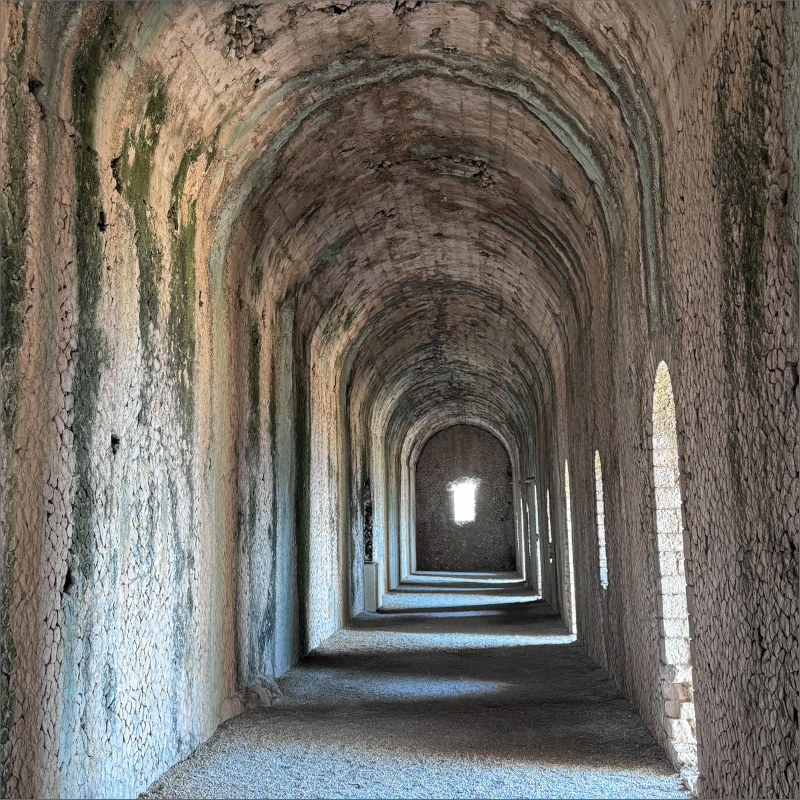
Igloo :: Time: what role does it play in the music of Abul Mogard?
Abul :: I think I play with the duration of time, in a way that the listener might lose track of conventional timing and enter a more intuitive, emotional space. To be honest, I must say I never thought of it, and this is a reflection I had after your question.
Igloo :: A soul album, that’s how I would define Quiet Pieces: a work that conveys a sense of religiosity and transcendence, reaching toward the sublime. Is there a moment in the compositional process when you feel detached and fully immersed in a reality no longer bound to this earthly plane?
Abul :: Of course, that is exactly the moment when I feel the piece might be complete.
Igloo :: A ghost drifts through this record, tied to the time we discussed. You mention discovering Phill Niblock’s Boston Tenor Index after his 2024 passing, which shifted your approach to dissonance and pushed you to explore uncomfortable sonic spaces. Can you elaborate on this pivotal concept and its impact on your work?
Abul :: Yes, that album by Phill Niblock was a significant source of inspiration. What I meant by pushing my sound into a territory I had not entered before was exactly this idea of exploring the space where one begins to feel uncomfortable. Niblock’s work encouraged me to build a tension that stayed just on the edge of discomfort. That feeling was very present while I was working, a kind of unease that, if pursued far enough, begins to feel natural.
In some pieces, I layered sounds close in character, almost indistinguishable, yet slightly different or misaligned, as if they were gently pulling against one another. I was drawn to the friction this created and tried to take it as far as i could while still keeping an aesthetic I felt was mine.
I think the sense of transcendence you mention might come from this tension, a fragile balance held just long enough for something new to emerge.
Igloo :: Is Quiet Pieces a moving tribute to memory, to time as a keeper of that memory, to intimate dissonance and majestic distortion transformed into an intense prayer and an irresistible, continuous ascent?
Abul :: That is a beautiful reading, thank you. I would not say I set out with a specific intention, but those elements were definitely present as I worked. Memory, time, the tension between stillness and friction. The process felt more like discovery rather than deliberate construction, and perhaps that is where the sense of ascent comes from. I am glad it resonated that way.
Photos by: Claudia Gschwend and Marja De Sanctis (album cover)
Quiet Places is available on Soft Echoes. [Bandcamp]

Related posts ::
 V/A :: Spaciousness (Lo Recordings) — Abul Mogard track premiere!
 Abul Mogard & Rafael Anton Irisarri :: Impossibly Distant, Impossibly Close (Black Knoll Editions)
 V/A :: Tone Science Module No.7 Cause and Effect (Tone Science / DiN)
 Alex Menzies :: Order & Disorder (Kathexis)
 H. Ruine, Mikhail Kireev :: Imagined / Awakenings (Mestnost) — [concise]