




The Father Road is a pulse-driven, transcontinental voyage of progressive electronica, tracing the mythic Lincoln Highway coast to coast as Paul Williams’ Church of Hed expands his ongoing musical road saga between Rivers of Asphalt and Under Blue Ridge Skies.
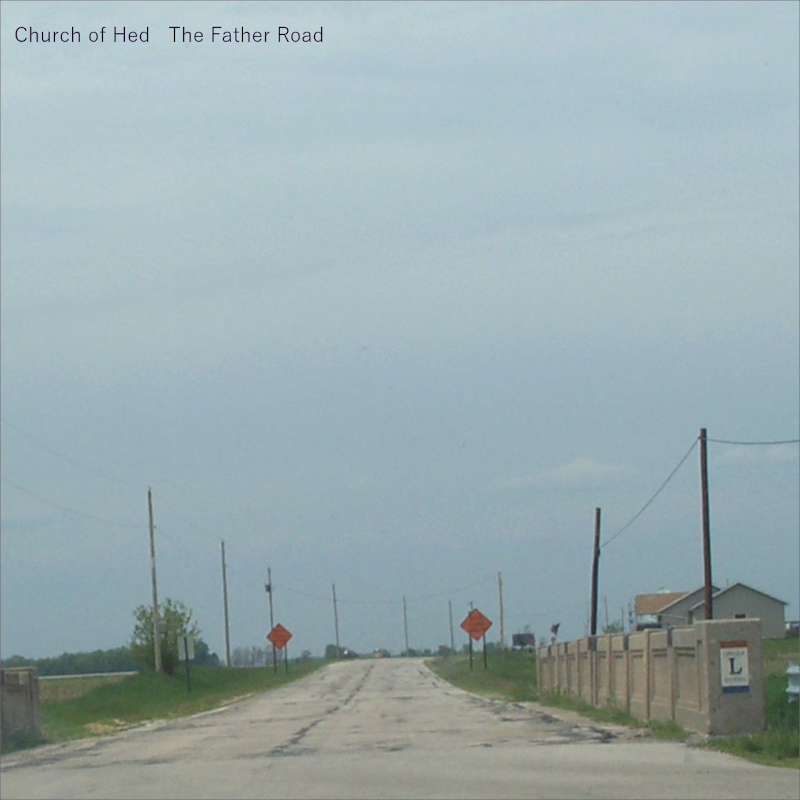
Soundtracking America’s first coast-to-coast drive
The Father Road takes listeners on a rhythmic and groove centered journey down the Lincoln Highway, guided by Paul Williams under the guise of his Church of Hed project. This is the sequel to Rivers of Asphalt, a concept album based on the mythic motorway Route 66, and sits in between the most recent release in the series, Under Blue Ridge Skies, a tribute to the Blue Ridge Mountain parkway.
This is transdimensional music for a transcontinental highway, a chugging trip of progressive electronica suitable for inner travel at home, or as a soundtrack to get into the driving zone while cruising along on the Lincoln Highway itself or on some other legendary American road trip.
The Lincoln Highway is the father road because it was the first one suitable for a car to go from coast to coast in the United States. It was dreamed up in 1912 by an entrepreneur from Indiana named Carl G. Fisher, a bicycle racing enthusiast who later got bit by the auto bug and became a motorhead. One of his jobs was working at what was considered the first automobile dealership in the U.S., and he was keen on building racetracks for these combustible beasts. Fisher was the man who led the charge to get the Indianapolis Motor Speedway ready for racing, giving us the roar of the Indy 500.
A lot of people thought at the time that paved roadways for cars would be the playthings of the idle rich who had the money and leisure time to go and drive around the country for weeks at a time. What use would they be for the common person who needed to earn a living and couldn’t afford to take off work? They called the idea of such roads “peacock alleys” where the men would show off their cars, and the money they had to buy them and the money they had to drive them.
And while Fisher had a vision of motoring, he didn’t think it was necessarily so exclusive. Until there were good roads to run on though, the automobile couldn’t be adopted by more people, by common people, giving them the same freedom as the wealthy to travel at high speeds. To achieve his dream of building a transcontinental road, Fisher needed backers. One person who didn’t back him was Henry Ford, who believed the government should be the ones responsible for creating the highways and byways of America.
Other people did come together around his idea though, which he projected to cost $10 million dollars or the approximately $328 million in today’s highly inflated dollars. He gathered a group of associates and friends from the automobile industry to raise the money, and he contributed a cool mill himself. “Let’s build it before we’re too old to enjoy it” was his battle cry.
After his backers rejected the name he had chosen, the “Fisher Highway,” a tribute to Abraham Lincoln was finally settled on and work began. The highway was officially dedicated on October 31st, 1913 and traverses from Lincoln Park in San Francisco all the way to Times Square in New York City. In addition to being dedicated on Halloween, the original route traversed through 13 states: California, Nevada, Utah, Wyoming, Colorado, Nebraska, Iowa, Illinois, Indiana, Ohio, Pennsylvania, New Jersey and New York. It evolved with various loops and additional sections that spurred on and off it at various points over the years, but only now exists as a patchwork of US and state highways. US 30 still traces a good measure of that earlier right of way, from Wyoming to Pennsylvania.
On the album Church of Hed chose to start his journey on the Pacific edge and travel eastward, tracing a route that had enticed millions of travelers in the years following the opening of the road. Young American’s hopped into their Model Ts to go out and see what the fading frontier had in store for them. Up until that time the railroad had still dominated interstate travel.
Motorik dreams on the Lincoln Highway ::
The music on The Father Road follows the changing landscape of the continent as it flows along the road. As Williams wrote in his liner notes, it starts with ““The Sea and the Golden Gate,” through the melodic grandeur of the two part “Sierra Ascent” to the stark beauty of “Sierra Crest,” all the while walking the line between purely instrumental electronic music, explorative 70s krautrock, and progressive rock, with a touch of space in the mix for good measure. From there we go across “The Loneliest Road” that stretches across Nevada and about half of Utah, a captivating near-nine minutes of stirring ambient sounds that perfectly capture the mystery and barren loneliness of the western deserts. “Salt and Snow” and “Wasatch Descent” take us through Utah and into Wyoming. Originally the Lincoln just skirted to the north of Colorado across southern Wyoming, but later a loop was added branching south to Denver. “Prairie Waves” takes us into Nebraska with a catchy song that’ll get stuck in the listener’s head, followed by a head-on encounter with “The Derecho” as we cross Iowa, a classic slab of powerful progressive rock adorned with spacy electronics. The swirling “Open Road Illinois” and “Plainfield Crossroads” gets us through Illinois towards Indiana and Ohio with another memorable melodic encounter. “Avoiding Toll Roads at Night” is a short piece that takes us from near-floating ambient to a busy keyboard mayhem. The ensuing six vignettes take us through Pennsylvania and New Jersey, one of the highlights being the ferocious “A Ship in the Mountains,” until we arrive at the journey’s conclusion, “Times Square and the Shining Sea.”“
The soundworld Church of Hed created for Rivers of Asphalt is also shared on these gleaming tracks. Some of the pieces were written at the same time, and the attentive listener can go in and hear the use of motifs that are the connective tissue between the albums. On and off ramps lead into distinctive states of mind and the hustle of big cities, or the languor of small towns, adding to the unique personalities inside the individual tracks.
There is a bit of everything here for those who enjoy motoring along with a motorik beat. Psychedelic rhythms, a restrained delicateness that emerges through an intricate pitter-patter of pulsing envelopes, a dash of energized ambience that keep the journey mellow, while still moving at enough speed to ensure the journey will reach a completion on the shore; enough inner space atmosphere to make the traveler in the outer world touched on the inside by all the people met and sights seen.
These evolving instrumental pieces unfold like the road with slinky dark bass lines, snapping percussion, and the tendrils of electronic hypnosis vibrating throughout it all. This installment in Church of Hed’s musical travelogue is a worthy companion for our own journeys along the roadways of life. Three full albums dedicated to the mysterious roads that crisscross the United States only goes to show how many more roads there are to explore. I’ll ride again with Church of Hed onto the lost highways that take us to distant horizons.
The Father Road is available on Bandcamp.