




Over 31 years ago, a casual tip from a friend in a Cambridge video store introduced me to Amber, an album that quietly reshaped the way I listened to music and still amazes me decades later.
Discovering Autechre’s timeless ambient electronic traverse
A little over 31 years ago, I was working in a video store in Cambridge, MA, where I’d become close friends with one employee named Alistair, who shared my love of English industrial music and electronic music in general. At the time, I was a little bored with the music I was listening to. Industrial was turning into heavy metal thanks to Ministry, and there seemed to be nothing else of interest. I’d firmly left Top 40 and popular music behind, devoting myself to finding the unheard music I knew was out there.
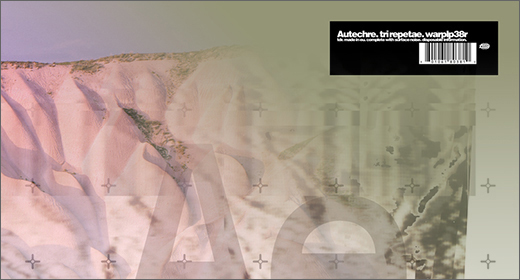
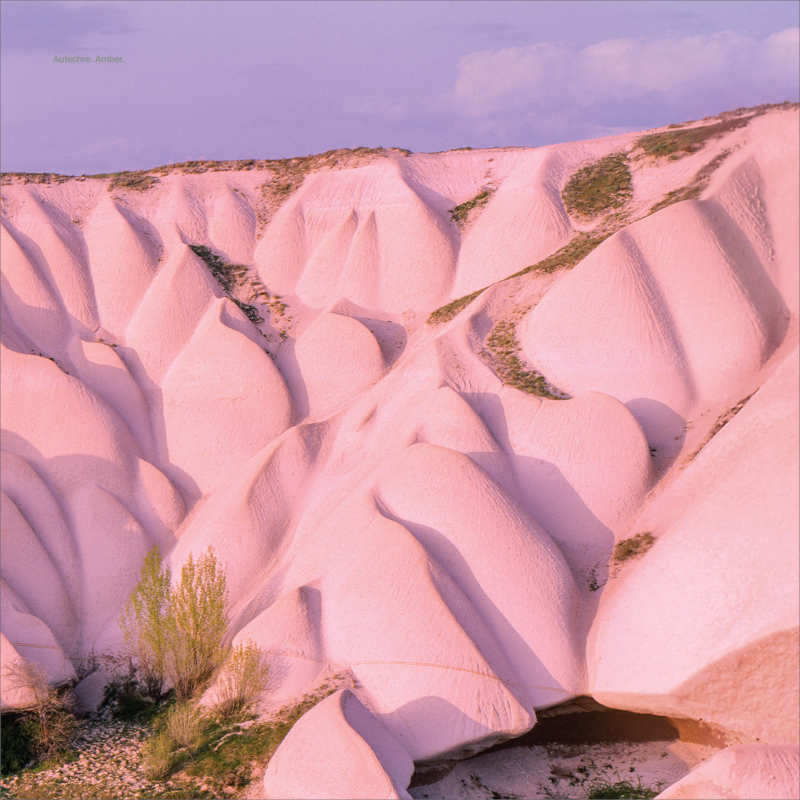
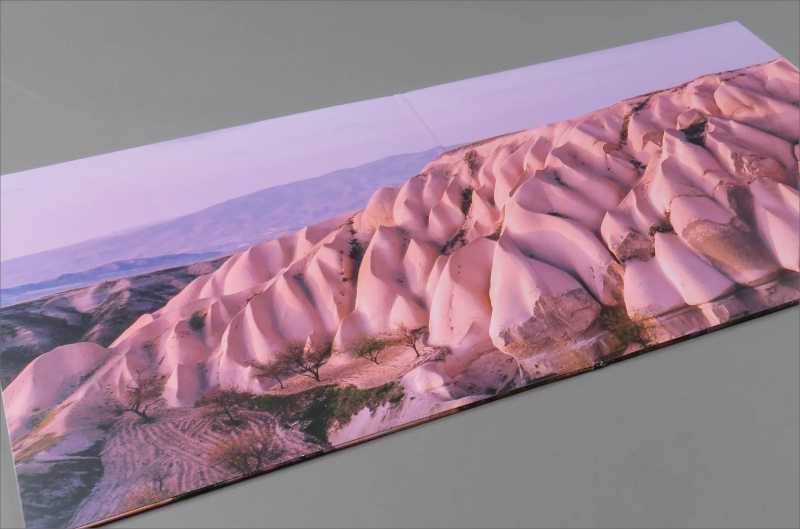
One day, Alistair mentioned a band and album that weren’t his cup of tea but he thought I might like. He took his copy of The Face magazine, rolled one half of it back, and handed it to me. There, on half a page, was a picture of a sandy hillside in shadow with small print above it:
“Autechre. Amber.”
The name was intriguing and unpronounceable, like it was Icelandic or Gaelic. The cover was like nothing I’d seen before either — courtesy of The Designers Republic. A day or so after the conversation, I rode the T down to Harvard Square, walked into Tower Records, and bought this album knowing nothing about it.
Over three decades later, I am still learning from the music within, as well as from the two guys (Sean Booth, Rob Brown) from Rochdale who made it. How multifaceted a jewel it is, revealing new details after years of close inspection. To say I became a fan of Autechre was one thing—by no means a completist, I’d still put myself in the upper 75th percentile—but saying I became a devotee of Amber might be more accurate.
How to describe it has become no easier now than it was upon its release. Nothing else sounded quite like it in 1994; not even the towering legend of Aphex Twin came close. The songs within enclosed a portal to another world entirely, one formed in the minds of a pair of former BMX-loving graff lads with a mutual love of certain music. Though they came from Sheffield, UK—a legendary birthplace of musical giants like Cabaret Voltaire—they sounded nothing like them. The strange tones on Amber appeared to come from the air and fill my brain.
Autechre’s masterpiece through the years ::
Amber embodies a rare quality in music: the album could be released today and most likely would hit as hard as it did back then. Its influences aren’t buried so much as nearly indecipherable. Though Sean Booth and Rob Brown worked with the tools of their peers—analog synthesizers, drum machines, and cheap samplers—they displayed a clear sense of the basics of harmony, melody, and rhythm. While their first effort, Incunabula (Warp), bore some similarities with albums by their peers, it is clear that during the time between the two albums, Autechre was honing their craft to such a degree that when Amber came out, it appeared almost as if from the forehead of Venus: fully formed, standing high and tall among others. Of its eleven songs, none begins as it ends, nor leaves the listener in the same state as when the first song played.
“Foil” opens with an anxious wobble over crushing drums that devolve into something strangely born of percussion yet fallen into rhythm. The pulse of the song is the lone synthetic droning while percussion occupies both the back and foreground of the stereo field. “Montreal” weaves a melancholic path through skittering percussion, evoking something in the heart while the ears and mind work through the synthesized orchestrations—which all the songs do, to varying degrees.
“Silverside” has an air of menace, doom, and loss, where looped voices repeat unintelligible recorded announcements while the steady, almost Caribbean beat pulses on, accented by harsh electronic percussion as the song continues, letting reverb and delay wash in and around the ears like an incoming tide on an alien world. “Slip” follows with such a light, childlike, and playful air that it might be from another album, though as the song moves along with a sparse beat, the authors of this work are clearly made known.

Lost in Amber’s electronic worlds ::
“Glitch” and “Piezo” are two of the earliest examples of Autechre’s ability to draw the listener into a world of their own. “Glitch” works in a microscopic realm of sparse, tight beats, echoing growly synths, and a skittering rhythm that builds the road upon which synth pads travel, snaking in and around the sparks flying from the central beat. “Piezo” follows suit, taking listeners along the sonic trail, then off the earth into a place off the horizon, another dimension of sounds and science, before gently dropping them back on Earth—not quite sure where they’d gone, though clearly uninterested in returning to normal life.
“Nine” is an ambient piece of electronics engaged in self-play as synthetically altered voices cruise and careen toward a sunset of inexplicable hues and shades. “Further” returns us to the realm of hard beats in a percussive workout, with accents of synthesizers framing the rhythm and soul of the piece. “Yulquen” is a lullaby with the gentle tap of echoes in the central part while atmospheric effects construct the deep yet delicate framework the song rests upon. “Nil” thuds and pulsates from its drums as synths weave and wrap the blanket of bass and keys over all, allowing for deft interplay of its parts into a study in emotion.
The album ends with “Teartear,” which I have to admit is not my favorite song, yet is inextricably linked to the album as a whole. As the closing track, perhaps it’s a reminder that all is not soft edges and reverb-smoothed drums, and there is much to be learned in heavy drums pounding out the rhythm for most of its 6:45 duration, until the loping synths end their collision and repeat a final message into the fadeout.
Amber, of course, has become legendary in the decades since its release. More so than Incunabula, it provides a roadmap of Autechre’s future endeavors. It would not be long before the duo dropped LP5 and Confield, indicating they were already light-years ahead of their colleagues in ways that still confound, delight, and shock their fans to this day—a perfect snapshot of the sonic worlds Autechre inhabits.
Amber is available on Warp. [Bandcamp | Site]