


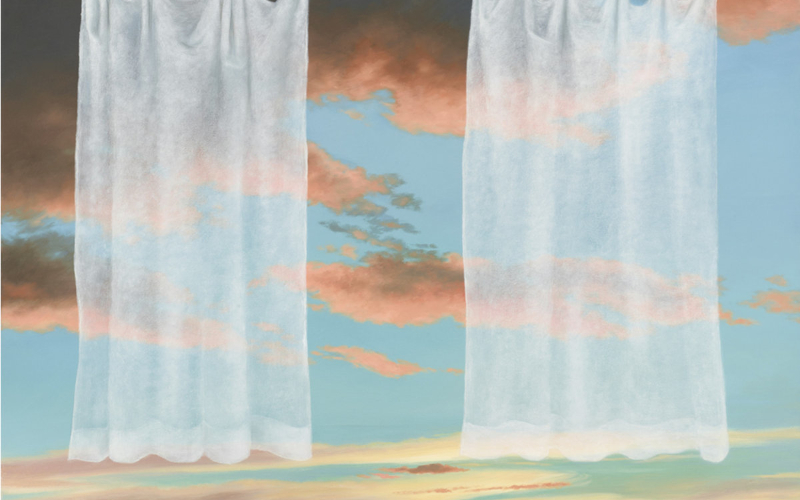
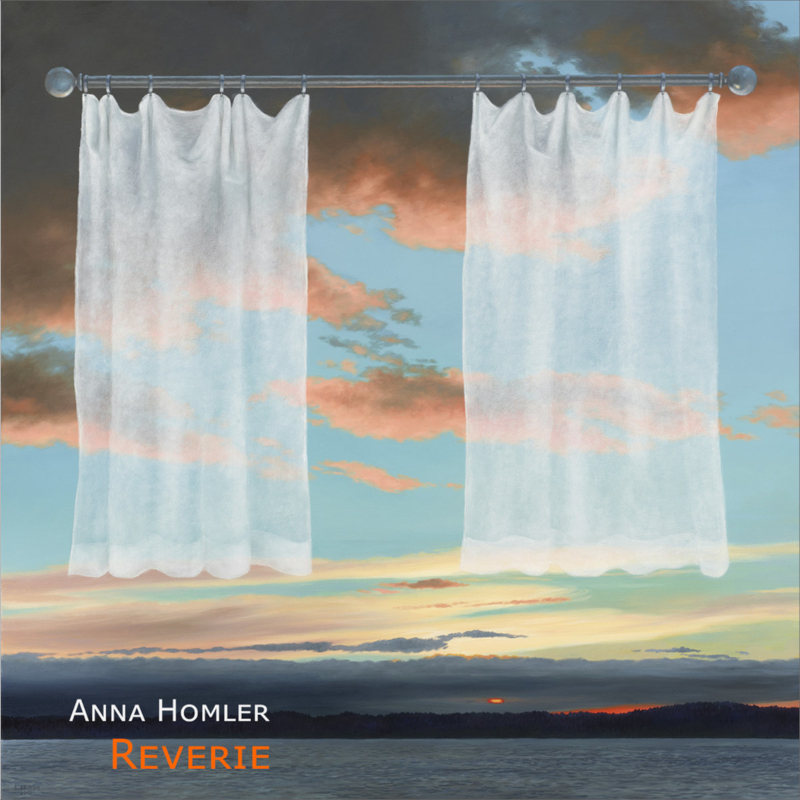
Reverie is a tour of unadorned castles in the air, playful and strange vocals, music inspiring pleasant dream-like thoughts, expressed with wordless musical vocalisms, fluid speech-like syllables that might lack any readily comprehensible meaning, an extravagant conceit of the imagination, a lost sense of dreaming while awake. There is an extraordinary array of great talent here.
A vocal instrument
The voice of Anna Homler invents melodies and rhythms, with her articulations projected as a lead instrument in a soundscape of collaborative improvisations. I find this to be a very powerful natural and minimalistic expressive force. What I hear is a vocal instrument using her expressiveness contoured for the moment, and emerging nevertheless as word-like and sentence-like units because of skilled realistic expressions, language-like rhythms and melody.
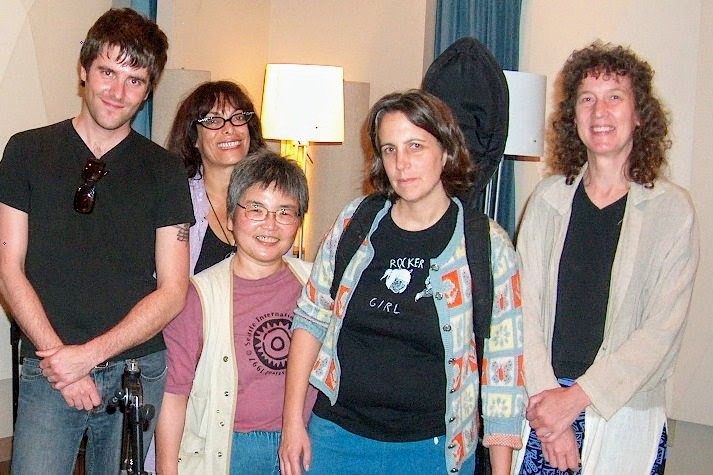
Reverie was produced during Homler’s artist residency at Jack Straw Cultural Center in collaboration with several of the world’s finest improvisers, kindred with similarly inspired voices, also instrumentally on acoustic guitar, koto, cello, electronics, suling gambuh, piano, and various percussive transportives. The 13 tracks of Reverie showcase an inclusive alternate musical universe of Anna’s creations, with her amazing friends Amy Denio, Bill Horist, Elizabeth Falconer, Lori Goldston, Susie Kozawa, Ikue Mori, and Steve Peters. I am stuck on the album title, a Reverie brings to my mind a feeling lost in fantastic abstraction, a loose or irregular train of thought, fanciful musing and refreshing. More of this please, and thank you for the uplifting and sometimes playful enigmatic articulation.
Opening with “Isola” (3:06) vocals are accompanied by other vocals and some simple and perfect percussive structures. Music in rectangular shapes that carry whatever the story is, in an odd swaying cadence. I love this track. “La Ka’ye” (3:05) takes the listener deeper into singing in tongues, giving intellectual control over to the spirit of mystical feelings. A zany counterpoint, two vocals trading gambolery, with some repetitive utterances, a little bit sassy and spirited, bright. A primordial operatic tribal lark.
The guitar balances gracefully with the cello on the title track, “Reverie” (5:14) which tells a story from the heart, not too long and complicated, from the feeling this could be a ballad. The vocals recite earnestly, explaining all the details of the song’s narrative, whatever the words might mean. The feeling is patient and even somehow comforting. The sound of fingers strumming on strings begins the next track, “Sisu” (2:30), presenting a most mysterious story, dark at times, sad at times, with strong delivery and passionate incantations. Now a dark cello gathers all ears, “Nocturne” (3:40) is elegantly strummed and plucked, perhaps talking to the moon in song, over dark distances and unseen sad hollows. The mood is persistent and the song is flavored with the perfect amount of emotion. This next romp changes everything, here are some totally crazy moments, “Chance Meeting” (1:49) might bring strange little creatures chittering away finishing each other’s sentences and making each other titter, with some proper screeching and full throated delivery. I will go out on a limb here, get a little crazy, perhaps I am experiencing something like what the Macbeth witches might have been doing before the haggard soldiers emerged, on their weary way to the throne of Scotland, the air ever full of gossip and mischievous crackly laughter, I could be wrong.
Expanding the sound of nuanced legends and myths ::
Now imagine a small animal that talks like a human, something with supernatural elements, the track’s title is “Fable” (2:20). I think I hear busy fingers on a stringed instrument, expanding the sound of nuanced legends and myths. The next track also has fingers on strings, fun and rapid, “A’la Ya’ka” (2:17). I hear a dramatic telling of an urgent tale, with the guitar spice rolling on and on, climbing and leaping back into the flickering wily shadows. “Oracle” (1:45) combines the sound I imagine to be a bowed flute, or a cello, plus her voice starts cautiously, then gets stronger, and with time becomes a fictitious creation myth. I want to live there in that realm next. Next, “Ha Ni’o” (2:55) begins, calling like a prayer using multiple voices and no other instruments, pleading and invoking, almost close to crying and always asking nicely. A wonderful guitar and cello dialog opens the “Canticle” (4:26) soon bringing strong rounds of vocals telling this tale, the instruments decorate the vocal lines and measures. The whole ensemble all comes together and builds a vivid image. “Overmorrow” (4:48) has a calming koto introduction that leads into the close gentle vocals, with a cherry blossom flavored story of darkness and hope. A new future direction, a piano whispers, and now we arrive at the closing track. This is the “Book of the Dead” (5:37) and all floats upon a cello, with gentle quiet chanting and singing. The piano becomes sad and dark. A very old crypt. I hear voices from long ago, sent on the journey unknown, with all possible compassion and care, we ask to guide and protect our lost one, becoming fully hopeful in the end.
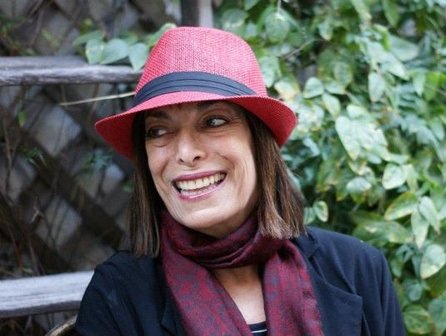
Anna Homler is based in Los Angeles. She sings in an improvised melodic language of her own creation, and has performed around the globe with a wide range of collaborators. She came into fame in 1985, with the album Breadwoman & Other Tales, a set of otherworldly spirituals delivered in an invented language by Homler over electro-acoustic composer and LA avant-garde contemporary Steve Moshier’s rich and strange production. Homler’s practice of divining speech, lyrical fragments, and melody for music that has now caught my soul on fire. Breadwoman, she’s so very old, she’s turned into bread! Breadwoman says, “If you don’t try to understand, you will.” Now my next search is on, to experience more exceptional Homler projects. For example, The Pharmacia Poetica® which is said to be an on-going installation project that explores the transformative power of sound and images that offers a mixture of remedies. These include sound, poetry, metalanguage, images, and objects. The main feature is a collection of glass bottles in which the hidden beauty of commonplace objects, suspended in liquid, is revealed. Also, Direct Time (Intakt Records, 1989), features Anna Homler, Carles Santos, David Moss, Greetje Bijma, and Shelley Hirsch.
Focused on subtle sonic details of the world around us ::
Contributing instrumental collaborator and Reverie‘s Producer, Steve Peters, also makes music and audio for a variety of contexts and occasions using environmental sound, found/natural objects, electronics, instruments, and voices. Elements of improvisation and formal structure are combined to create place-based works that encourage a contemplative state of listening focused on subtle sonic details of the world around us. His work has been released on such labels as Cold Blue, Palace of Lights, Sirr, Dragon’s Eye, 12k, and Present Sounds. He performs with the Seattle Phonographers Union and is Director of Nonsequitur, a non-profit organization that presents concerts of innovative music through the Wayward Music Series at the Good Shepherd Center Chapel in Wallingford.
Amy Denio (rhymes with ‘Ohio’) is an award-winning Seattle-based singer, composer, multi-instrumentalist, improviser, record producer and recording engineer. Her inspirations include world music, and is mainly known as a vocalist, accordionist and saxophone-player. She creates music for dance, theater, film, television and installations in collaboration with artists all over the world, and has a four-octave vocal range. She’s a founding member of Ama Trio, Tone Dogs, The Tiptons, Billy Tipton Memorial Saxophone Quartet, Danubians, Pale Nudes, Lao Tse and The Entropics, and her Italian chamber/kitchen quintet Quintetto alla Busara and improvising trio Gli Autopiloti. And a bunch of other stuff too.
A unique voice ::
Seattle-based guitarist Bill Horist delivers an idiosyncratic and richly emotive take on the world’s most ubiquitous instrument. He has cultivated a unique voice in a number of styles in the realms of jazz, rock, folk, and experimental music. He has played on dozens of records and has performed throughout North and Central America, Europe and Japan; collaborating with numerous leading lights in a beguiling range of genres. Perhaps best known for his prepared guitar treatments, his work is widely regarded alongside masters like Fred Frith and Keith Rowe. In both solo and ensemble capacities, Bill has received critical praise internationally and has been awarded several grants and residencies. He has created music for dance, film, theater and video games. In addition to a busy performance schedule, he teaches private lessons and conducts classes and workshops from elementary to graduate levels.
Elizabeth Falconer is one of the few American masters of the koto, a traditional zither from Japan. She has earned numerous awards for her work combining Japanese folktales with original koto music and has produced over 10 albums on her label, Koto World. She began playing the koto in 1979, she later moved to Tokyo and studied under the esteemed Sawai Kazue and Sawai Tadao at the Sawai Koto School, and earned a Shihan (master’s license) at the Sawai Koto School, which focuses on contemporary works. She is an admirer of the work of Sawai Kazue.
Lori Goldston is a classically trained and rigorously de-trained, possessor of a restless, semi-feral spirit, a cellist, composer, improvisor, producer, writer and teacher from Seattle. Her voice as a cellist, amplified or acoustic, is full, textured, committed and original. A relentless inquirer, her work drifts freely across borders that separate genre, discipline, time and geography.
The gathering of sounds is a primary activity ::
Susie Kozawa is a sound artist, composer and performer who works mostly with sound collages and site-specific installations, in which the gathering of sounds is a primary activity. She explores different acoustic spaces using musical instruments she makes out of found objects, kelp, modified toys and human voice. She creates live sound design for dance and theater productions. She was a founding member of Aono Jikken Ensemble. Her other activities have included New Media Gallery 2023-24 (with Brigid Kelly and Alex MacInnis): Tokio Florist Project; and the Artist Support Program 2008 (with Erin Shie Palmer): Recorded letters written by Asian American immigrants for a permanent sound and sculpture installation for the new Wing Luke Asian Museum.
Ikue Mori is technically a legendary NYC artist, born in Japan. In 1977 she visited New York and suddenly was the drummer in a groundbreaking band, DNA (with Arto Lindsay, Robin Crutchfield, and Tim Wright) followed by a shift from drums into electronica, playing drum machines, which she sometimes modifies to play various samples. Mori has drawn inspiration from visual arts. Her 2000 release, One Hundred Aspects of the Moon was inspired by famed Japanese artist Yoshitoshi. Her 2005 recording, Myrninerest, is inspired by outsider artist Madge Gill. Beyond her solo recordings, she has recorded or performed with Dave Douglas, Butch Morris, Kim Gordon, Thurston Moore, and many others, including as Hemophiliac, a trio with John Zorn and singer Mike Patton, as well as being a member of Zorn‘s Electric Masada. With Zeena Parkins, she records and tours as duo project Phantom Orchard. She often records on Tzadik, as well as designing the covers for many of their albums.
Audio recordist Doug Haire has been a staff engineer at Jack Straw Studios in Seattle since 1990. The Jack Straw Foundation, also known as the Jack Straw Cultural Center, is a non-profit, multidisciplinary audio arts center in Seattle’s University District, founded in 1962, that fosters the communication of arts, ideas, and information through audio media. Doug has recorded just about every kind of music and engineered countless live radio performances. He was very active in the free-improv scene, recording hundreds of albums for the likes of the New Art Orchestra, Wally Shoup, Dennis Rea, Jeff Greinke and countless others while working at the Jack Straw Studios. He also produced a long-running radio show called Sonarchy on KEXP which he ended in 2018. When he’s not in the studio he heads outside, listening for interesting sounds and locations to record. These recordings then became the basis for audio compositions, musique concrète mash-ups.
Reverie is a tour of unadorned castles in the air, playful and strange vocals, music inspiring pleasant dream-like thoughts, expressed with wordless musical vocalisms, fluid speech-like syllables that might lack any readily comprehensible meaning, an extravagant conceit of the imagination, a lost sense of dreaming while awake. There is an extraordinary array of great talent here.
Amy Denio – voice
Bill Horist – acoustic guitar
Elizabeth Falconer – koto
Lori Goldston – cello
Susie Kozawa – voice
Ikue Mori – elctronics
Steve Peters – suling gambuh, piano, percussion
Reverie is available on Right Brain. [Bandcamp]