



Hawgood has tied Folk Reels to the idea of a mobile archive, a repository for scattered works, old tapes and encounters. Live At Still Point 2026 introduces a welcome fissure into that archive. To preserve also means admitting loss and giving it an audible measure.
A work that fully embraces the loss it suffered and transforms it into living matter
A live album promises to bear witness, a weighty claim, perhaps too weighty. It evokes the idea of an event fixed once and for all, destined to return unchanged with every listen. Live At Still Point 2026 favors a memory with sections erased, passages heard only by those present at Brimscombe Mill that afternoon. The recording preserves the core of Ian Hawgood’s performance, while the contributions of two laptops used for processing were never captured in the file. A tangible absence, then, which has become the defining character of the work itself. The released sound recognizes its own limits and reveals them with rare candor.
For Hawgood, the concert marked his return to performing before an audience after seven years. That fact carries more weight than a line in a press release, since his artistic journey has always sought a human dimension in the act of listening. A British sound engineer, founder of Home Normal and custodian of Folk Reels, he has built an extensive catalog around care, collaboration, tape and field recordings. At Still Point, that principle reconnects with the risk of the moment and a freedom still capable of play.
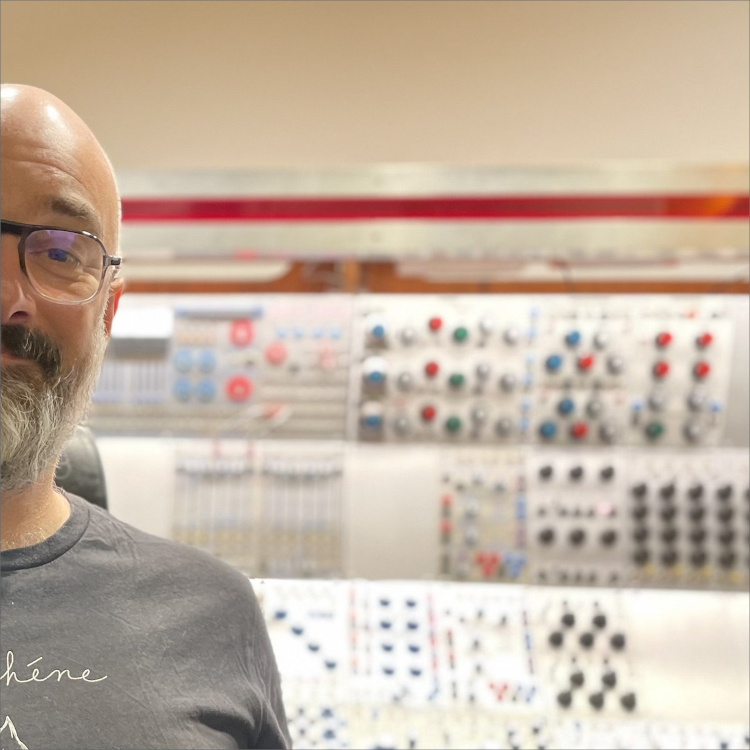
Twenty five minutes, a single movement. At first come rustling sounds, calls whose source is difficult to place, brief electrical flashes. They resemble tentative contacts taking the measure of the air. Then a deep mass expands, gathering everything happening around it. Figures from We Are But Dream are bent and pushed towards a different sense of duration. Hawgood uses SYNTRX, Buchla sequences, sounds gathered outdoors and computers running AudioMulch, instruments from different eras surrendering their names to a single current.
The music grows unhurriedly and gathers body through accumulation. A melody seems about to declare itself, then immediately chooses a less determinate form. This hesitation gives the work its intensity. No backdrop inviting distraction, no contemplative postcard. Hawgood’s ambient music asks for attention in a low voice and makes perceptible the time sound requires to change its nature. From time to time, an impulse punctures the continuity, an oblique jolt roughens the balance. It happens, that is all. The performance retains a vulnerable quality, even a slight awkwardness, precious in an age obsessed with polish.
Depth becomes almost physical ::
In the central stretch, depth becomes almost physical. The volume rises, the fabric thickens, while the pressure avoids all monumental emphasis. Hawgood proceeds through successive degrees of proximity: one colour enters another, the drone slowly alters its light, the breathing becomes irregular. It takes time to realize that the initial landscape is already elsewhere. At the point of greatest rarefaction, the current loses substance and seems about to fade out. The music accepts this descent. From there emerge more clearly defined figures, a gentle pulse, circling scales that bring energy without breaking the spell. The ending gathers motion and a strange, purposeful serenity, as though the sound had found a way to continue after almost dispersing.
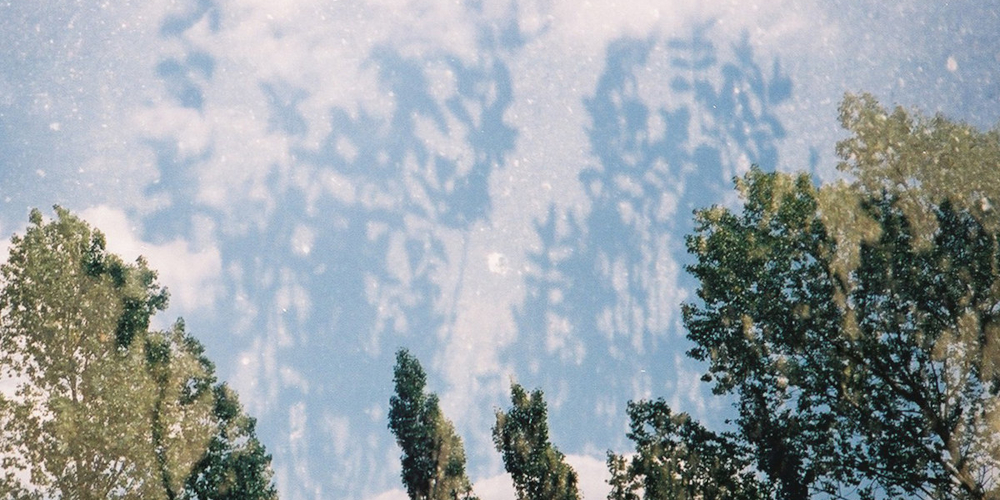
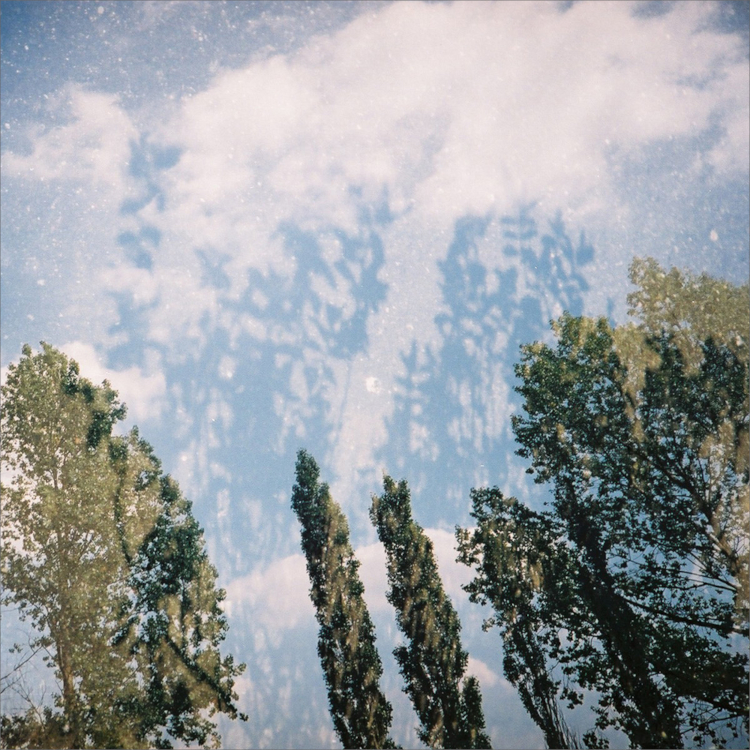
Tim Diagram’s photograph translates this condition well. Trees seen from below, pale clouds, a second pattern of foliage superimposed upon the sky. The image holds two temporalities and allows them to interfere. The album likewise contains what happens and the imprint of what escapes. The material lost from the two computers compels a reconsideration of what a document can mean. The audience heard a broader version, traversed by elements that are now irretrievable; the album offers an autonomous trajectory, barer and perhaps more exposed. Fidelity lies in the gesture, its openness to chance and the human scale of what has been preserved.
Hawgood has tied Folk Reels to the idea of a mobile archive, a repository for scattered works, old tapes and encounters. Live At Still Point 2026 introduces a welcome fissure into that archive. To preserve also means admitting loss and giving it an audible measure. The still point evoked by the title becomes a magnetic centre around which everything changes: intensity, distance, density, memory. This is where the album’s achievement lies. Its beauty arises from a restrained decision: to release what survived without consoling reconstruction and to entrust absence with an active role.
At the end, an unusual feeling lingers. Has one listened to a concert, or to the memory that a concert produced inside a machine? The question matters more than any answer. Hawgood offers twenty five minutes freed from the pose of the celebratory live album and the smoothness of the ambient product. The sound breathes, falters, gathers strength and recedes. In that movement it carries with it the Still Point community, the apprehension of returning, the pleasure of experimentation and the part that no medium will ever be able to hold. A work that fully embraces the loss it suffered and transforms it into living matter.
Live at Still Point 2026 is available on folk reels. [Bandcamp]

Related posts ::
 Icky Reels :: FIND YA GURL EP (Self Released)
 Icky Reels :: DL Poisons (Self Released)
 Boards of Canada announce Inferno (Warp) — May 29, 2026
 Boards of Canada :: Inferno Sessions @ Barnsdall Gallery Theatre, Los Angeles May 22, 2026 · 7:30 PM
 The Heartwood Institute :: Plague Dogs (Folk Police Recordings)