







In these two deeply moving releases, Yann Novak and David Vélez transform personal grief into acts of listening, remembrance, and meaning-making.

Listening through grief and absence
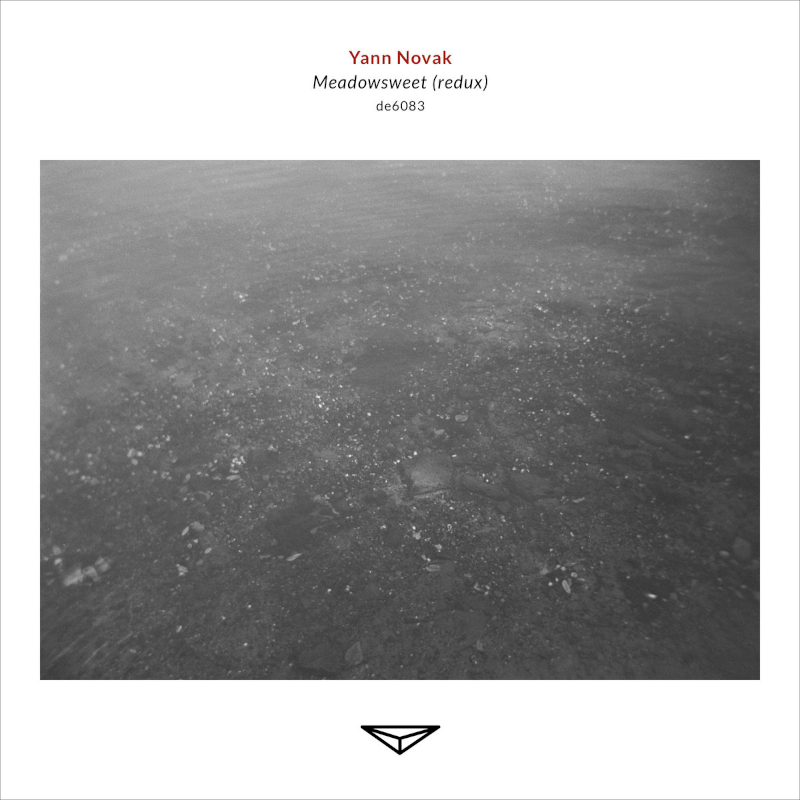
Everyone copes with loss in their own ways. With these two harrowing releases, Yann Novak and David Vélez each use the process of making music from field recordings as a path to create meaning and beauty in the face of fathomless grief and lingering pain. Novak describes his Meadowsweet as exploring “the presence of absence, the way a person lingers in the spaces they once occupied”: in his case his mother, Ingrid Ann Buslee, who died 20 years ago, just before the initial release of this reimagined album. Vélez took inspiration from Albert Camus’s reading of the myth of Sisyphus, considering how we can transform the meaningless absurdity of life with our actions and attitudes; he writes, “mourning feels pointless and yet necessary. Grief becomes endurable once it becomes an artistic ritual.” After the death of his father, Álvaro Octavio Vélez, in 2024, Vélez developed a ritual of spending four hours each afternoon for three months creating music from field recordings, sine waves, and various objects. As someone whose own mother has congestive heart failure and other likely terminal medical conditions, listening to the intense, raw emotion of these albums felt deeply painful yet strangely soothing; as if by bearing witness to Novak’s and Vélez’s grief I can anticipate and face my own more meaningfully.
Of the two albums, Novak’s Meadowsweet often sounds more subtle and hushed, though at times the thickly layered field recordings become almost overwhelming with the building intensity of loss they express. The listener can’t help but feel how painful it is to walk through the rooms or the gardens or other beloved spaces where a now-absent loved one once lingered. The tracks flow seamlessly from one to another, offering a nearly unbroken reverie (indeed, the last track presents the album in full, with no pauses between tracks). Yet each track also fades at the end, as even the most precious of memories do. Hearing this album revisited 20 years after Novak’s mother’s passing shows us that while memory may fade, grief can unfortunately remain evergreen.
Almost shuddering as it shimmers ::

Novak lets us know what we’re in for by opening with a lengthy track called “A Hard Drive.” It starts very quietly, with almost imperceptible noises, until a garbled female voice emerges in the background. Though I suspect this is a clip from the astrology session a friend held to help assuage Novak’s pain, I felt as if I were witnessing him listening hard for his mother’s voice in a room she used to frequent. The music slowly builds, pensively, almost shuddering as it shimmers. On the one hand the track expresses a feeling of being adrift and rudderless, yet with an underlying current that slowly pulls you back to certain memories. The repetitive, carefully layered drones give a sense of tracing the contours of the same memories again and again, trying desperately to hold onto them, while also hollowing inside with the deep sorrow of never being able to make new ones with the lost one.
The fourth track on Meadowsweet, “A Long Goodbye pt. 2,” sounds damp and foggy, with shadowy figures moving in the distance, and a feeling of radiance as if the darkness itself were shimmering. For me this track evokes a sense of wonder and mystery: what afterlife is Novak’s mother experiencing, and will he meet her there someday? The track slowly fades, bubbling and staticky, like transmissions intercepted from the world beyond.
Since they fly back and forth between the heavens and the earth, birds often represent souls. Starlings, for example, can act as psychopomps, guiding the souls of the departed to the land of the dead, or carrying messages between the spiritual and physical worlds. On the second to last track of Meadowsweet, “Swarming Starlings,” their twittering sounds maddeningly unearthly, a far cry from the abrasive voices I associate with this European species brought to this continent by colonists to sing in American gardens. Gently tinkling chains sound later in the track, of course reminding me in this context of the thick chains of regret that ghosts drag with them in Charles Dickens’ A Christmas Carol. Then heavier drones emerge, evoking thick swarms circling, almost becoming one forbidding organism. The track ends in a ghost-space, swirling and fading.
On the closing track from Meadowsweet, “Release,” though the feeling of absence lingers, radiant and shimmering drones move to the foreground, like healing slowly dawning. The listener imagines Novak starting to let go of his powerful suffering, but not the memory of his mother or his grief at her loss. It almost sounds like the landscape is singing in the background, while the track fades to a ghostly wind moaning softly.
In comparison to Meadowsweet, Vélez’s Loss sounds noisier, with percussive static and mechanical noises arranged against a backdrop of nearly constant drones. The listener imagines the musician wrestling with his grief almost in real time, raging and shouting and pounding against it to turn this raw material of suffering from something ugly and horrible into beautiful sonic sculptures. I found it hard to pick out any one specific moment to listen to as new sounds kept being constantly layered over the old ones, which to me felt like a perfect expression of the experience of grieving.
Field recordings as acts of mourning ::

Emphasizing the ritual purpose of Loss, Vélez names each of the six tracks “Ceremonial.” The first long track, “Ceremonial #1,” starts off noisy and glitchy, hissing and staticky. Slowly other sounds emerge, like water flowing over rocks, accompanied by cricket stridulations and the rolling-pebble sounds of frog calls. Constant drones in the background paint an undertone of melancholy and sadness against which feelings of rage and devastation sometimes flare. At times mechanical sounds predominate, like a repeated foghorn-like noise that offers a pulsing beacon in the darkness. Crackling whispers emerge later in the track, like ghosts of the feelings of grief one tries to push down, wanting not to feel them and acknowledge the profound loss from which they arise.
“Ceremonial #3” begins with a pure, low hum like the energy of life flowing; Vélez layers more percussive elements atop it. Again the repeated drone-beacon sounds in the darkness, marking the inevitable passage of time for others even after time has stopped for one. Listening to the track as a whole makes me think of someone slowly spinning the dial to tune a shortwave radio, drifting in the comforting white noise of static until you suddenly find a channel that sounds like ghosts conversing in the unintelligible language of the dead. Starting about halfway into the track, and continuing until the end, a droning radiance blossoms, perhaps offering a glimmer of hope for an end to suffering and a new beginning.
On the next track, “Ceremonial #4,” Vélez offers a repeated low percussive sound, like a steel drum being played with trembling fingers and converted into a slowly decaying drone. I get a sense of nervousness: will I get through this grief? How, and how long will it take? I feel the hand of the composer more actively here: searching, grasping, trembling. What can a musician possibly create from all this suffering that will turn the emptiness of loss to the fulness of meaning and beauty? Deep listening to self and surroundings both gives an answer and poses new questions.
With the closing track, “Ceremonial #6,” more atmospheric drones enshroud the listener in shadows and darkness, creating an eerie feel I associate with dark ambient music. Percussive elements tear scratches in the dark fabric of the track, letting through pinpricks of light, shimmering with a sound like wind chimes tinkling to the currents of the afterlife. One gets a sense of deep attunement; a labor of listening for a voice that is both forever lost and never forgotten, and imagining the contours of a world none of us can know deeply until it is impossible for us to share what we have learned.
Yann Novak‘s Meadowsweet (redux) is available on Dragon’s Eye. [Bandcamp]
David Vélez‘s Loss is available on Unfathomless. [Bandcamp]

Related posts ::
 Yann Novak & Pinkcourtesyphone :: Double review (Dragon’s Eye)
 DRAGON’S EYE :: Reviews for Yann Novak, Novak/Drouin and Tyler Potts
 Yann Novak :: The Future is a Forward Escape Into the Past (Touch)
 Yann Novak and Robert Crouch :: Fata Morgana (Murmur)
 Return of the Dragon :: Dragon’s Eye Recordings Relaunch