

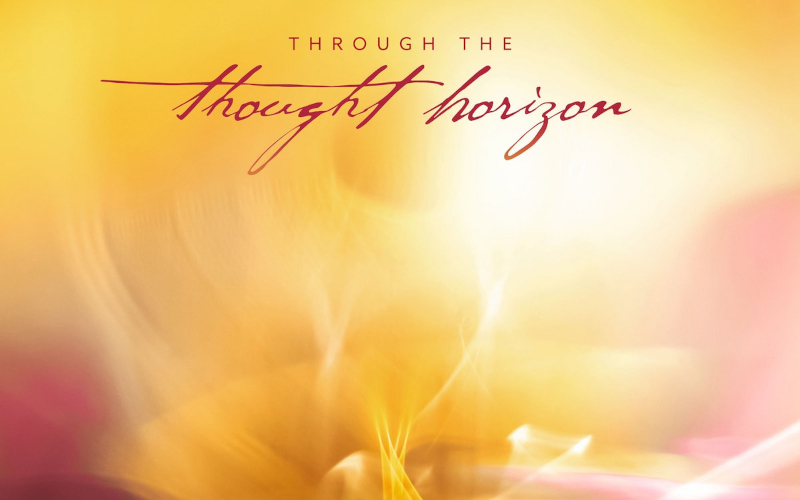

As a first collaboration of David and Scott, the feeling is immediately harmonically balanced and calming, the overall flow allows for sightseeing while you are napping. Cinematic tinkling satisfying hearts and minds, two chill guys, gentle souls making lovely music. Through The Thought Horizon is a melodic, beautiful, and deeply resonant album.
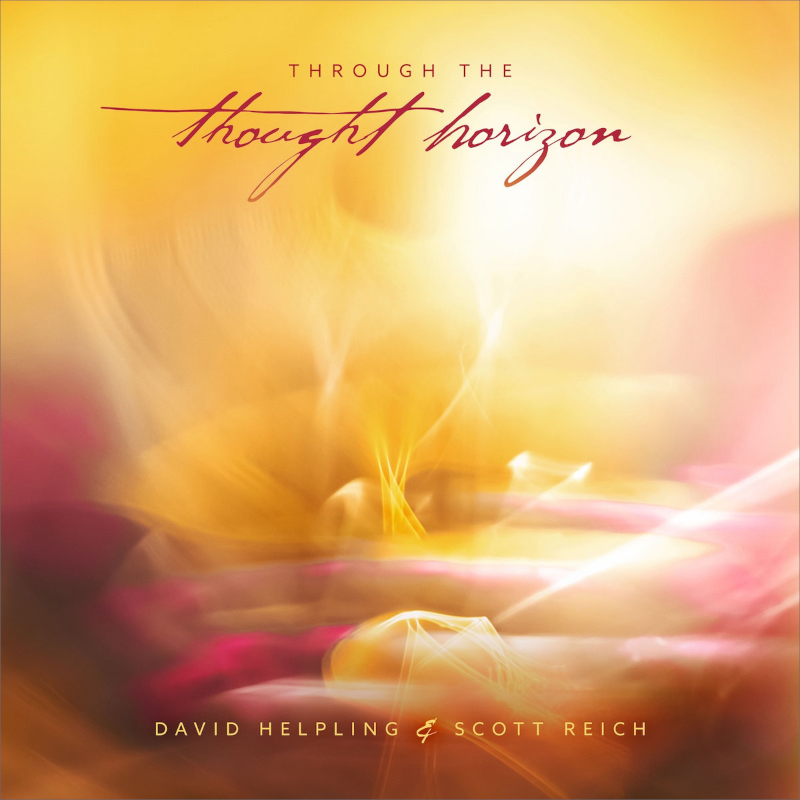
Cinematic tinkling satisfying hearts and minds
Celestial keyboards, electric guitar and piano, the feeling is slow with the reverb turned all the way up, past 11, or just completely breaking off the reverb knob. There are a lot of different Grand Pianos on this record. There is mystery without darkness. This album is about returning, not to what was, but to what is. What is home, what is who we really are. This music will not bring you there, but it might help you to consider that you are already there.
The poet David Whyte once spoke about life being the place “where our need to express our own particularity is always in a conversation with life’s equally strong need to change us into something else.” Consider the conversational nature of reality. We innately know that we are here in this time and place in order to express something within us. Something important that can only come from us. Life cooperates by creating situations for us where we must express this, where there really is no other choice.
Scott said that his creative process is his attempt to enter the inner sanctum, into the silence in which all music is born. That silence is like the original void from which all universes emanated. “This is a good analogue for David‘s studio. It has excellent sound isolation and it is dimly lit. Whenever I entered that place with David it was like a sacred space. This is where the lucent music spirits would visit.” Scott finds that the potential for good exists in all reality configurations.
For this album David leaned heavily on his Yamaha electric grand (CP70) and effect pedals for much of the record. He also created some special electric guitar textures to support many of the tracks. His hardware instruments were recorded “wet” through a SSL analog mixing console including some of his favorite analog and digital synthesizers. There are a lot of different Grand Pianos on this record, all of them were sampled virtual instruments. Even still, Scott would improvise and record some of the piano parts when he was down in the studio.
David reveals, “Scott is a gifted pianist and brings incredible modal changes and sophisticated chords… this makes this release unlike anything I have been involved with before. He comes from a jazz background, but is a deeply spiritual person… even more than that he is KIND, and that comes through in every note he plays. This record was a JOY to create and produce for me. Scott trusts me implicitly and I know exactly what he wants to say with the music. At the same time he has a very specific opinion about the music and can pinpoint exact changes or direction as soon as he hears what I have created or choices I have made. I LOVE this… this kind of open communication and love for a specific result made the production process very free and swift. Scott is very well read and is deeply steeped in poetry… specifically Rumi and Rilke. All of the titles for this record came from Scott’s world, including the title of the release itself. He would often send me the most beautiful quotes pertaining to our many discussions on consciousness, the divine and our place in this world and what may exist beyond it. Quotes and memes from these poets and contemporaries like Mooji kept me focused and inspired to bring these pieces together.”
Sparkling sunshine in slow motion ::
Opening with a single ping on the piano, the feeling is revelatory, with reverence and all that fantastic reverb, summoning forth oceans of calming waves, “The Simplest of Miracles” (8:01) the piano tells the story with only sound. In the quiet part there is an orchestra, the dimensions expand and glow. An emerging piano melody with synth shadows follows, “Into Our First World” (4:55) the journey seems to drop off, reignited by piano tingles sending us over the edge and into the vastness of waking up in the morning. Quiet moments follow and gently flow together starting from light grey to full dense deep colors, “Source of the Longest River” (6:32) takes the listener flowing through very different territories in the same gentle slow pace, no hurries. Slowly, a piano emerges in a dream, gradual and careful, precise. We go into the void with all those colors and illusions, “Shadows, Stars and Dreams” (5:49) midway through the track there is a relaxing, the piano warms the way.
Fading in, first as hints, followed by echoes, sparkling sunshine in slow motion, “Breath of a Flower” (6:14) brings in more instruments, electric guitar, chimes, electronics, suggesting the sound of flowers breathing gently in glorious microscopic detail. The next track might be a little bit sad, a slow piano, with illuminating washes, “Dream of the Last Morning” (4:40) brings hope, keyboards create magic. “Fallen Skies, Remember Me” (4:43) quietly emerges bringing a lyrical feeling, a sad love song, obviously with no words, just a melody that has a poetic meter, a tragic story of rising strings, it is heavenly. Starting from quiet the piano builds into a light funky jazz groove, “The Primordial Tower” (7:17) suggests a bridge to the sky, there is no darkness here. For the final track, the guitar rainbows wave slowly, “Through the Thought Horizon” (7:10). The piano comes up and upward we go, with pixie dust everywhere, sparkling and shifting. This whole album is like a finely crafted soporific, which is in high demand in times of constant stress.
As a first collaboration of David and Scott, the feeling is immediately harmonically balanced and calming, the overall flow allows for sightseeing while you are napping. Cinematic tinkling satisfying hearts and minds, two chill guys, gentle souls making lovely music. Through The Thought Horizon is a melodic, beautiful, and deeply resonant album.
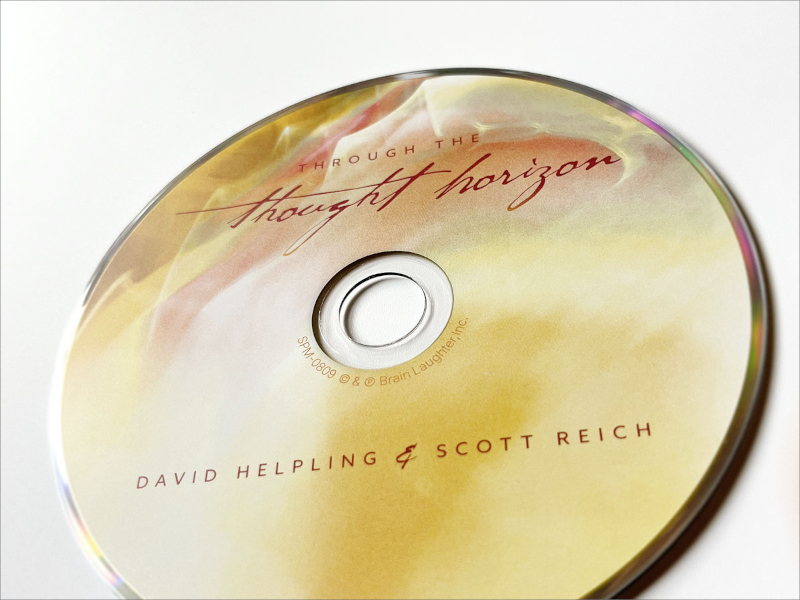
Through The Thought Horizon is available on Spotted Peccary Music. [Bandcamp]