





Boards of Canada didn’t just shape how we hear music — they reshaped how we experience reality, and Geogaddi remains their most unsettling proof: a deliberately disorienting, symbol-laced descent where warmth masks dread and mystery is the message.
Troubled, cryptic, less forgiving
It’s hard to stay objective when the subject helped shape how you hear music — maybe even how you exist within it. For me, Boards of Canada (aka brothers Marcus Eoin and Michael Sandison) is that subject. Calling them an “object” feels almost insulting. I know there are a few beautiful souls out there who understand exactly what I mean. When “Happy Cycling” first hit my ears on a sunlit day in 1996, it cracked something open. That crack led to Music Has the Right to Children — still the most important electronic album of my life — and from there into full-blown devotion. Memorabilia hunted. Bootlegs decoded. Obsession embraced.
But to think of BoC as linear — predictable, developmental, safe — is dead wrong.
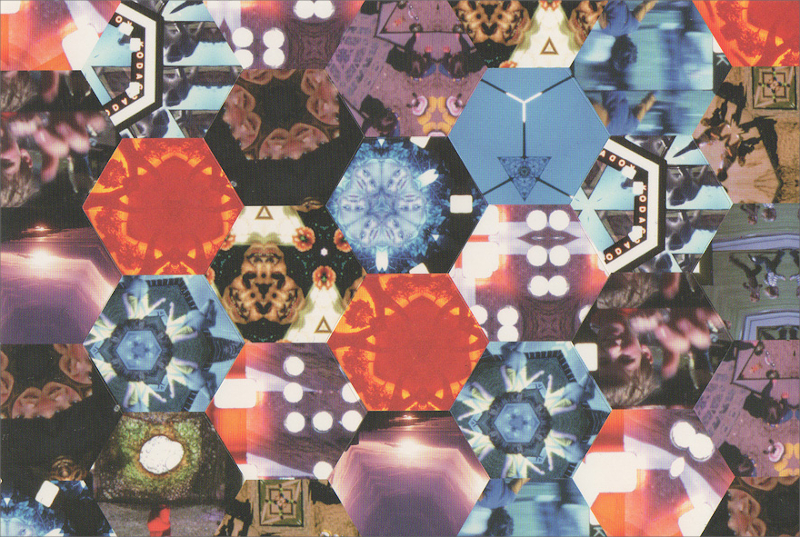
Yes, they forged a signature sound: fluttering analog decay, haunted educational-film nostalgia, psychedelic documentary scores from a post-apocalyptic classroom. But their music resists vocabulary. It refuses genre. It dissolves grammar. It’s better perceived as synesthesia — colors folding into geometry, feelings refracted into sound, an eagle circling somewhere inside your skull.
And then there’s Geogaddi. It hit differently in 2002. It still does.
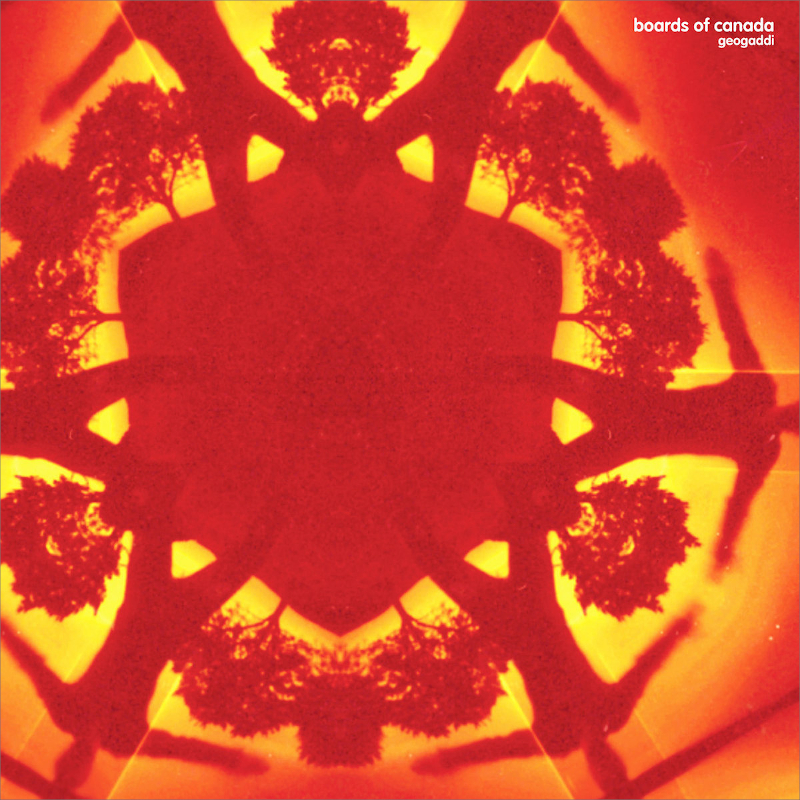
If Music Has the Right to Children bathed us in VHS-warped nostalgia, Geogaddi was its darker sibling — troubled, cryptic, less forgiving. The hooks are there, but they don’t comfort. They haunt. They stick without allowing you to hum them.
It divided listeners then. It still does. And that’s precisely its power.
The architecture of unease ::
Geogaddi is dense with intention. Number theory. Sacred geometry. Mathematics as divine language. A runtime of 66:06. The whispered “a god with horns.” Religious subtext isn’t shouted — it’s embedded. Rhythms are used sparingly. Orientation is denied. Synth drones wobble like faulty guidance systems. The opener, “Ready Let’s Go,” feels almost naive — which makes the descent that follows more disturbing.
“Music Is Math” anchors the record with a chord progression that sears itself into memory, breathing through a push-pull drum pattern that feels almost biological.
“Beware the Friendly Stranger” remains one of the most unsettling pieces ever pressed to tape. It sounds innocent. It feels catastrophic. I still don’t know how they do it. But it works. Every. Single. Time.
“Gyroscope” spins like ritual machinery — atonal drones, murmuring children, percussive elements that feel borrowed from somewhere ancient. The mix unhinges itself. That’s the trick: each layer destabilizes the others.
Transitions like “Dandelion” and “The Smallest Weird Number” act as coded interludes. Obscure mathematics. Hidden references. Completion, fullness, divine order. BoC were once linked to an elusive collective called Music70 — coincidence or breadcrumb, you decide.
Then comes “1969.” Accessible. Catchy. Almost pop. Vocoded vocals glide over beats that early hip-hop producers would envy. There’s even something resembling a chorus. If it weren’t so poisoned. “1969” doesn’t reassure. It warns.
Warmth wrapped around dread ::
“Sunshine Recorder” feels like a lost sibling of earlier work — until the bassline derails and a child’s forced “bye bye bye” denies closure.
“In the Annexe” is fragile and luminous, fading out continuously across its brief lifespan — less a song than a breath.
“Julie and Candy” reminds you that something dark lurks behind friendly surfaces. BoC’s genius lies in that tension: warmth wrapped around dread.
“Energy Warning” lands with uncomfortable relevance — a child’s plea about waste layered over anxious minor-key tones. It stings.
Then there is “The Beach at Redpoint.” Possibly one of the most devastatingly beautiful chord progressions ever written. Full yet empty. Expansive yet hollow. How do they make you feel absence through richness?
At this stage, the album has dragged you through despair, curiosity, paranoia. “Alpha and Omega” escalates the séance — drilling arpeggios, downward momentum, something horned pressing against the veil.
Fluttering analog decay ::
“I Saw Drones” disorients through reversal and fade, simplicity weaponized.
I won’t dissect “The Devil Is in the Details.” Some things are meant to be experienced, not explained.
“A Is to B as B Is to C” fractures into processed fragments — sacred ratios scrambled into sonic debris.
“Over the Horizon Radar” and “Dawn Chorus” offer a fragile ascent, almost hopeful.
But hope in Geogaddi is always laced with bitter almonds.
“Diving Station” pairs delicate piano with a brooding drone that feels tectonic. “You Could Feel the Sky” then lifts everything — majestic, illogical chords speaking directly to the nervous system. Philosophy without words.
Finally, “Corsair” moves like a ruined requiem, exhausted yet immense. And “Magic Window” — nearly imperceptible — extends the runtime to its infamous 66:06.
Silence as final gesture. Or final threat.
Twenty-four years later ::
Geogaddi hasn’t aged. If anything, it feels more relevant in a world increasingly comfortable with surface brightness and hidden machinery. The duo has downplayed the mythology. Fair enough. But mystery is part of the architecture. Rather than replicate past glory, they veered sideways. No linear progression. No safe sequel. Just conviction.
Today, Geogaddi stands as a monument to artistic autonomy — to following a darker instinct when the world expects light. Be careful revisiting it. In an age already saturated with omens, this record doesn’t merely soundtrack unease. It opens doors. And not all of them close easily.
Geogaddi is available on Warp. [Bleep | Bandcamp]