




Throughout Fluorescent Grey, the compositional identity is collective and porous. Leimer, Peters, and Barreca continue their project of dissolving ego in favor of ensemble synergy, crafting a shared auditory imagination where the boundaries between composer, performer, and listener collapse.
Darkly ringing deeply disturbing classical modern instrumental music
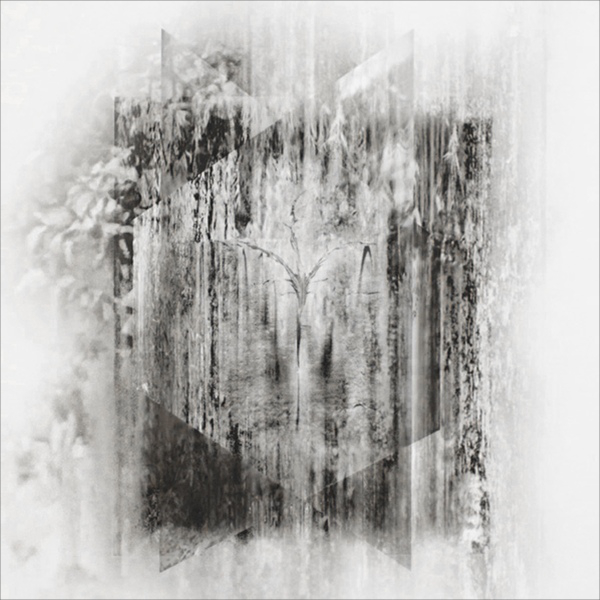
With Fluorescent Grey, K. Leimer, Steve Peters and Marc Barreca establish a genuinely distinct ensemble voice. Tyler Boley’s cover art, a smeared, somber grayscale abstraction, melting smudged runny worn ruined lost details in smeared charcoal grey, perfectly captures the dangerous spirit of the album—I love the fleeting impressions, lost textures, and a melancholic beauty in decay. Fluorescent Grey is not casual listening—it demands attention, surrender, and above all, curiosity. For listeners attuned to deep ambient explorations and the poetics of sound, this is a landmark release. Haunting, immersive, and profoundly affecting, Three Point Circle delivers a meditation in shadow and light that rewards repeated, intentional listening.
“Distortion manipulates the purity of sampled harmonics.”
Across these soundscapes, listeners are invited into singular sonic vignettes that shimmer with restrained melancholy and transcendent tension. The first track, “Grey Fluorescence” (8:57) unfolds like drifting constellations of piano flickers and lush harmonic smears, shimmering with unresolved chords and whispering textures. The ensemble’s approach to timbre is painterly—granular textures, metallic timbres, and subharmonic drones refract through each piece like light through complex fragmented gauze. There is a powerful paradox at play: the music feels simultaneously dense and minimal, intricate and austere. The trio construct delicate sonic architectures—resonant with bowed strings, manipulated samples, prepared piano, and field recordings—that appear to dissolve even as they form. The production, rich in spatial depth, reveals micro-events upon close listening: glimmers of melody, ghostly voices, synthetic winds, submerged pulses.
Emotional landscapes from minimal source material ::
Tracks such as “Still Current” (6:32) and “Common Misophonia” (8:03) exemplify the group’s uncanny ability to shape emotional landscapes from minimal source material. There is a quiet unease that threads through these compositions—each note feels haunted, each sound a fragment of something barely remembered or not yet fully formed. “Common Misophonia,” in particular, explores the psychological tension between sonic beauty and discomfort, turning mundane acoustic irritants into aesthetic moments of revelation. New blasting bowed buzzing breaks in with low tones, “Dull Flares” (8:05) sounding so harsh until you understand the lathes, the strings, the bows, working together, striking and stroking. The harshness is softened and lighter now, bows abound, tings of sharp metal strike, I hear a cello in the mechanic’s shop, the sound of fuzzy vibrating steel plates creates suspenseful tension.
One of the album’s most striking achievements is its attention to temporal drift. Each piece is allowed to breathe—often slowly, deliberately—while small changes accumulate and reframe perception. A door silently opens, the light swings and “Muted Chromesthesia” (7:35) introduces exotic timbral combinations that speak to synesthetic impressions—sound as color, tone as movement, drone as memory. Now with a sharp metal clang and then a robot seems to ask a question, “Nearly Remote” (6:01). The answer hides inside a set of chimes, bits of speckles flow. A huge cave is inside the piano, with flickery space music so far all of the remote action remains in the darkness.
Drills and lathes whispering flickers in the fog ::
Next, old bleeps from the past, “Grapheme Form” (7:14), with buzzing and plucked strings, ringing metal, a familiar sense of fingers on strings. Drills and lathes whispering flickers in the fog. Sometimes I am thinking of Steve Reich. The smallest functional unit of a writing system, tiny grains of sounds that harken to physical substances—strings and planes and tiny dots at play. With a calm pace, no urgency, only strange distortions and clues to the puzzles. Searching at night, looking into the hopeless mire. Long metal strings vibrate, questioning this or that or the other—almost a question, but really just an inquisitive noise. Restless ripples and mirages, fingers on long metal strings. The whistles and plucks own this cloud.
The closing tracks—”Dark Sky, Sirens” (8:57) and “Aphotic Stream” (7:39)—deepen the descent. This is music from the ocean floor of emotion: aphotic, submerged, and unmoored from traditional structure. There is no urgency, relax in the darkness and remember that night after the battle. Echoes of classical guitar, granular resonance, and shimmering bells coalesce into dreamlike movements where nothing is solid and everything is suggestive.
Throughout Fluorescent Grey, the compositional identity is collective and porous. Leimer, Peters, and Barreca continue their project of dissolving ego in favor of ensemble synergy, crafting a shared auditory imagination where the boundaries between composer, performer, and listener collapse. The ambient chamber collective deliver a mesmerizing masterwork of electroacoustic abstraction and introspective resonance. On their two previous releases, Three Point Circle’s compositional process willfully blurred individual identities in favor of a collective compositional technique. This is their most immersive release yet, an evocative nine-track cycle where each composition becomes its own mise-en-scène: distinct, darkly illuminated, and sublimely disorienting.
Fluorescent Grey is available on Palace Of Lights. [Boomkat | Juno]