



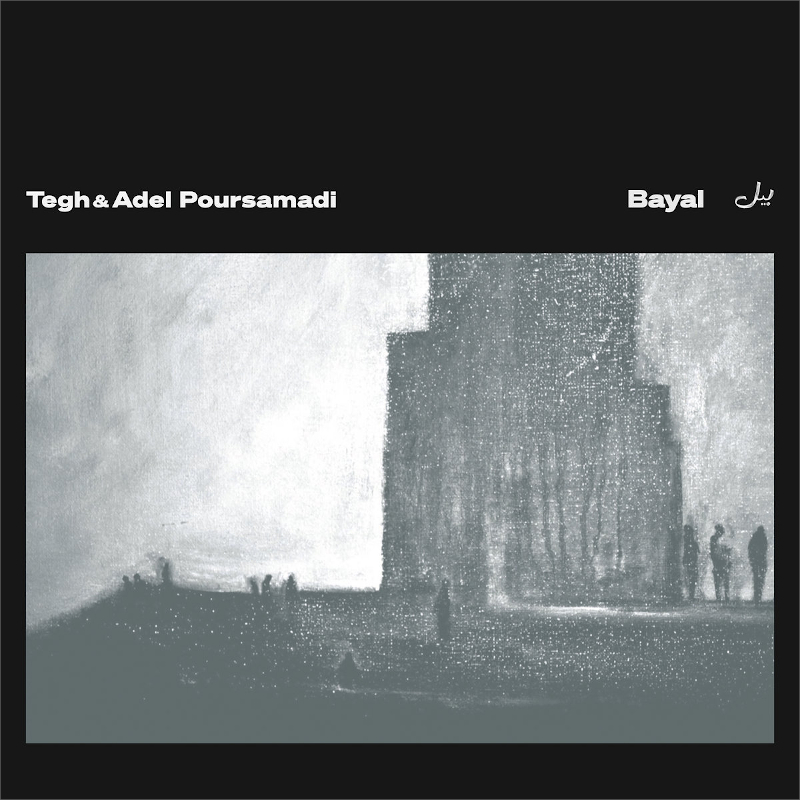
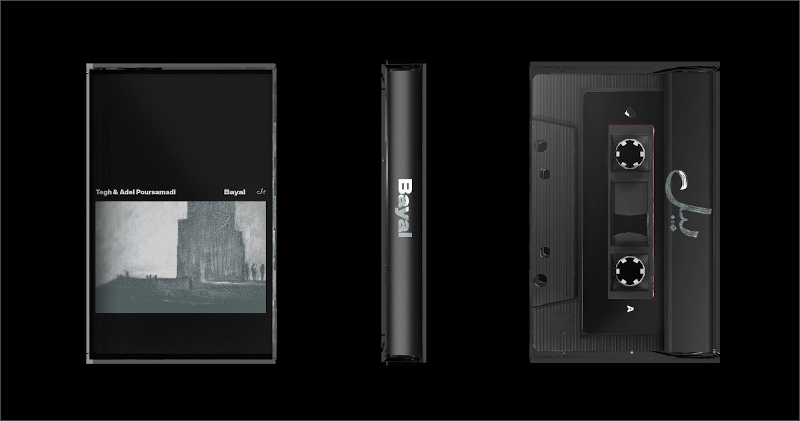
Iranian experimental musicians Shahin Entezami (aka Tegh) and Adel Poursamadi reunite for their third collaboration album Bayal, a creative response of greyscale synthesis, violin, and traditional instrumentation to a 1964 collection of short stories by seminal Iranian author Gholam-Hossein Sa’edi.
The dark light of mystery
Iranian experimental musicians Shahin Entezami (aka Tegh) and Adel Poursamadi reunite for their third collaboration album Bayal, a creative response of greyscale synthesis, violin, and traditional instrumentation to a 1964 collection of short stories by seminal Iranian author Gholam-Hossein Sa’edi. Suspended in a gloam of moaning and unplaceable synthetic textures, the earthen and worldly timbres found in Bayal conjure this verisimilitude with grace. The imagined village of Sa’edi’s creation appears as a desolate, foreboding potency, cloaking the sonic space in darkness. The book—The Mourners of Bayal—is a collection of eight short stories set in the fictional village of Bīll, exploring heady themes of loneliness, despair, sufferance, famine, superstition, and death in an unnamed time period without clues to its geographic setting.
The dark light of mystery.
Tegh and Poursamadi explain that they shaped the album’s raw material by recording sound-based improvisational dialogues, which were later processed, structured, and developed into the final pieces. This process, Tegh says, “placed the emphasis on responding to the intended concept, with less attention paid to musical rules.”
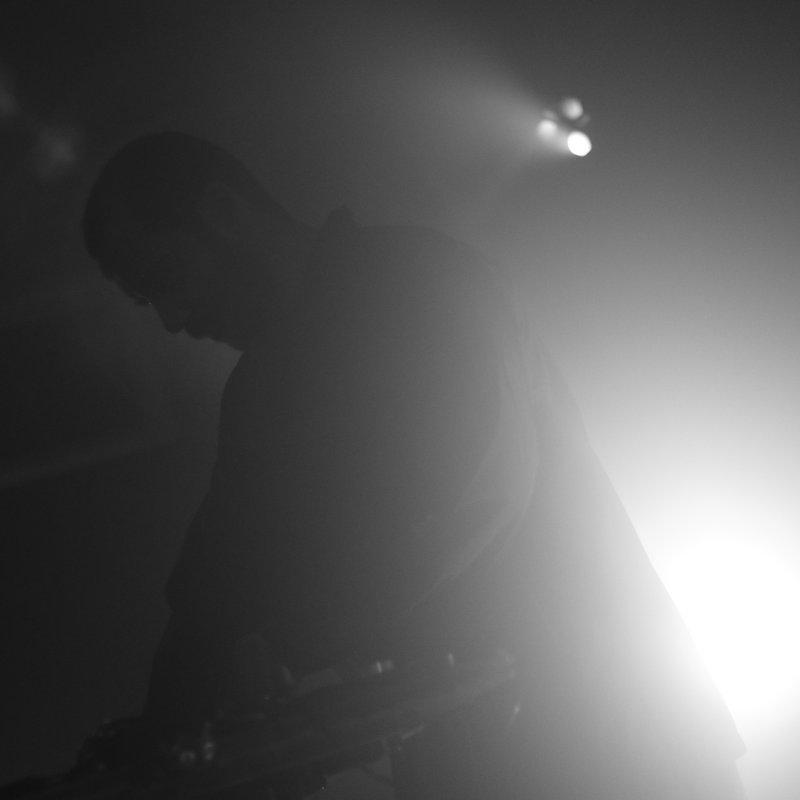
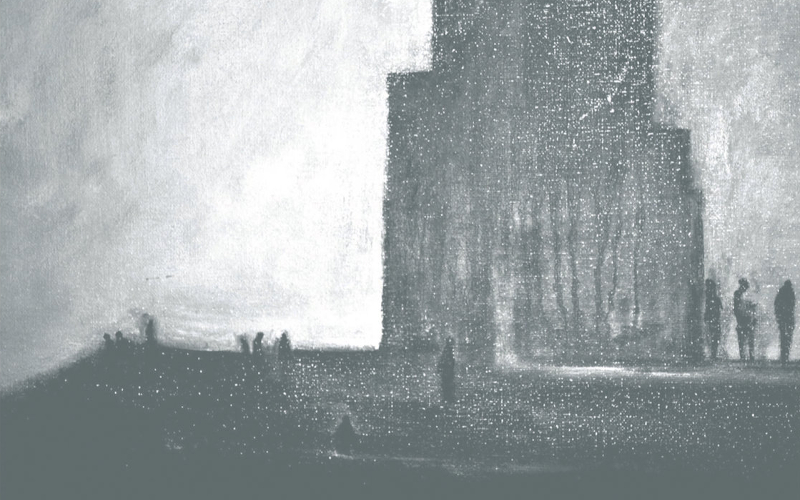
“In this album, the focus is less on the details of the stories, characters, or events, and more on their overall atmosphere,” writes Tegh in the program notes. “During the creative process, the book and its stories were approached from a distance, as if the village of the book was being seen from the top of a hill. From this perspective, complex relationships, conversations, or the precise intensity of situations cannot be understood, only the movements, objects, and faint memories of the characters are felt. It is as if the voices of the people, their cries, and other sounds are heard from afar, but the details remain unclear.”
The opening brings choked string chords and haunting, soaring industrial billows. The portal to Bayal’s suggestive and enveloping cosmos yawns wide in its overture, “The Black Stone” (5:37). The feeling awakens from endless slumber, a new cycle begins. I hear bowed instruments in a huge wet cavern, chaotic dissonance and a quiet spot, danger and sizzling darkness. The energy pushes louder, followed by strong continuous dark matter, I think that something else is behind the wall of energy. I hear voices whispering, sometimes the voices get louder, coming from somewhere dark deep down below with ghosts moaning and calling, but only fragments make it through, portending a darker doom, “The Cow” (7:07). Shadowy, metallic beats bring a time-stretched haze into focus, while organic string ornamentation disintegrates into fizzing static, examining the oppression, corruption, and alienation of Sa’edi’s villagers and their real-world counterparts, or all mankind.
The sun comes out through this strange atmosphere ::
“Toward the Vast Mountain” (4:05) sets off with bowed instruments that are glass cutting sharp, now there are many bowed instruments and everything has gotten quite dark, something is changing. We seem to have launched and are reaching a great speed while still sitting in this chair, there may be vocals, this is complex. She is hidden if she is there at all. The next track is “Papakh” (2:36), I hear bowed instruments, forming a long sharp edge that continues to infinity, now there are many edges, the edges tremble and squirm. So far the gates are holding, but the walls are melting, the sun comes out through this strange atmosphere. I think that a reed instrument makes brief appearances and then vanishes completely. This one is my fave so far.
Dark and slow, “Zanguleh” (8:07) features electronic and traditional instruments, gently bowed, opening up the sky and revealing new dimensions, a distant train blasting its instrument, a new voice pleads its perspective. Now there are many voices, some are descending, some are opening, I might hear an old radio sound, crackling color static sparks flying. I have never encountered willow trees like this before, “Under the Willow Tree” (8:58) brings us home, through low slow electronic swirls in the dark, and blasting blaring crushing loud textures that stay dark. Hanging lashes dangle in the murky sky, a continuous noise or sound, I think of the spirits that are weeping in the caverns, machines are hissing and new creatures form and begin to walk, my sense of terror is growing. This is the end.
Shahin Entezami, also known by the stage name Tegh, is a classically-trained musician and sound artist based in Tehran, Iran. His music style mostly takes root in noise, drone and glitch together with experimental elements. Adel Poursamadi is an acclaimed multi-string player also based in the Iranian capital, a studied and experienced performer of the viola, violin, and of traditional Iranian instruments such as the kamancheh.
Bayal is Tegh & Adel Poursamadi’s third album as a duo, following 2022’s highly praised Ima, and 2024’s follow-up After You Left.
Bayal بیل is available on Injazero. [Bandcamp]