






Across eleven diverse movements, SICK STREET displays rhythmic elasticity, aural sculpting assembled from found sound, cellular technology, environmental residue, postcode mosaics, and a restless multiplicity of influence.
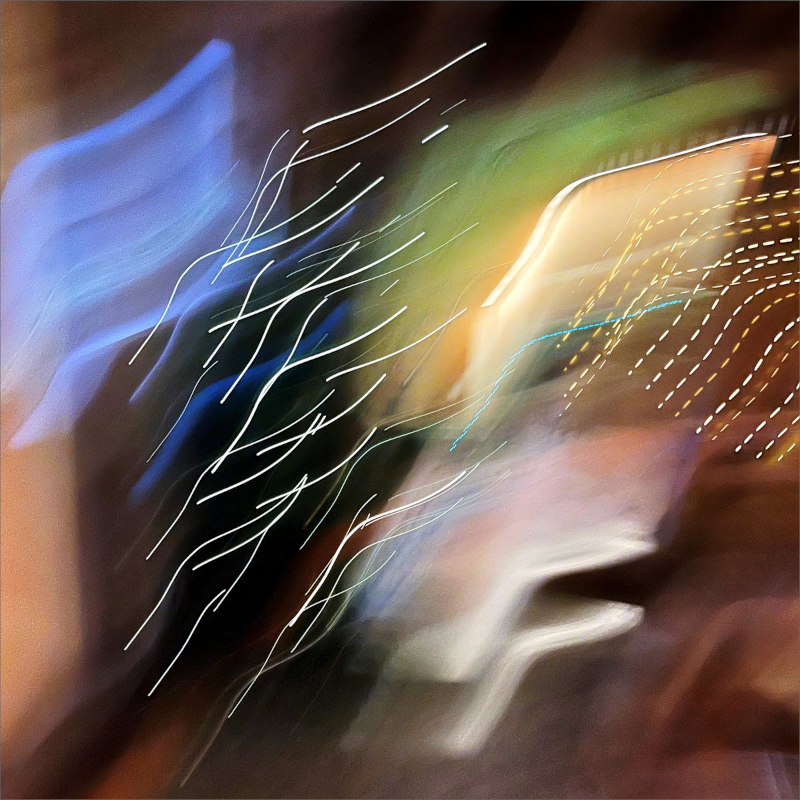
An audio-topographical survey of urban psychic life
UK artist Poppy H illustrates something that can arguably be said about Britain’s relationship to creativity—and perhaps to music more specifically—which is that it exists as its own singular expressive domain. Partly this emerges from the country’s layered social strata, but there is also something else at work: something deeply and innately Albion-esque. A sensibility difficult to export, difficult to imitate, and almost impossible to detach from the geography and psychological weather that produced it.
As a near-perfect archetype reinforcing this idea, we arrive at Poppy H’s latest set, SICK STREET. Across eleven diverse movements, the record displays rhythmic elasticity, aural sculpting assembled from found sound, cellular technology, environmental residue, postcode mosaics, and a restless multiplicity of influence. None of these components are uniquely British in isolation, yet here they coalesce with the strange density of living in—and for—the modern city. It feels less like genre exercise and more like an audio-topographical survey of urban psychic life.
Opener “Thempire” carries a genuinely affecting heart, shaped unmistakably in the silhouette of classic Detroit futurism, recalling the emotional circuitry of Carl Craig operating under his Paperclip People guise. There is warmth buried beneath the machine pressure; melancholy hidden inside propulsion.
“Your Shell” introverts elegantly into a kind of spectral Cocteau Twins via 4AD atmosphere, folding dream-state textures inward until they resemble memory fragments dissolving against rain-streaked concrete. Elsewhere, “It Trains Itself” weaponizes wicked staccato drum programming and nervously plucked synthesis, stuttering and mutating its way toward the more experimental corners of the dancefloor—the kind of low-key, word-of-mouth industrial gathering where the room feels held together by smoke, voltage, and mutual insomnia.
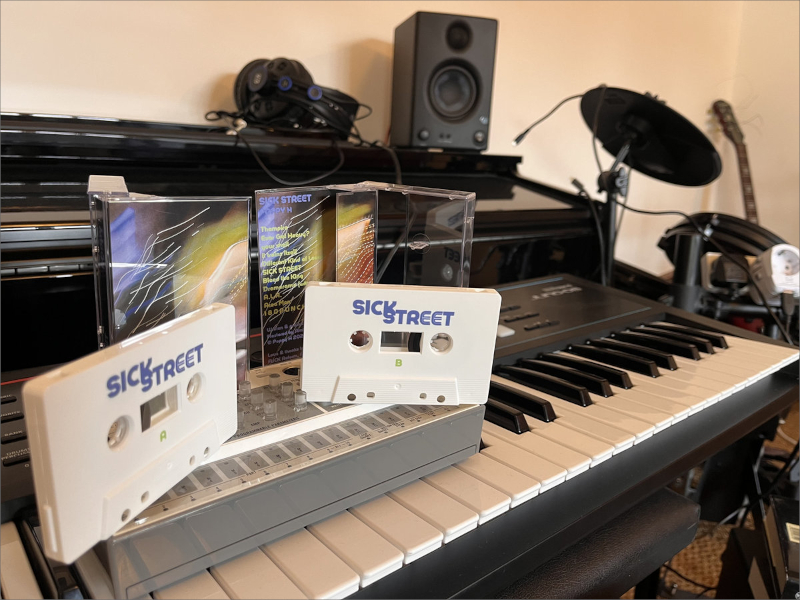
Memory fragments dissolving against rain-streaked concrete ::
The title track arrives like an alternative-radio jewel from some lost John Peel or Steve Lamacq transmission. It possesses that same uncanny ability to sound both immediate and collapsing simultaneously, flooding outward before caving into its own brutalist architecture. There is something of The Fall in its energy—if not directly in tonality, then certainly in spirit: confrontational, disjointed, peculiarly British, and alive with friction.
Closer “180Punching” finally detonates the record into full braindance-adjacent delirium: a ZX81-loading-screen kick to the sternum rendered through Atari-era techno abrasion. It is all 200mph momentum and slap-in-the-face bleep/bloop circuitry, collapsing into a gloriously wiry digital mess that somehow still maintains precision within the chaos. The track feels simultaneously decomposed and hyper-functional, like old consumer electronics discovering sentience mid-rave.
What SICK STREET ultimately succeeds at capturing is not simply eclecticism, but the sensation of contemporary British electronic culture as lived experience: fractured yet communal, exhausted yet euphoric, hyper-local yet culturally omnivorous. Poppy H does not merely reference influences maybe musical or not; they metabolize them into something unmistakably their own to which we can each identify. Now that is some skill for adept creativity. Well played.
SICK STREET is available on Bandcamp.