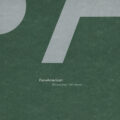




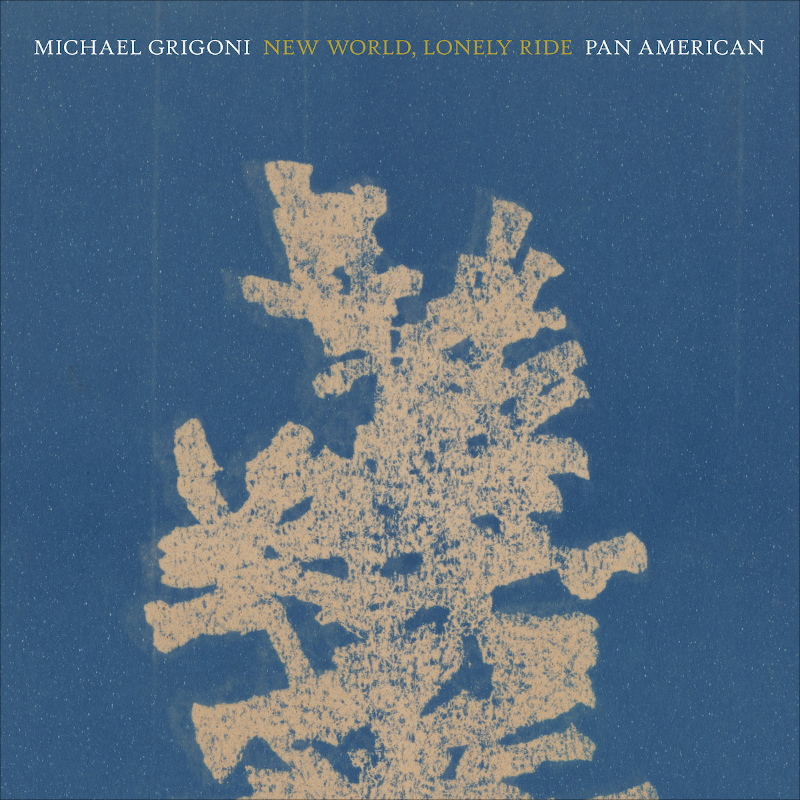
It’s hard to be cranky when listening to the soothing sounds presented by Michael Grigoni and Pan•American in their first collaboration, New World, Lonely Ride, a journey into the majestic physical landscape of America as well as its grim psychic underside.
High lonesome sound
It’s hard to be cranky when listening to the soothing sounds presented by Michael Grigoni and Pan•American in their first collaboration, New World, Lonely Ride, a journey into the majestic physical landscape of America as well as its grim psychic underside.
I have a special fondness for pedal steel, lap steel and dobro, all played on this album by Grigoni. These are the quintessential sounds of American music in my mind. My grandpa, who played in local country rock combos, had all of these instruments at his house and played them often, though he was more accomplished as a bassist. The dobro he built himself, so these sounds tap into childhood and teenage memories of hearing him and other family members play, and seeing him work on his instruments, always with a cigarette dangling out of his mouth or smoldering in a nearby ashtray.
Then there are the microtonal aspects of playing dobros and steel guitars: players hit the notes between the notes and explore the rich world of tonality that exists outside of the strict equal tempered universe imposed by European pianos. Sounds slide and shimmer as metal bars touch metal string. The strings are tense, but the sound of them relieves my own high-strung tension.
High lonesome sound ::
Lap and pedal steel guitars were originally from Hawaii, first developed in the 1880s. The instruments and sound migrated to the United States when the kingdom was annexed in 1898, and they quickly became a fixture here sinking their roots into the land. Like the immigrants who came here through the golden door (or who were brought here against their will) their instruments and songs with them. These sounds couldn’t help but be transformed by the American landscape. Yet even within their cohorts and enclaves, life in the new world has often been lonely and harsh. Call it the pervasive influence of capitalism or unbalanced individualism at the expense of community, if you will. Those are at least contributing factors. Some of that loneliness is heard in the “high lonesome sound” of various strains of old-time music, often in a keening voice. There is an aspect of that high lonesomeness in the blended and bent notes of these instruments.
This record is wordless, instrumental, and that also adds to its lonesome quality. The guitars meander like a person sent up from the holler into a city to find their ways in factory work, to find their way in raising families, when their extended family has been left back home down in the hills. Now, generations later, the factories are closed and the children of their children continue to meander in the lonesome world of digital connection and analog isolation. Welcome to America. Yet the title track opener has a tenderness to it that pervades the album. Perhaps its because if you press the wounded psyche of the nation too hard, listeners would wince in pain.
Divides cut across these spaces ::
Mark K. Nelson as Pan•American contributes guitar, mandolin and keyboards to this album. The mandolin is almost harp-like at times giving songs like “Sun Morning Sun” an ethereal rinse, a quintessential tinkle for the other sounds to weave around in their nebulous luminosity reflecting the wide-open spaces in a vast shared geography that is still marred by an unwillingness to find a shared common ground. Divides cut across these spaces like lines demarcated by the surveyors and map makers determining our boundaries.
In a bid to weave our disparities together songs like “Omni Country” recall the very name of the Pan•American project itself, omni and pan both being words for all or everything. Nelson’s guitar lines are like the individual threads in the vast quilt of the country, stitching up the frayed patches, and Grigoni’s various stringed instruments played with slides are the plains, mountains, prairies, rivers and streams winding through. The mandolin’s almost percussive like patter, on “Dream of Someone” are like the people inhabiting this vast continent together.
I think music like this can be a personal and collective balm for the wounds of divisiveness, the scars of environmental degradation, the feeling of being unmoored and always on edge. Songs like “Silver Streams” and “Blue Tears Never Dry” are the necessary tears that come with empathy and reconciliation.
Fuses that calm spiritual sense ::
This lovely record fuses that calm spiritual sense. with some of the best things America has given the world: blues, jazz, bluegrass, (post) rock and roll. It also points the way to what I see as becoming a next major form of music, an instrumental minimalism drawing on ambient merged with traditional forms. Could America take our best traditions from the past, as this music does, and with hope and daring, join them together, to create a shared vision for our shared future? Albums like this one certainly do their part to contributing to what I hope is an emergent ethos.
So many artists are tracing their roots back into Americana, and giving it an ambient spin. SUSS have championed the growth of ambient country music, and this record certainly fits in with that strain. It is also tied in with minimalism. Like jazz, minimalism can be heard as a form of American art. In this kind of music, jazz meets minimalism over the bridge of old time playing, via the vehicle of improvisation. What this music takes from ambient and minimalism is a certain kind of quietude and hush, that allows a rippling presence to emerge. What that presence is might be known from other kinds of American music, namely gospel, but without the words. There is a spirit within this kind of music, it might even be holy. (It need not be Christian or religious in a fundamentalist sense). In that sense it reminds me of the Ambient Church movement and the recent Ambient Girl tour playing in old churches across England.
I really think ambient is one of the greatest forms of contemporary spiritual music, and here we are in the church without walls, out on the land in the wide open plains, in the mountains and rivers without end.
New World, Lonely Ride is available on Kranky. [Bandcamp]