





For an artist whose work is rooted in the landscapes and quiet moments of Patagonia, Tesoros is Lumtz at his most personal and his most generous—sharing an archive of walks, notes, and small musical experiments as if handing you his journals and saying, here, take a look. Most listeners will find something in it. The ones who slow down enough will find quite a lot.
A collection of treasures
There’s a particular quality to music made in mountain cities. Something about the altitude, the distance from urban noise, the proximity to water and weather. Luciano Lamtzev—the Bariloche-based Argentine composer operating as Lumtz—has been making music shaped by that environment since 2019, releasing lo-fi ambient pieces rooted in Patagonian landscape and personal documentation. Tesoros is his most deliberate statement yet—a 16-track collection released on We All Speak In Poems, the label curated by Alaskan Tapes‘ Brady Kendall, gathering two years of walks, field recordings, and quiet experiments into something that feels genuinely intimate.
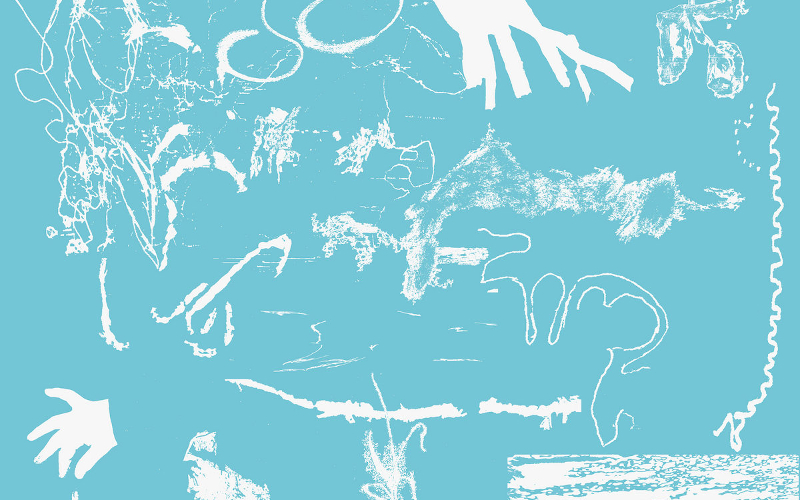
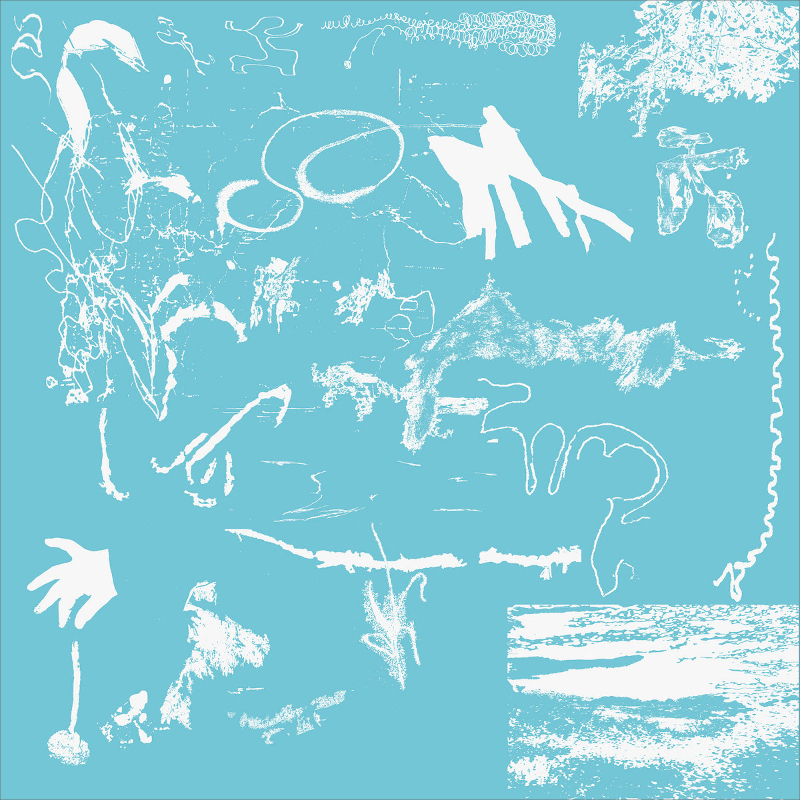
There are some pretty ambient pieces here that are beautiful and just bring back nostalgic moments. It’s as if the hertz, the sounds, are just meant to stimulate the mind in some way, pieces that speak to your soul. Coming in knowing nothing about this artist and coming out feeling like the artist gave you a very gentle therapy session. That’s the best way to describe it. The cover is very abstract but really doesn’t give off the type of music you’ll hear after you’re done listening. It’s like a door or gateway to welcome you in. Lamtzev does a great job plucking the right notes, introducing the stereo panning on field recording elements, and finding the right balance of volume for this type of sound and genre.
Like something tumbling slowly inside a closed space ::
The album goes through a very subtle ambient introduction with its first four tracks, and then track 5 “alt r cmd p” comes in with a beautiful guitar riff and clicky drums with glitched-out repeaters forming around the beat. It’s a very pleasant experience—it sounds like that feeling when you know something good is coming but you just can’t see it yet. The next few tracks all the way down to “Madera” (track 8) are very pleasant to listen to. “Madera” has a very strange effect, almost as if the notes playing are being fast-forwarded or skipped, and there’s an intentional vinyl scratch peeking through at times while a key organ plays underneath. It’s actually quite pleasant to listen to despite its strangeness.
Track 9 “Mirada brillante” features MAQ, who appears to be a producer. The track seems to be a series of particular notes going around in a series of chords or restricted chord scales, looping and skipping and randomizing within that scale.The production here has a particular quality, notes cycling through what sounds like a restricted scale or chord set, looping and skipping and landing in slightly different places each time without ever breaking free of the harmonic boundary they’ve been given. It’s an effect that creates beautiful, meditative unpredictability. Nothing repeats exactly, but nothing surprises you either. It just moves, contained and weightless, like something tumbling slowly inside a closed space. It reminds a lot of Neuro… No Neuro‘s approach to melodic ambience, that same cute offset of electronic ambience that feels nostalgic and slightly displaced from normal musical logic.
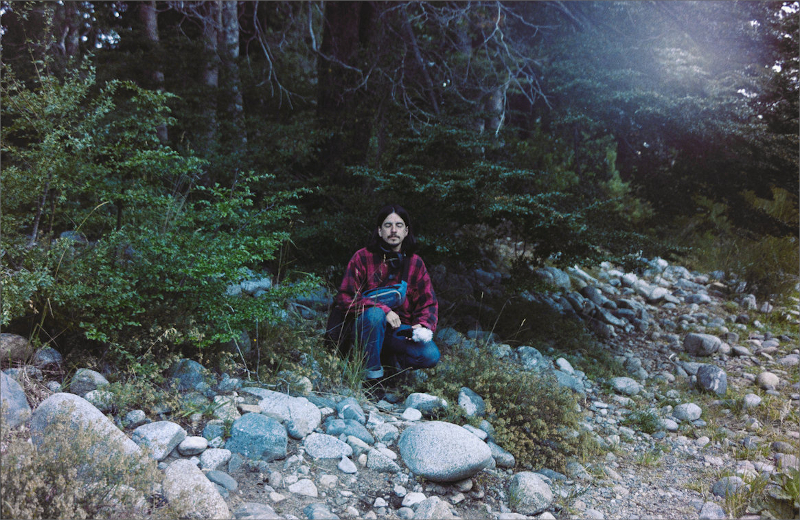
An artist whose work is rooted in the landscapes and quiet moments ::
“Playa serena” is beautiful and gives off an early Boards of Canada ambience vibe. Synthetic wind chimes with a running ocean wave crash alternating through some rhythm loop, a very interesting piece. The last four tracks are all features. The closing track “un camino luminoso” features two artists—what sounds like a vocal duo between a female and male voice singing over beautiful notes that have worked their way through the album’s sound design language by this point. The static in the background is intentional, though it can sound like a bad recording if approached without context. It isn’t.
Tesoros is exactly what its title suggests—a collection of treasures. Not grand ones. Small ones. The kind you carry in a backpack without knowing their value until you stop and look through them. For an artist whose work is rooted in the landscapes and quiet moments of Patagonia, Tesoros is Lumtz at his most personal and his most generous—sharing an archive of walks, notes, and small musical experiments as if handing you his journals and saying, here, take a look. Most listeners will find something in it. The ones who slow down enough will find quite a lot.
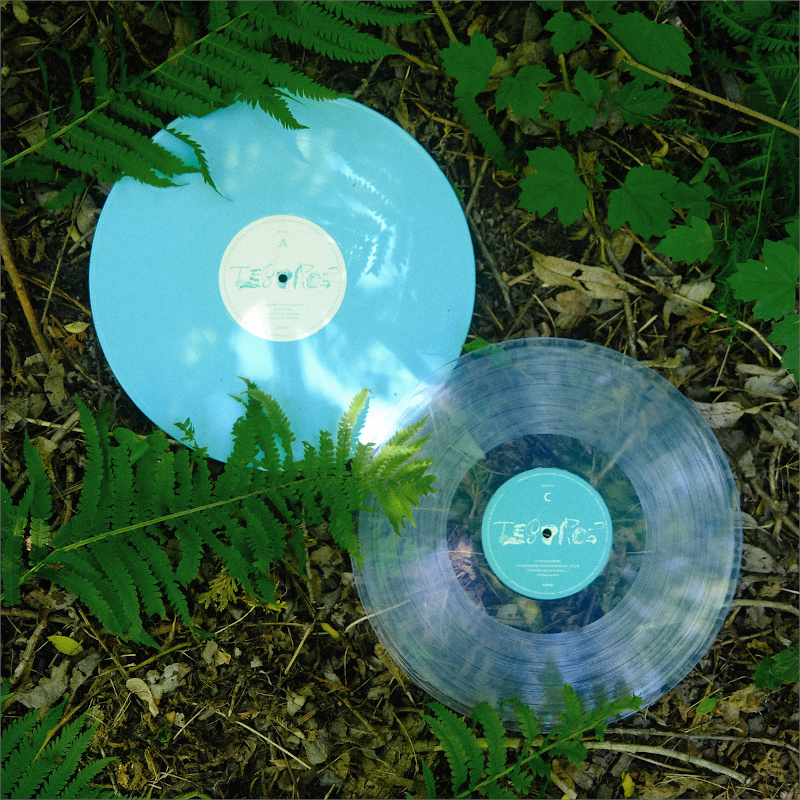
Tesoros is available on We All Speak In Poems. [Bandcamp]