



The strength of D-R is that, like much of the best ambient music, it can be approached as the perfectly balanced backdrop which will subliminally change your state of mind, or as a full immersion, disclosing one more detail at each listen. In both cases, the album rewards the listener, and inspires them in its tranquillity.
Two questions followed by two answers
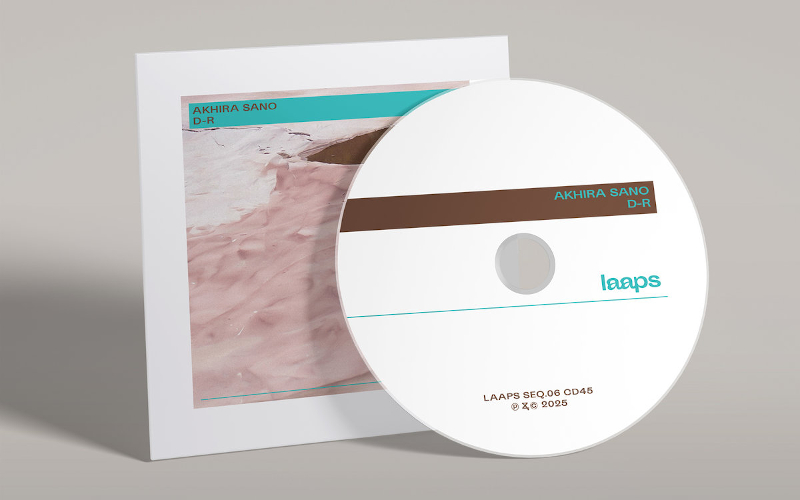
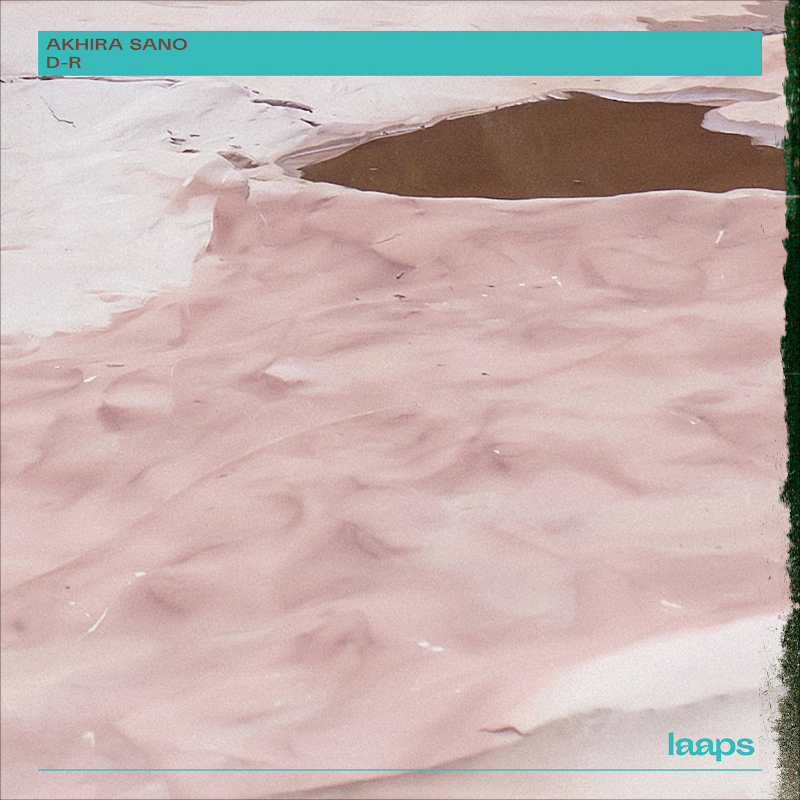
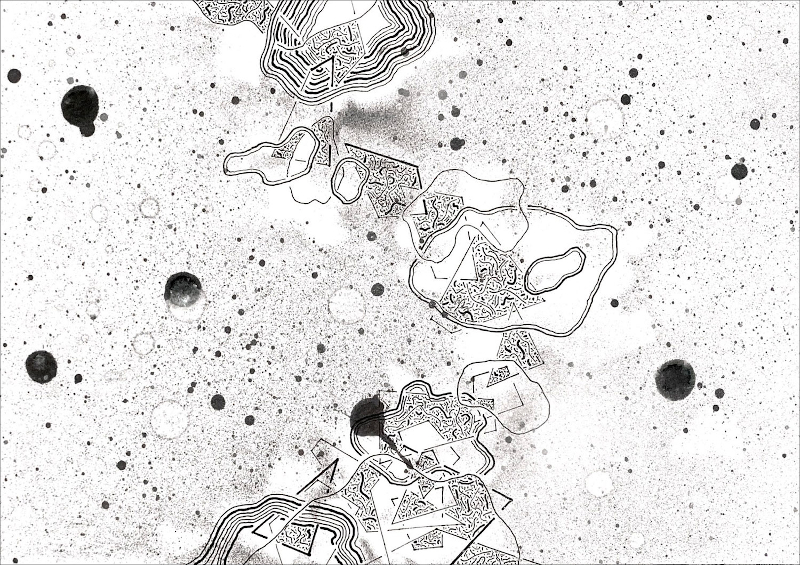
Akhira Sano’s new album, D-R (out on laaps in digital and physical formats), continues the peaceful path laid out on past releases such as in front of (2023, OTOROKU), with delicate soundscapes unfolding from a few sources which coexist in perfect harmony, with no rush or end point. While these compositions could potentially linger on indefinitely, sharing a similar construction to Sano’s sprawling drawings of black blots and lines coalescing into universes or cells, the overlying structure of D-R is much tighter, and it’s constrained to four tracks – two questions followed by two answers.
That being said, what is being asked and replied to is not clear. While the elements that form the album are few, manifest, and very harmoniously put together, the music stays put in the abstract, and even its outer world references – like water or objects being moved or used – do not anchor the listener to the real: while a lot of ambient music has taken to using field recordings as a proxy for narrative and texture, as an easy way to add “something more” to music and give it a way of emotionally relating to the world, and a place and a story within it, D-R eschews this in a number of ways.
Unnaturally amplified, in a lowercase manner ::
Some of the field recordings sound unnaturally amplified, in a lowercase manner, or they are distorted by reverb, and this estrangement is amplified by their juxtaposition to the omnipresent hiss (waves of white noise crashing in and out of the recording, not like a strong wind but like thick vapour made to glow in and out of view by a soft spotlight). Glitches are present too, but only reveal themselves to deep listening; with this unobtrusive and non-disruptive use, they become one more living being in the ecosystem. Piano melodies too unfurl delicately, moving around in space without a specific direction. Like Eno’s infamous tape loops in Music for Airports, they instantly dissolve any tension with no claim to narration.
In the two responses, these ideas are subject to further elaboration. At the beginning of “Réponse Un,” the field recordings are more lively, including birds chirping on top of a loose piano counterpoint, with glitchy echoes at the low limits of perception in the mix. The arrangement is still as unstructured and digressive as that of the two questions, and “Réponse Deux” brings the minimal approach to its conclusion with a fully electronic instrument weaving its way through the swathes of cosy white noise.
The strength of D-R is that, like much of the best ambient music, it can be approached as the perfectly balanced backdrop which will subliminally change your state of mind, or as a full immersion, disclosing one more detail at each listen. In both cases, the album rewards the listener, and inspires them in its tranquillity.
Sounds, arrangements and mixed by Akhira Sano
Mastered by Taylor Deupree
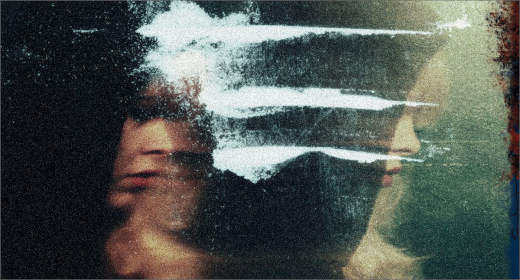
Artwork by Jenni Toivonen
Design by Sprflxgrfzm
D-R is available on laaps. [Bandcamp]