



Drum and bass is more than just a high-energy electronic music genre — it’s a cultural movement born in London’s diverse neighborhoods, shaped by the sound systems and traditions of diaspora communities. Emerging from underground clubs and pirate radio stations, it gave voice to a generation and transformed the global music landscape.
Urban basslines, global cultural shift
Chapter 1 :: How London’s Underground Beats Became the Voice of a Generation and Changed the Musical Culture of the World
Culture has always been full of trends and styles, and music is one of its most vivid languages. In this article, we will look at drum and bass not only as a genre, but also as a cultural phenomenon that was born on the streets of Britain and formed entire subcultures.
It all started in the crowded basements and small clubs of London. Afro-Caribbean sound systems brought the heavy, pumping bass and hypnotic rhythms of reggae and dub. Indian and Pakistani communities added their own elements, complex percussion patterns and unique melodic shades that colored the sound palette. In East London clubs such as The Four Aces in Dalston in the early 1990s, this heritage met with the energy of working-class youths drawn to the rave, hardcore and acid house scenes that were popular in the late 1980s to mid-1990s. These hosted parties that attracted young people looking for new forms of expression and created a space for early experimentation.
Other important clubs of the period included Tasco Warehouse (Plumstead) and Movement at Bar Rumba (West End), which attracted a growing audience of hundreds of people at parties. The social context of the city also influenced the development of the genre. London in the early 1990s was tense: unemployment, economic hardship and racial tension permeated everyday life. Young people were looking for ways to express frustration, hope and identity at the same time. Fashion became a separate form of self-expression: baggy trousers, hoodies and caps denoted both belonging and resistance. Issues of exclusion and discrimination strengthened the desire to find a space where expression would be unlimited and the search for a new sound became this place.
The music scene of that time was rich in styles: rave, acid house, early jungle and experiments with recitative to the rhythm created the ground for a new sound. Technology in turn made the process accessible: Akai S950, MPC60 samplers, Technics SL-1200 players, Atari ST computers with Cubase, as well as pirate radio stations Kool FM (founded 1991), Don FM and Rinse FM, opened the doors to new artists and were ready for bold experiments. Music spread very quickly for that time, branded parties and radio stations became the ideal platform for the emergence of a new style.
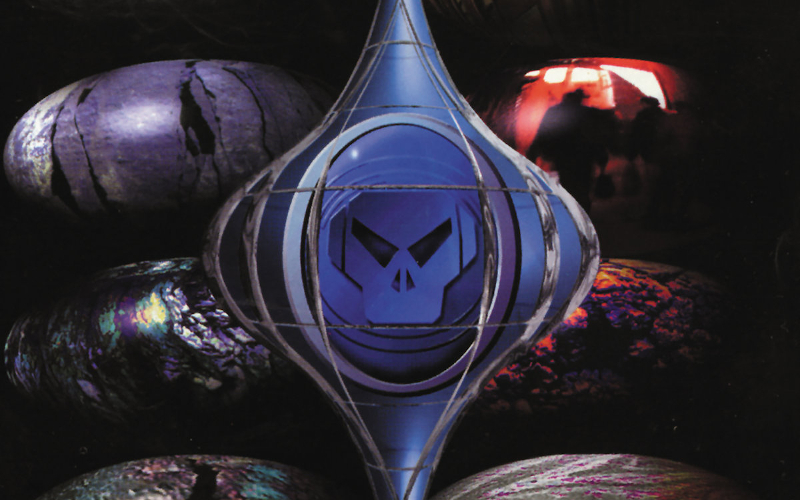
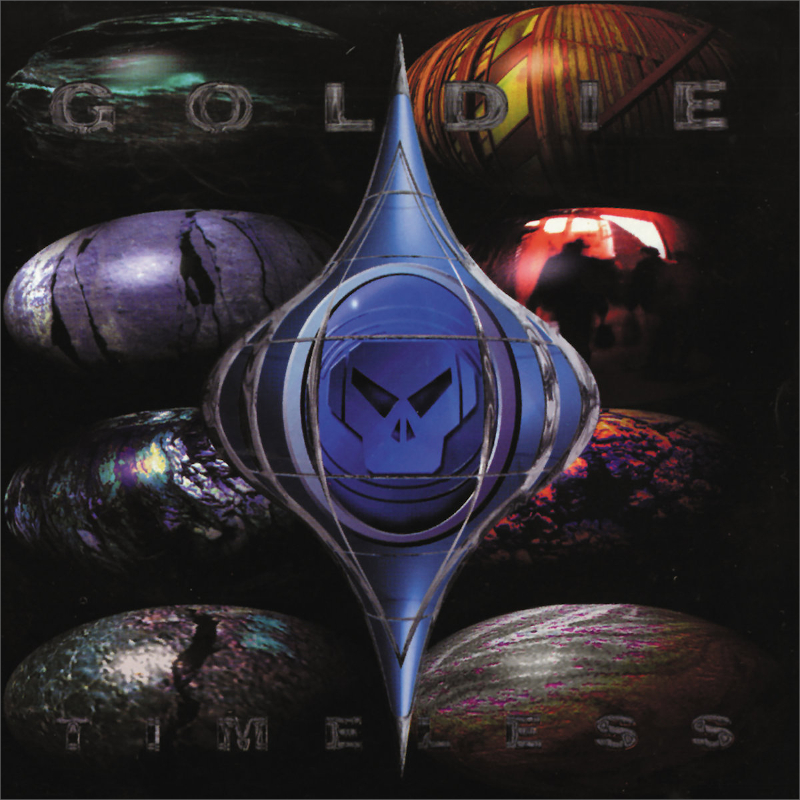
Pioneers of the drum and bass scene shaped its character. Fabio and Grooverider pushed breakbeats to the limit, experimenting with sped-up breaks and heavy grooves while performing on radio stations and in underground clubs. Goldie, a visual artist and musician, popularized graffiti in the early 1990s, and his work became associated with drum and bass culture. His Metalheadz label released iconic releases such as 1995’s Timeless and the single “Inner City Life,” which cemented the genre’s aesthetic code. LTJ Bukem added melodic textures to hard-hitting rhythms, demonstrating that drum and bass could be both intense and melodic. Their tools were simple: vinyl, samplers, drum machines, and inexpensive synthesizers, but from this humble setup emerged a sound that was bright, immersive, and at the same time fractured.
One of the most iconic moments took place one night in the basement of the Rage club in Brixton in the early 1990s, when Grooverider first played a sped-up Amen Break (from The Winstons’ 1969 song “Amen, Brother”) over a powerful bass line. Smoke, strobe lights and a crowd of amazed teenagers created an atmosphere that was new for its time. Few could articulate what they were hearing, but everyone felt that a new sound and style had been found. From these hidden underground spaces, drum and bass grew into a worldwide movement, creating subcultural spaces and giving a voice to those who had long been unheard. Its legacy continues to be heard at festivals around the world, preserving the original energy of its origins.
At its core, drum and bass is a reflection of London itself. It was born out of diaspora communities and working class neighborhoods, bridging cultures, narrating social realities and capturing the restless spirit of a generation. The music captures the texture of the city, the resilience of its people and the energy of young Londoners eager to be heard.
Chapter 2 :: England before the bass: from jungle and bass to drum and bass
London in the late 1980s is experiencing an economic downturn, high unemployment and a constant influx of new residents. Along with these new residents, other cultural traditions are penetrating the city. In poor areas, street sound systems with reggae and dub begin to sound, which becomes an important basis for the future bass culture.
At this time, the musical environment is dominated by rave and acid house, gathering thousands of young people in industrial warehouses and at semi-legal parties. Post-punk takes its position as an alternative to classic rock and roll, which has long been entrenched in the status of “music of the nation.” Against the background of this mixture, space appears for a new sound.
The first step is jungle and bass. It combines fast breaks, heavy bass and fragmented vocal samples, which DJs record and process on the equipment available at the time — Akai samplers, drum machines and cheap synthesizers. An important source of distribution of the music are pirate radio stations such as Don FM and Flex FM, which broadcast fresh tracks around the clock and build an audience for the genre. By the mid-1990s, jungle begins to change. The sound becomes more polished and dynamic, the bass—deeper, the rhythms—complex. It is this transition that cemented the name drum and bass.
New venues appear in London clubs—The Rocket in Holloway, Lazerdrome in Peckham, later The End in the city centre, where DJs experiment with fast breaks and deep subs. These venues become catalysts for the transformation of the genre. If techno, which came to Berlin from Detroit, reflected the industrial landscapes, and house from Chicago—the energy of the metropolis, then drum and bass became a musical mirror of London. It absorbed street rhythms, the cultural heritage of diasporic groups and the desire of working youth for a new language of self-expression.
Chapter 3 :: Voices of the First and the River of Subgenres
By the mid-1990s, drum and bass had already gained international fame, and with it its own artists, labels and large venues.
It is worth starting with Goldie, perhaps the most recognizable artist of this scene. As an artist and musician, he combines street art, graffiti and a unique musical sound. His label Metalheadz becomes the center of the genre, and the album Timeless (1995) cements drum and bass in the cultural history of Britain. Goldie‘s formula combines a hard rhythm with an urban flavor, turning music into a part of the city’s identity.
New directions were not long in coming. In general, drum and bass can be imagined as a river branching into several streams fed by one source.
- Liquid sounds like a sunrise after a rave: soft, atmospheric and melodic.
- Neurofunk is hard, filled with tearing and electric sounds; It describes the future of the city in cold steel tones, where each part is built on the limit of energetic tension.
- Jump-up retains street audacity and the immediate energy of the dance floor.
All these styles retain common roots, but give listeners different impressions: from meditative immersion to an aggressive adrenaline surge.
The basis of the genre is different from techno. Drum and bass came from another country, but, unlike techno, it is the music of diaspora, built entirely on alien sounds. The Germans took techno from the Americans, but adapted it for themselves, creating a signature style and preserving the roots. The English, on the contrary, completely adapted foreign music and culture, creating their own genre on their basis.
Thus, drum and bass simultaneously acquires its integrity and diversity. The pioneers set the tone, labels and clubs reinforced it, and subgenres showed that the genre has many channels, each with its own character, but with common traditions.
Chapter 4 :: From the Basement to the Stadium
Drum and Bass developed a unique musical language that combined sound, movement and visual elements. The style of the scene—tracksuits, hoodies, sneakers, caps, street denim and graffiti posters—became part of the atmosphere of clubs and parties, where each element complements the sound, creating a holistic sense of space.
On the dance floor, the genre shifted its emphasis from a straight beat to broken patterns, where the MC controlled the energy of the crowd, and the practice of “rewinding” and exclusive versions of tracks made each night unique. Dance floors became a space for experimentation, where every sound, every pause and every drum hit created a sense of participation and shared experience.
Labels continued to play a key role in supporting the scene and shaping its sound. Metalheadz (London, 1994, Goldie, Kemistry and Storm) became the centre of a hard urban sound, RAM Records (Hornchurch, Essex, 1992, Andy C and Ant Miles) provided a venue for energetic tracks including jump-up, Moving Shadow (Stevenage, Hertfordshire, 1990, Rob Playford) released jungle and experimental drum’n’bass, Good Looking Records (London, 1991, LTJ Bukem) created a soft, melodic liquid. Through these venues new ideas, sounds and styles quickly found a resonance with listeners, and club nights turned into real laboratories of sound.
Festivals and large events allowed the genre to move beyond the basements and local clubs. Hospitality (London, 1996, Hospital Records) annually gathers thousands of participants, UKF (London, 2009, online platform and YouTube channel) introduces the public to new names and fresh tracks. The international map of drum and bass festivals includes:
- Let It Roll (Czech Republic, Prague, 2003, Blackout Music)
- Sun and Bass (Italy, Sardinia, 2000, Sun and Bass Crew)
- Neurofunk Festival (Germany, Berlin, 2010, DnB Germany)
- EXIT Festival (Serbia, Novi Sad, 2000, EXIT Foundation)
- Rampage (Belgium, Antwerp, 2006, Bass Events)
These events allowed the genre to maintain its experimental freshness and at the same time achieve international recognition.
Author’s quote ::
“The success of the genre is natural, but unexpected. The peak of electronic music development in the world gave birth to dozens of experimental genres, many of which remained local and did not receive widespread support. The main difference of drum and bass was the broken rhythm, which was not present in other genres, while others were distinguished only by their melody and were close to disco and house. A completely different sound, rhythm and atmosphere accepted by society made the genre popular and allowed it to go beyond the local scene.”
Today, drum and bass lives simultaneously in clubs, at local parties and at large-scale international festivals. Here, music is felt not only by the ears, but also by the body, light and movement, turning every evening into a unique journey through rhythm, atmosphere and energy that is impossible to forget.
Conclusion ::
To sum up all of the above, we can confidently say that drum and bass is not just music, it is the history of several cultures, their breath and movement. Every drum beat, every low bass seems to echo the pulse of streets, alleys and squares, turning cities and crowded dance floors into a living musical instrument. Drum and bass reminds us of music’s ability to connect space and time, confirms that any experiments can be successful, turning local stories into global rhythms and making audible what usually remains outside of attention. This is a rhythm that the whole world hears, and the world that listens to it.
Editor’s Note: This feature highlights key figures in the early Drum and Bass scene but is by no means exhaustive. Many influential artists contributed to the genre’s rise, and the absence of certain names should not be seen as an oversight or dismissal of their impact. ie. Roni Size & Reprazent, Andy Stott, DJ Hype, A Guy Called Gerald, Aphrodite, Bad Company UK, Ed Rush & Optical, Photek et al.