

Long before digital memes defined underground culture, punk flyers—xeroxed collages slapped onto telephone poles—served as the gritty, hand-made invitations to scenes like the Jockey Club’s explosive 1980s freakshow.
Strength in Unity
Before there were memes posted to anonymous internet message boards, there were flyers posted to anonymous telephone poles, and left at anonymous locations for anonymous people to pick up and ponder. They often looked like some kind of dadaist collage with letters clipped from magazines and newspapers. They might have even been ransom notes. They certainly left those who gazed at them hostage to their invitations to a secret underworld. They might as well have been the lines from Herman Hesse’s masterpiece Steppenwolf: “TONIGHT AT THE MAGIC THEATER—FOR MADMEN ONLY—PRICE OF ADMITTANCE YOUR MIND.—NOT FOR EVERYBODY.”
The punk flyers of the 1980s were an invitation to run away from home and join the freakshow, hang out with the madmen. They were a way to gain access and break into the asylum. Straight society was downright certifiable after all, with its Cold War, inflation, working class degradation, and slashed social services. If you were in the greater Cincinnati area at the time, that freakshow converged at a place called the Jockey Club across the river from the city proper, in the little city of Newport, Kentucky, a town that had once been ruled by the mob. The story of the Jockey Club might just be a joke… a freak, a madman, and a gangster walk into a bar…
Newport, Kentucky was the den of iniquity whose red lights glowed in the shadows of the German Catholic conservative Cincinnati. In the 1970s an effort had been made to clean the place up, and by the end of that decade many of the gambling joints and stripper joints had been closed. This left some proprietors of the old bars and clubs wandering how they were going to pull in the marks.
It was in this milieu that the hero of our story, an old timer who went by the name of Shorty, was approached by some punk rock kids from the local community radio station WAIF. They had a place on the air to play their riotous music. But they needed a place to host the local bands getting into the style, and the touring bands from around the country that they wanted to book. Shorty was game for that. As long as the customers bought beer, they could play whatever kind of fuck the music they wanted. New life was breathed into the forgotten Jockey Club.
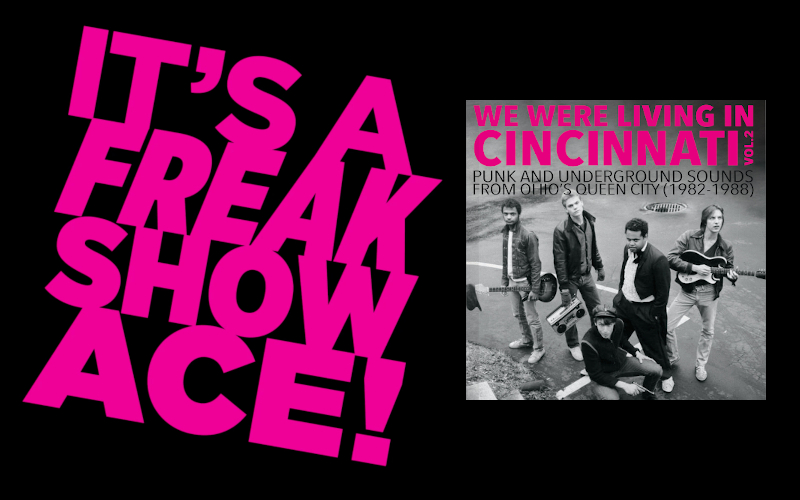
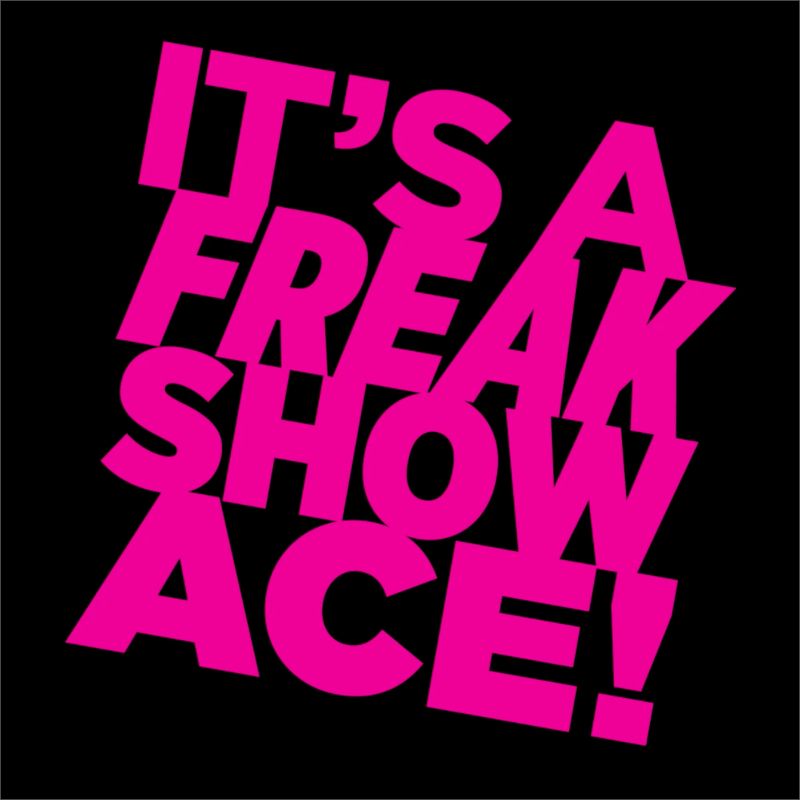
If it hadn’t been Bill “Billy Blank” Leist, front man for The Reduced, and DJ “Handsome” Clem Carpenter, host of a punk rock show on WAIF, the flyers compiled in the book It’s A Freakshow, Ace! by Kelli Evans, and the music on the compilation We Were Living in Cincinnati might never have been recorded. One of the things I like think punk rock is about is gumption and moxie. Leist had been looking for a place he and his friend and their bands might be able to play at on the regular. His father had worked with ex-gangster “Hallman Shorty” Mincey’s brother tim some years ago and new about the down-at-heels divey spot, and told his son he might try there. Leist had the gumption to do it. When Shorty gave them the green light he and Handsome Clem started booking local bands like Cointelpro, 11,000 Switches and BPA, all featured in the book from the mighty Aurore Press and the compilation from the unstoppable HoZac Records. The Jockey Club became the regular spot for the punks, and soon national acts were getting on the bill. The influx of kids kept Shorty happy, and the locals were grateful and excited to have a place where they could do their thang.
In the book, Aurore Press co-founder Betsy Young gives an introductory history of the Jockey Club building itself, how Shorty came to be its owner, and the time of its arise as a punk club and place for musical and cultural experimentation, to its decline and demise. In this world, the flyer was king. Shows were announced all word of mouth, over the airwaves of niche shows on WAIF, and on the flyers distributed by devotees around the city. As Evans writes “the underground relied entirely on word of mouth and its own visual presence.”
Xerox dreams built a scene ::
After the show, the flyer was something you could hold on to, tape up in your bedroom, put into a notebook, or otherwise just save as a memento of those nights where adrenaline, energy and music, and a world of possibility outside mainstream control all surged and converged. Kelli Evans curated these images from a slew of backyard archivists who held on to these treasures. She also wrote a visceral gut punch of a history, talking to the people who made the flyers about what it was like and their motivations. She provides further context by delving into the artistic precedents and analysis of their import, imagery and legacy.
Perhaps it wouldn’t hurt to relate photocopy art to memes. Since the advent of the xerox machine, the flyer and the zine became the epitome of the democratic underground, allowing for the easy dissemination of texts and visual images. The flyers were themselves a distinct form of meme. They were copyable and copied. The imagery and style was subject to recycling and new iterations on common themes. The use of collage as a primary mode of making them, takes the flyer all the way back to the Dadaists who shared in the same sense of irony, sarcasm, and sense of the absurd. The idea of the meme was first brought into awareness in the year of punk itself, 1976, when Richard Dawkins The Selfish Gene was published. It was a name for something that replicated itself. So perhaps the meme owes just as much to the replicants of Philip K. Dick. It’s a Freak Show Ace, after all.
These disposable pieces of paper were collaged and cut-up and mixed together with bizarre images appropriated from the mass media and recontextualized into something seething with Gen X sarcasm, resentment, and bile. And there are a ton of them in this book to feed your imagination with, to regenerate some of that explosion of energy released during the shows.
Mixed in with the bizarre in your face bile of exploding skulls, banal advertisements detourned to make new meanings, is some of the surrealist and sickest shit you haven’t seen since those telephone poles and bulletin boards went pretty vacant in favor of that other kind of batwing craziness found on facespook. This is the book you really want to have in your face.
Cut, Paste, Scream, Repeat ::
For people in the Midwest at the time, the Jockey Club was an equivalent to the CBGB’s or to Mabuhay Gardens. In other words, it was a life line if you were a freak. Musically they were lifelines too. Places where independent, non-commercial sounds could be heard. The anarchic appeal of these places was part of their charm. Punk music allowed for greater interaction between the people who were making the music and the people who came to listen and dance. No lighters were held up to the rock gods on the stage, because this was no stadium. The people on the stage were people just like the ones in the crowd. This made it inevitable that so many in the crowd would form their own bands. These local groups would hold down the scene like a meta spike holding down a circus tent.
Those who played inside the Jockey Club were just as eclectic as a group of trapeze artists, clowns, lion tamers, and sword swallowers. Each had their own talent, their own show, but they were all part of the circus. Whether it was garage punk or postpunk, or the then-new sounds of hardcore, or the sidewise skew into new wave, the greater umbrella of punk gave people permission to enter into a free realm of expression. Shorty gave them a stage to do it on, and beer to drink while they were at their antics.
This allowed the experimentalists and the electronic tinkerers and gadget hackers like the people in 11,000 Switches to come in and make some noise, paving the way for others who would hear it and say, “if that person can make a cut-up of a preacher and a TV show on a tape and make it sound funny, then I can record stuff off the radio and make music with it on my cassette deck too.” A world of possibilities opened up from this, and on the artier end of things, experimentalists soon found a home through the WAIF radio show Art Damage. Art Damage co-founder Uncle Dave Lewis was in several of the bands who played the Jockey Club, and whose names are written and pasted across the flyers in the book.
Art Damage in turn would form an anchor to the local noise and experimental electronics scenes, giving sound investigators in the Millennial generation a place to start working, and they in turn leaving the overall scene in tact for those coming up in turn through their own work of booking, radio advocacy, or all- around experimental shenanigans.
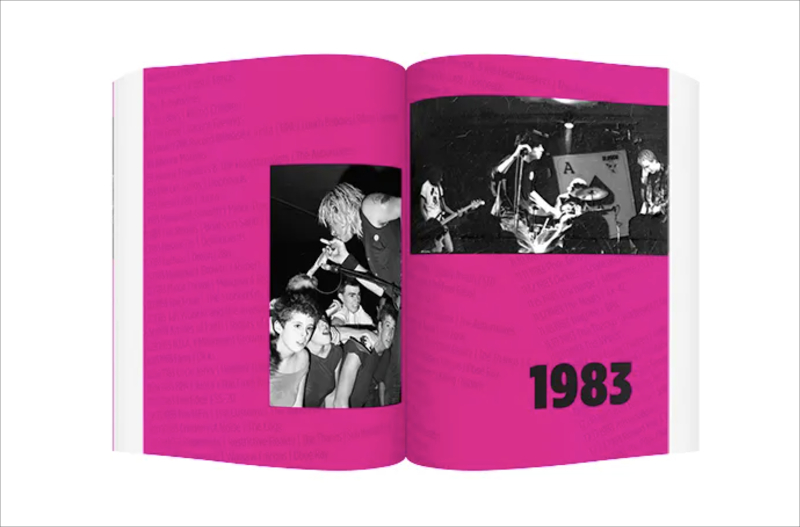
Analog memes lit the fuse ::
Looking at all these flyers makes me want to go and listen to some of the bands whose names are all over them. That’s pretty easy to do these days, for the most part. Well, at least with the national touring acts that featured on so many of these works of proletarian art. People like the Misfits, Black Flag, Hüsker Dü, the Mintuemen, D.R.I., Minor Threat, the Dead Kennedy’s and on and on and on. But if you wanted to go back and listen to all the local bands that opened up for these groups and the many others, and the local groups that headlined their own shows, that gets a bit trickier, but not impossible.
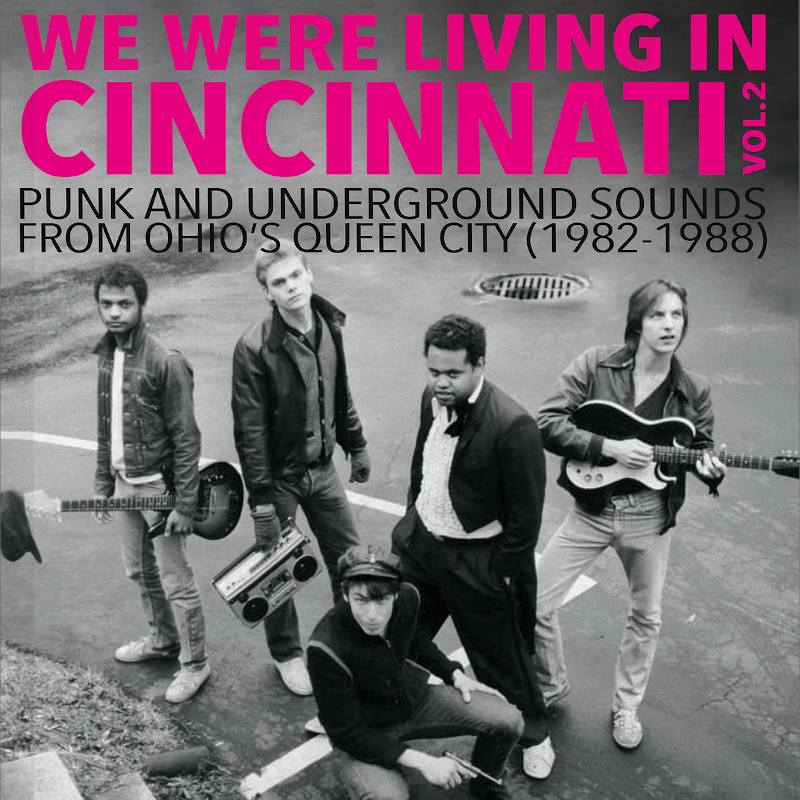
Enter HoZac records, a punk label and press out of Chicago specializing in archiving punk rock culture. They have some fantastic new releases too, sure to get your head throbbing, but they excel at trash diving and saving things from the dumpster. One of their 2025 releases is the second volume of the various artists compilation We We’re Living in Cincinnati. The first volume contained a bit of proto-punk and other material, and covered the years 1975-1982. This new second volume covers 1982-1988 and is subtitled The Jockey Club years. This is your go to soundtrack to listen to while perusing the book. Those are the exact years covered by the book. The book was assembled chronologically by year must have taken painstaking effort. Not all of those flyers have the year on them, just the night of the show. A list of shows and who played is also featured at the beginning. All of that work must have involved a ton of research. It was probably fun though for punk minded obsessives like Evans and the good folk at Aurore Press.
There is another connection to between the HoZac release and the book. That is, Peter Aaron. Aaron is a member of Sluggo the Chrome Cranks, and a music journalist. Aaron contributed quite a number of flyers to It’s a Freakshow, Ace! as well as some of his own words. That should be no surprise because he started working with Bill Leist to book many of the shows there.

But Aaron wasn’t the only one who contributed from his collection of flyers or who spoke to Evans. The flyers were created by 24 known individuals, and others whose identity wasn’t able to be tracked down. Many of these characters, and they are characters, were members of some of the bands featured on the HoZac compilation.
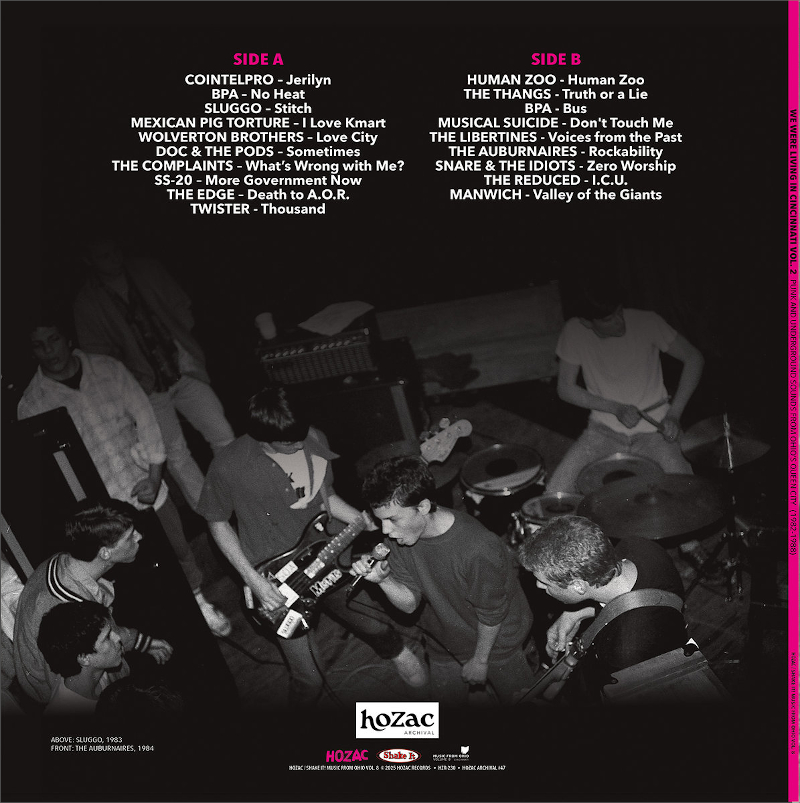
Now the era can be relived again in all its glory with fine hardcore tracks from Sluggo and SS-20, fine off the wall wailings and nihilistic spasms from the likes of Mexican Pig Torture, or the negations of Human Zoo. The unhinged performance art rock of Manwich is also on tap as are the surf friendly sounds of Doc and the Pods. The Thangs, Libertines and many others are also here for the punk inflected garage rock party.
Those who spring for the LP edition of the release will be overjoyed by the poster insert that features a family tree of Cincinnati bands. The insert also contains rare pictures of punk rockers in action, living their life, going after their dreams. The purchase also comes with a download of 28 bonus tracks, full of all kinds of sonic strangeness. And like the Nugget comps of vintage garage rock that inspired many of the heavy hitters recorded here, now this compilation will live on to intrigue and instigate the music of our future.
I want to give my own sincere thanks to all the backyard preservationists and attic archivists who kept these documents, tapes, and recordings to make things like the book and the record possible. Far from being museum pieces, the multivalent philosophy embedded within punk is still alive and kicking, just like the dadaists who ripped things up on the stage well over a century ago.
Aaron says of it all, “I’m loathe to call it nostalgia. But yes, I can understand why some people might. Fair enough. Even back then, though I knew I was part of something that was -and still is- culturally important. I just couldn’t throw the evidence away.”
Cincinnati has the Latin motto “Juncta Juvant” on its official seal and flag. What it means is “strength in unity” This book and record feed off each other. That’s why I had to write about them both at the same time, because looking at the one, and listening to the other, makes them both better together.
It’s a Freak Show Ace! by Kelli Evans is available on Aurore Press
We Were Living In Cincinnati Vol 2 1982-88 is available on HoZac.
Related posts ::
 Test Dept :: Industrial Overture Studio & Live Recordings 1982-1985 (Artoffact)
 Soul Oddity :: Tone Capsule (Reissue) (Control Freak)
 Ben Pedroche :: Independent As F***: Underground Hip-Hop From 1995-2005 (Velocity Press)
 The Electro Maestro :: Ben Evans (aka The Droid)
 Yuco :: I’m Living with Melancholy in the Fog (Flaming Pines)