


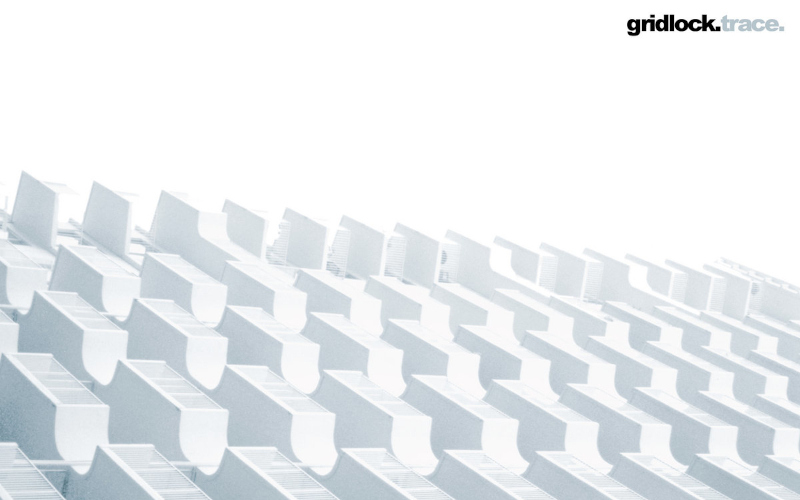



Gridlock‘s Trace returns, and this is a classic industrial IDM release. As a reissue, there’s nothing here that’s reinventing the wheel in regards to production, it was released at a time where this type of sound was innovative and thriving.
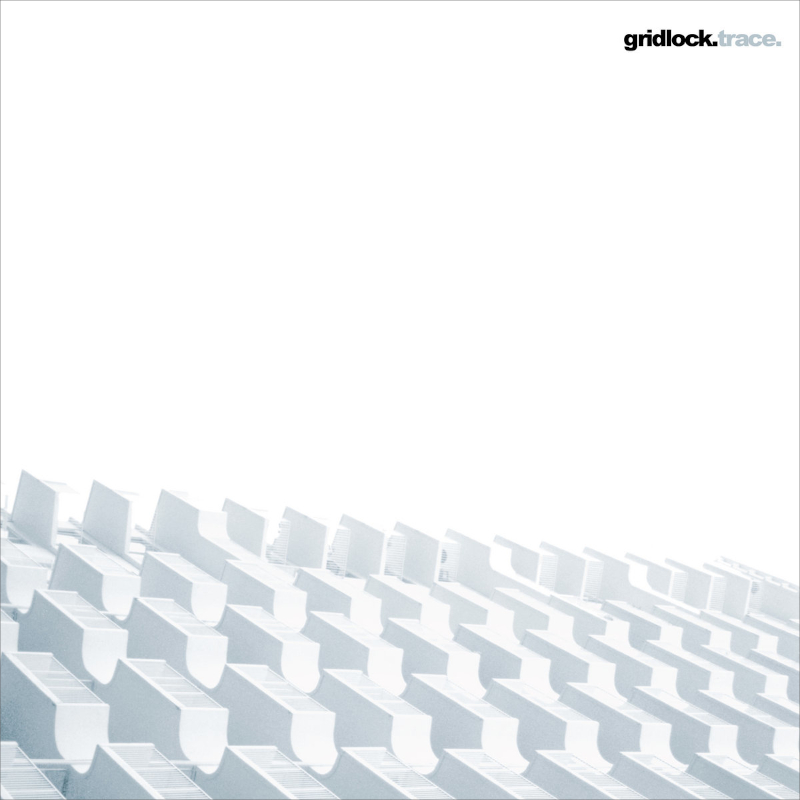
Heaviness through electronics
Gridlock‘s Trace returns, and this is a classic industrial IDM release. As a reissue, there’s nothing here that’s reinventing the wheel in regards to production, it was released at a time where this type of sound was innovative and thriving. The late 90s and early 2000s saw IDM at its creative peak. Labels like Warp, Rephlex, and Skam were pushing boundaries, with artists like Autechre (Confield, 2001), Boards of Canada (Geogaddi, 2002), and Aphex Twin (Drukqs, 2001) exploring increasingly abstract and experimental territory. At the same time, the industrial scene was fragmenting, with some artists doubling down on dancefloor aggression while others — like Gridlock — moved toward ambient, glitch, and atmospheric textures. Trace arrived in 2001, right in the middle of that shift, bridging the heavy electronics of industrial with the cerebral experimentation of IDM.
Noticeably, I would categorize this as IDM/ambient. Trace has a signature sound here, and it’s like opening up a sound chamber with classics that were forgotten or drifted away. As you hear it, it literally sounds like faded memories of a past, pads and emotional depth throughout the entire album. This pressing also includes bonus tracks that nearly double the runtime, which I’ll get to later.
The opening of this album is great and a great introduction. It’s subtle and doesn’t rush into any of the drumming. Trace was written in such a way that all the tracks are interwoven into each other. Pads, drums, and specific sounds and kits were utilized to make everything just work together, making the entire release uniform and an enjoyable listen. Track standouts to me are “Front,” “Voiceless,” and “Estrella” — great here for their drums. And I can easily say what it sounds like and compare it to other IDM artists during the time it was released. Think Autechre‘s LP5 (1998) or Phoenicia‘s work on Schematic Records around the same time. But this type of IDM drum programming and sound was still being discovered and explored during this era, so this is an example of the IDM sound. They were just experimenting at the same time.
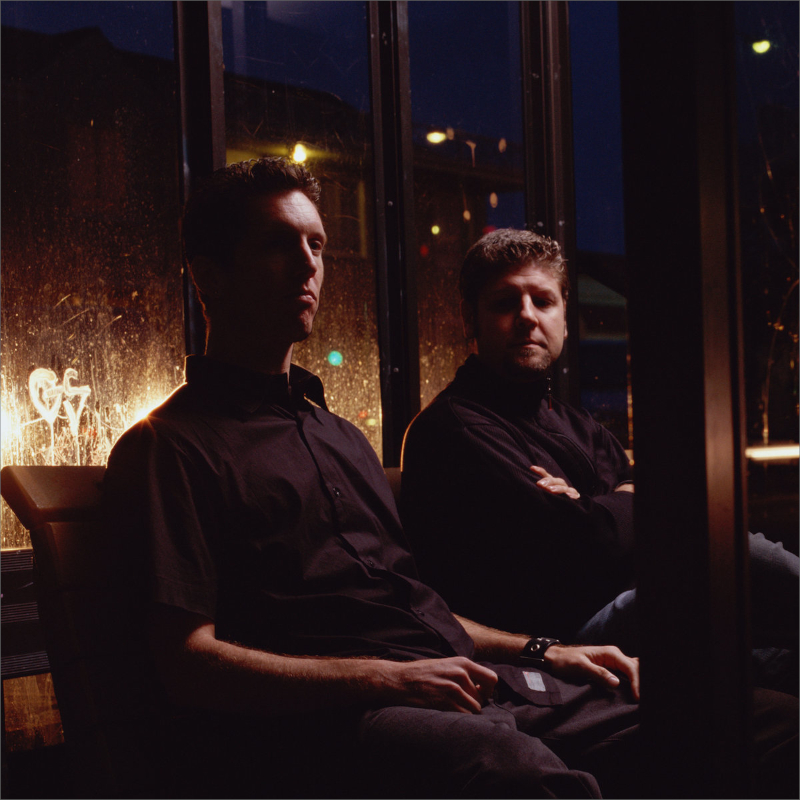
Gridlock was conceived by Mike Wells in 1993 as “heaviness through electronics.” Originally part of the electro-industrial scene, the San Francisco-based duo — Wells and Mike Cadoo, released their debut The Synthetic Form in 1997 on Pendragon Records, followed by Further in 1999. But by the time they started working on Trace, things had shifted. Pendragon Records was acquired by Metropolis Records, and the duo’s sound was evolving beyond the label’s expectations. They requested an amicable split and found a new home on Unit Records, a sublabel of Possessive Blindfold Recordings inspired by forward-thinking imprints like Hymen Records. The early sessions for Trace were disrupted by a fire in a neighboring unit, forcing the duo to halt work. Months later, they regrouped in a new studio space in downtown Oakland, where their workflow expanded alongside their ambitions.
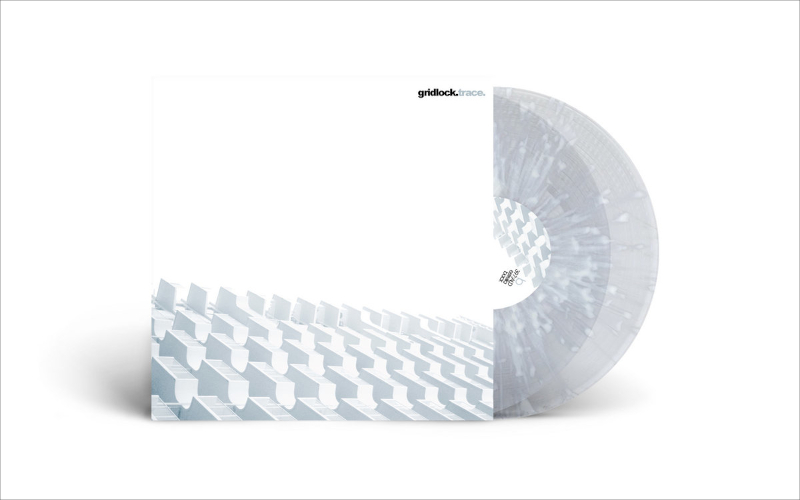
The album’s internal structure often reflects fragmentation and reconstruction — several compositions unfold in distinct movements, suggesting phases of disruption and recovery. Trace found an audience among IDM and experimental electronic listeners, and it’s remained a high point in Gridlock‘s catalog. The duo would continue along this trajectory with their final album, Formless (2003), before disbanding. Mike Wells passed away in 2022, and Viasonde is reintroducing Gridlock‘s catalog with the support of his family. Following the 2024 reissue of The Synthetic Form and the 2025 reissue of Further, Trace returns on June 5th as a limited clear vinyl pressing with white splatter, with 50 percent of proceeds donated to the American Foundation for Suicide Prevention in Wells‘ honor.
Emotion and atmosphere coexist with intricate programming ::
I want to point out the standout for me that I enjoyed in this release: “Untitled” (track 5). I actually think this one is unique out of all the tracks. The pad textures are different, and the tease of the distorted kicks and blips throughout is a hypnotizing interlude, I believe. I can respect it being strategically placed in the middle of the album. I kind of wish there was more to it, but it’s perfect the way it is. They could’ve taken it in a more bizarre frenzy of rhythm with those drums but decided to leave it as is. Beautiful pads and emotional melodies.
Now for the bonus material: This is a plethora of material that is definitely worth listening to. If you think it’s going to be different or what typically normal side Bs or bonus material is (the rejects of tracks, tracks that didn’t make it, filler thrown in to pad the runtime) this is not what this is here. Bonus material often carries the stigma of being lesser work, the stuff that didn’t quite fit, the experiments that failed. But sometimes bonus tracks are just that — bonus. Not worse, just different. These tracks are special, with remixes from Vcam and Somatic Responses both bring a different style to the tracks. Vcam‘s remix of “Voiceless” has that fast drum vibe, but an enjoyable rhythm. I figured it’d be something like his present work, but this actually was a different approach, and the synths and drums laid out in this version are gold. Somatic Responses gives two remixes, and they are fast and distorted. Since Somatic Responses has a very similar style to Gridlock already, I was curious to see how that would sound, but the Welsh duo took the approach of making these versions faster and with more drive. It is loud and doesn’t hold back. Understood and heard it very clear. Great work on the remixes.
If I had to compare it to anything, it stands out as a classic IDM/ambient release post-Tri Repetae sound, but it’s not that. It brings back emotional rhythm and has weight to it. IDM culture in the early 2000s was at a crossroads, some artists chased complexity for complexity’s sake, while others recognized that emotion and atmosphere could coexist with intricate programming. Trace sits in the latter camp. It’s not trying to impress you with its technical prowess. It’s trying to make you feel something. And that’s what makes it a classic. This is a release that deserves to be heard again, and Viasonde‘s reissue gives it the platform it deserves.
Trace is available on Viasonde. [Bandcamp]