


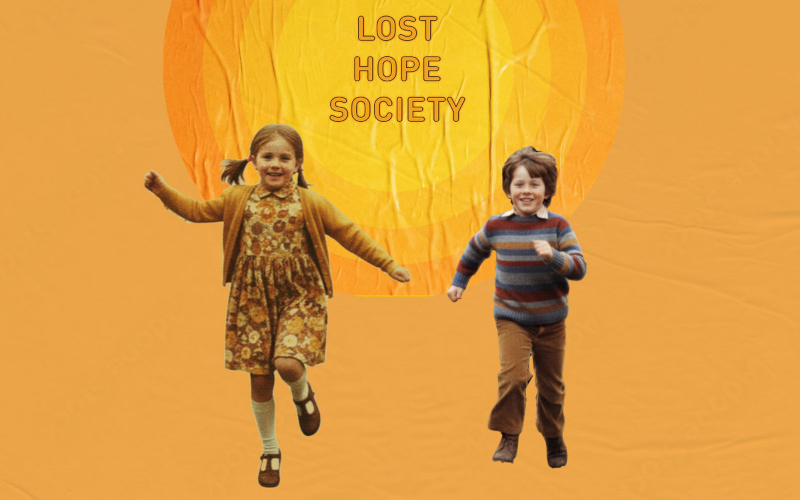


Lost Hope Society doesn’t deal in easy optimism. Instead, it locates hope as a kind of underlying signal—constant, even when masked by noise. Like Midsommar, it uses brightness to reveal shadow, and in doing so, turns discomfort into clarity.
Sometimes playful, sometimes disquieting
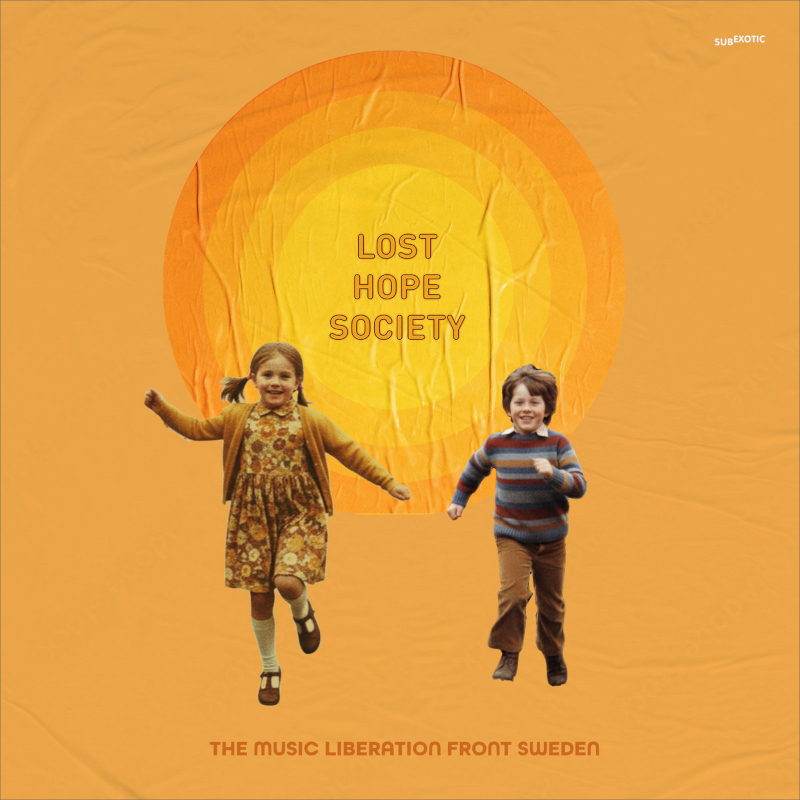
Listening to The Music Liberation Front Sweden on Lost Hope Society feels like stepping into Ari Aster’s Midsommar refracted through analog circuitry—somewhere between pastoral reverie and ritual unease, where beauty and dread share the same frequency. There’s a constant duality at play: warmth laced with corrosion, innocence shadowed by implication. The textures feel soft, almost nostalgic, yet carry a low, persistent tension that never fully dissipates.

This is not pastiche. It’s a careful reconfiguration of familiar language into something more elusive. Where others circle the gravitational pull of Boards of Canada, this record quietly steps beyond it—less a continuation than an elevation, as though the imagined past it draws from has been further weathered, further decoded. A pre–Cold War dream-state rendered with such conviction it begins to feel unearthed rather than invented.
The sonic architecture is deliberate and deeply expressive. Ambient passages open and close like breath, while Moog and Roland lines drift in loose, curling phrases—sometimes playful, sometimes disquieting. The drums land with tactile presence, shifting between organic looseness and machine insistence. Treated guitars thread through cello, viola, and Mellotron, not as decorative flourishes but as carriers of meaning—each tone shaping the emotional grammar of the piece rather than showcasing technicality. There’s maturity here, and a confidence that comes from restraint.
Holding space, letting the tension speak ::
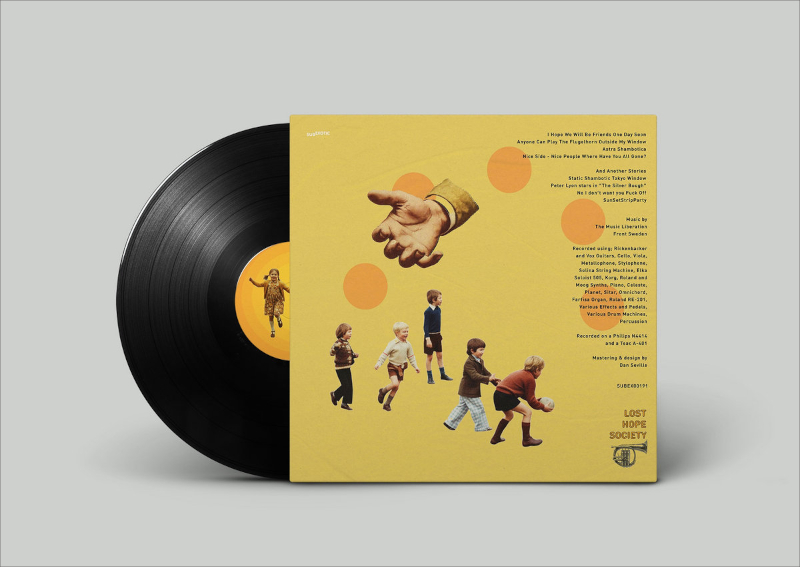
Described as “not so easy listening,” the album doesn’t confront so much as it unsettles. “Nice People – Where Have You All Gone?” stands as a centerpiece: a seven-minute piece unfolding in measured phases, tracing one of the record’s central concerns—the endurance of hope when its absence feels most convincing. It resists resolution, instead holding space, letting the tension speak.
“SunSetStripParty” offers a different light entirely, dissolving into neon-classical warmth, almost ecstatic in its glow. In contrast, “No I Don’t Want You To Fuck Off” sharpens into abrasion—its title reflected in brittle distortions and slicing glitches, where the sound palette itself seems to bristle. “And Another Stories” becomes the emotional hinge. It begins like a future-retro paean, deceptively light, almost pop-facing, before revealing its deeper current. There’s a sense of thaw here—a slow melting of accumulated grey, exposing something that was never absent, only obscured. It suggests that hope isn’t introduced but uncovered, that even misreading’s and distortions can’t fully suppress what persists beneath.
Lost Hope Society doesn’t deal in easy optimism. Instead, it locates hope as a kind of underlying signal—constant, even when masked by noise. Like Midsommar, it uses brightness to reveal shadow, and in doing so, turns discomfort into clarity. A record that doesn’t just explore its themes—it quietly proves them: a complex simplicity in 10 out of this world beautifully crafted pieces.
Lost Hope Society is available on Subexotic. [Bandcamp]