



Taken together, Fading Bright and Litchfield reveal the emotional and conceptual breadth possible within contemporary ambient music when approached with sincerity and imagination. Both artists resist easy categorization or formulaic structures, choosing instead to create deeply immersive worlds shaped by texture, emotion, and atmosphere.
Transforming space, perception, and mood
Perceptual Tapes continues to establish itself as one of the more quietly essential labels operating within contemporary ambient and experimental music. The label’s catalog consistently favors atmosphere over spectacle, intimacy over excess, and deep listening over immediacy. Two recent releases, Fading Bright by memorysound and Litchfield by Spectrical, embody these values beautifully. Though distinct in approach and geography, both albums explore memory, environment, and emotional resonance through sound that feels profoundly tactile and human. Together they form a kind of dialogue between inner and outer landscapes, between recollection and observation, between fading light and living wilderness.

Nathan Strong, recording as memorysound, crafts music that seems suspended in the fragile space between nostalgia and impermanence. Fading Bright, his sophomore full-length following 2023’s Color of Sunshine, unfolds like a series of half remembered dreams illuminated by soft analog glow. Recorded using analogue synthesizers, Eurorack systems, piano, found sounds, and lo-fi processing techniques, the album embraces imperfection not as aesthetic affectation but as emotional truth.
From the opening moments, Fading Bright establishes an atmosphere of warmth tinged with melancholy. Tape warble gently bends tones at the edges, while distant textures hover like memories struggling to remain intact. There is an unmistakable intimacy to Strong’s compositional approach. The music never feels constructed for passive consumption. Instead, it invites listeners inward, asking them to sit quietly within its drifting emotional weather.
One of the album’s greatest strengths lies in its pacing. Strong understands the power of patience. Rather than relying on dramatic crescendos or overt melodic hooks, he allows pieces to breathe and evolve naturally. Drones swell softly before dissolving into near silence, while delicate motifs emerge almost accidentally from the surrounding haze. This gradual unfolding gives the record a meditative quality, encouraging immersion rather than analysis.
Emotional residue left behind ::
The album’s tonal palette recalls elements of classic ambient and drone traditions while remaining deeply personal. There are moments that evoke the faded beauty of old photographs or the emotional residue left behind by specific places and times. Yet Fading Bright never slips into sentimentality. The nostalgia here feels complicated and lived in. Memories arrive fragmented, altered by distance and time.
Strong’s use of found sounds and lo-fi digital textures adds another layer of emotional depth. These subtle imperfections ground the music in physical reality. One can almost hear the dust in the circuitry, the aging tape heads, the quiet hum of machines existing in dimly lit rooms. Such details lend the album an organic quality that distinguishes it from more sterile ambient productions.
Particularly striking are the moments when blissful drones give way to darker undercurrents. Beneath the album’s warmth lies an awareness of impermanence, a recognition that beauty often exists precisely because it cannot last. This tension between comfort and loss gives Fading Bright its emotional weight. The music glows softly even as it seems to disappear in real time.
Strong also demonstrates an impressive instinct for melodic restraint. Piano fragments and synthesizer figures emerge sparingly, often appearing for only brief moments before sinking back into abstraction. These melodies feel less like compositional centerpieces and more like emotional traces passing through the listener’s consciousness. The result is music that lingers long after it ends, not because of grand gestures but because of its quiet sincerity.

If Fading Bright explores internal memory and emotional residue, Litchfield by Spectrical turns outward toward the natural world while arriving at similarly profound emotional terrain. Inspired by time spent within Australia’s Litchfield National Park, Timothy Allen’s latest work exists somewhere between field recording documentation and immersive ambient composition. It is an album deeply connected to place, yet it transcends simple environmental portraiture.
Allen’s process is particularly fascinating. Field recordings of birds, insects, bats, flowing water, and wind moving through trees were first transferred to cassette tape before becoming the foundational material for the album. This additional layer of mediation transforms the recordings into something more dreamlike and unstable. Nature itself becomes filtered through memory, texture, and time.
A sense of spatial vastness ::
The opening passages of Litchfield immediately establish a sense of spatial vastness. Sounds do not simply appear within the stereo field. They seem to emerge from immense distance, moving through layers of atmosphere before reaching the listener. Water trickles softly beneath drifting synthesizer tones while insects pulse rhythmically at the edges of perception. The effect is immersive without becoming overly literal.
Allen’s background in sound design is evident throughout the album. Since beginning the Spectrical project in 2012, he has consistently explored unconventional recording techniques and textured sonic environments. On Litchfield, these interests reach a remarkable level of refinement. Acoustic instruments, modular electronics, electric guitar, kalimba, and glockenspiel blend seamlessly with environmental recordings, dissolving distinctions between organic and synthetic sound sources.
What makes Litchfield particularly compelling is its refusal to romanticize nature. This is not pastoral ambient music designed merely for relaxation. The wilderness presented here feels alive, mysterious, and at times unknowable. Insects swarm in dense rhythmic clusters. Wind howls through spaces with eerie resonance. Distant animal sounds appear momentarily before vanishing back into darkness. Allen captures not only the beauty of the environment but its strangeness and enormity.
Subtle environmental transitions ::
There is also an extraordinary sense of motion throughout the album. Tracks drift slowly like long hikes through unfamiliar terrain, guided less by traditional structure than by subtle environmental transitions. The listener moves through spaces rather than songs. Sounds overlap and dissolve into one another with dreamlike fluidity.
The tape-based processes play a crucial role in shaping the album’s emotional character. Cassette degradation softens sharp edges and introduces gentle instability, making even the clearest field recordings feel slightly haunted by time. This approach aligns beautifully with the album’s larger themes of perception and memory. What we hear is not nature presented objectively but nature remembered, filtered through personal experience and sonic transformation.
Allen’s use of silence and negative space is equally masterful. Some passages become nearly still, allowing tiny sonic details to emerge with startling clarity. A single insect rhythm or faint harmonic drone can suddenly feel monumental within these sparse environments. This careful attention to dynamics and pacing demonstrates remarkable compositional maturity.
Taken together, Fading Bright and Litchfield reveal the emotional and conceptual breadth possible within contemporary ambient music when approached with sincerity and imagination. Both artists resist easy categorization or formulaic structures, choosing instead to create deeply immersive worlds shaped by texture, emotion, and atmosphere.
The value of slowness and attentiveness ::
Perceptual Tapes deserves significant recognition for curating releases of such depth and nuance. In an era increasingly dominated by algorithmic consumption and disposable listening habits, albums like these remind us of the value of slowness and attentiveness. They ask listeners not merely to hear but to inhabit sound.
Fading Bright glows with intimate nostalgia, offering fragile emotional fragments suspended in analog haze. Litchfield expands outward into living ecosystems transformed through tape and memory. One turns inward while the other reaches toward the external world, yet both ultimately arrive at similar truths about impermanence, presence, and the elusive nature of experience itself.
These are albums that reward solitude and repeated listening. Their beauty unfolds gradually, revealing deeper emotional and sonic layers over time. In their quiet way, both memorysound and Spectrical have created works of intimate poetic resonance, albums capable of transforming space, perception, and mood long after the final sounds fade into silence.
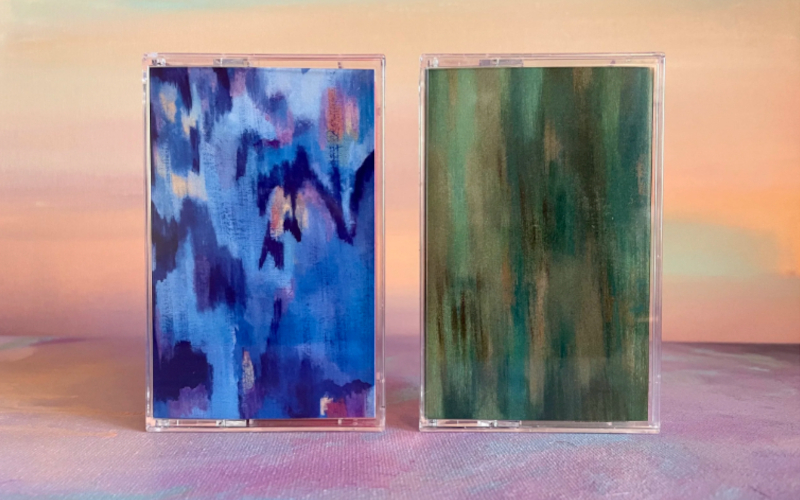
Fading Bright and Litchfield are both available on Perceptual Tapes.
Related posts ::
 2View — Sons of Melancholia :: Hyperliquid, Spectrical :: Among Lunar Glaciers (Perceptual Tapes)
 Swoop and Cross :: On the Grounds of Indecency (Perceptual Tapes)
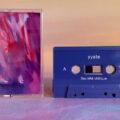 yyate :: Société oblique (Perceptual Tapes)
 2view :: Tapes and Topographies :: Plumage (Lontano Series) & Rudiments (Simulacra)
 Akhira Sano :: Fading (ato.archives)