





Markarian has a unique process here and MemLoss conveys a unique ambience that is centered on leaving you in a daze. This isn’t abstract sound art for its own sake, it’s documentation of confusion, of forgetting, of grasping for something that’s no longer there. MemLoss doesn’t need to justify itself. It just is.

Minimalism as a language
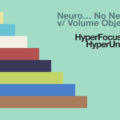
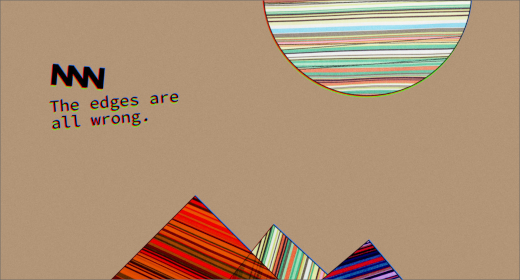
Neuro… No Neuro returns with MemLoss. Kirk Markarian, the Tucson, Arizona-based producer behind the moniker, has spent years crafting minimal glitch and microsound on labels like Audiobulb and Mille Plateaux. The moniker itself was constructed to create sound and visuals depicting the side effects of several brain surgeries and radiation treatment. MemLoss is explicitly themed around memory loss and Markarian‘s actual life.
His style has lots of bells, leads, and pretty unique keys close to blips, with field recordings peeking in here and there. It’s what you’ll get in all of his releases, just themed to how he wants you to look at stuff. He sets it up for you to imagine. His music and art style are very unique and imaginative. Almost like a recurring memory of a nostalgic day, but you can’t remember it fully … only faintly. If that feeling had a sound, this would be it. Pads are introduced here but are very subtle and faded out.
Where those artists explore minimalism as a formal exercise — testing the limits of perception and pushing digital artifacts to the foreground — Markarian uses minimalism as a language for something more personal. His soft sounds and sparse kit aren’t about purity or reduction as an end in itself. ~J. Batista
Minimalism in electronic music has always been about intention. The philosophy of using soft sounds and sparse arrangements isn’t about limitation, it’s about clarity. Artists like Alva Noto, Ryoji Ikeda, and early Oval built entire careers on the idea that stripping sound down to its essentials forces the listener to focus on what remains. Every click, every blip, every sustained tone carries weight because there’s nothing else competing for attention. Markarian‘s approach follows that lineage. It isn’t just blips and beautiful keys, there’s purpose behind this. The minimal sound and kit selection speaks to the fragmentation and gaps in memory that the album explores. When you’re forgetting words, losing pieces of thought, the mind doesn’t fill in the blanks with noise. It leaves them empty. Markarian‘s sparse productions mirror that emptiness. The soft sounds, the restrained synth selection, the faded pads, these aren’t aesthetic choices. They’re structural ones. The minimalism is the point.
What sets Markarian apart from the clinical minimalism of someone like Alva Noto or the mathematical precision of Ryoji Ikeda is the emotional core beneath the restraint. Where those artists explore minimalism as a formal exercise — testing the limits of perception and pushing digital artifacts to the foreground — Markarian uses minimalism as a language for something more personal. His soft sounds and sparse kit aren’t about purity or reduction as an end in itself.

Sometimes less isn’t just more. It’s everything ::
Markarian‘s visual work reinforces this. His album covers and graphics are just as minimal and simple as his productions: stark, abstract, sometimes simple. There’s a consistency between what you see and what you hear. The restraint carries across both mediums. And that restraint is intentional. By limiting his palette, both sonically and visually, Markarian forces the listener to sit with what little is there. You notice the decay on a single pad. You hear the grain in a field recording. You feel the weight of a bell tone fading out. In a world where electronic music often leans toward maximalism, layers upon layers, complexity for complexity’s sake, Markarian‘s work is a reminder that sometimes less isn’t just more. Sometimes it’s everything.
Markarian‘s usage of keys and synth selection in this album are very minimal, and I believe he does this purposefully or at least it seems that way. His visuals are just as unique and simple as his productions. Tracks like “Why Are You Like This” and “Words On Branches” are standouts to me. The others seem to be variations of notes and patterns shifting with utilization of the shared synth kit selection, but these two individual tracks sound different and have a fading string and pads element to them that introduces a mysterious and ominous sound.
Markarian has a unique process here and MemLoss conveys a unique ambience that is centered on leaving you in a daze. This isn’t abstract sound art for its own sake, it’s documentation of confusion, of forgetting, of grasping for something that’s no longer there. MemLoss doesn’t need to justify itself. It just is.
MemLoss is available on Audiobulb. [Bandcamp]