






Krope is a six-part cinematic sound suite in which Belarusian artist Anton Anishchanka reimagines ancestral folk songs through analog warmth, field recordings, and spectral electronics, weaving love, loss, and memory into a haunting journey across Belarus’s past and present.
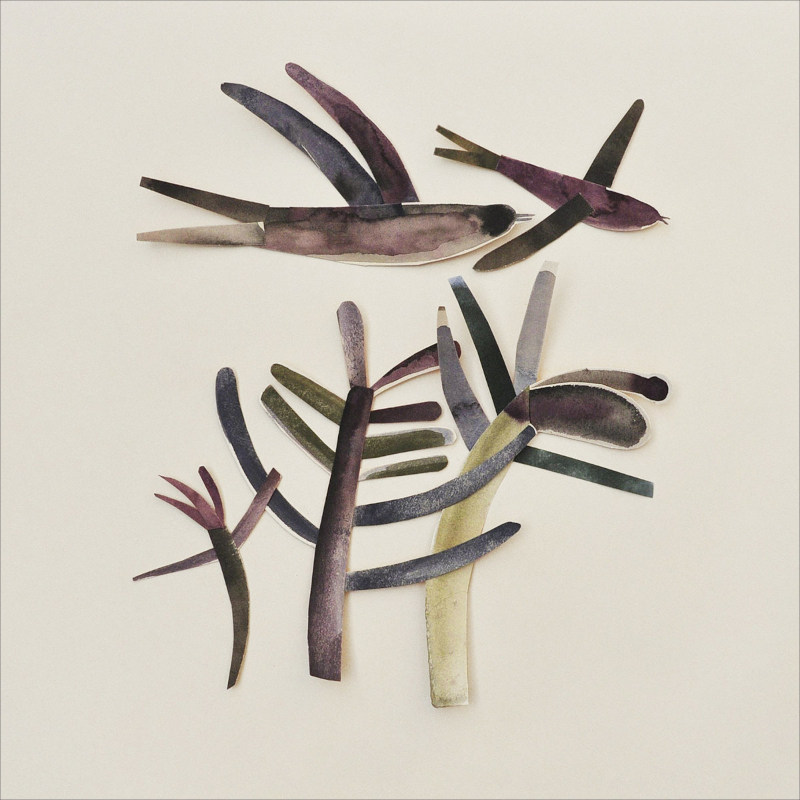
Ancestral echoes in analog light
Krope reimagines traditional Belarusian music through contemporary sound art. From the opening song to the final vigil of death, grief and regret give way to disarming love, shaping the ethos of Anton Anishchanka‘s interpretation of Belarusian culture. Acoustic instruments and analog processing add warmth, complementing electronic layers and archival voices. Through the hiss of a passing train, the murmur of a stream, the low hum of wind, Krope captures the movement of everyday life and the haunting emotions felt by generations before. Anishchanka is weaving rare folk vocals with sparse harmonica, vibraphone, analog synths, and a variety of field recordings from fading rural landscapes. Krope offers listeners a cinematic journey into the destinies of Belarusian ancestors and down paths lost during World War II and the Soviet era, combining field recordings, synthesizers, reel to reel tapes and archival sounds.
Born from the interplay of nature, culture, and personal reflections, Krope offers intimate fragments of lived experience. “From the entire collection, I selected three tracks around which I constructed a cohesive narrative – these songs became the foundation for the whole project. In that sense, this marked the starting point of my deeper exploration into traditional culture,” says Anishchanka. He continues, “Krope transcends the idea of a mere collection of tracks – it’s a seamless, immersive journey, unfolding like a cinematic narrative that breathes and evolves as one living entity. I wanted to break free from fragmented songs and craft a cohesive story – an album to be experienced in one sitting, like watching a film that holds you in its grip.”
The imaginary narrative opens with the title track, “Krope,” a song sung by young women when marriage meant an impossible simultaneous feeling of hope and uncertainty. “Krope” (5:54) begins with walking in the woods, the distant singing woman gets closer, a strange interlude shifts into sounds of motion, creaking activity, maybe something metal is moving, grinding and squeaking, then quiet. She sings again, perhaps factory sounds grind and creak in the past, and on into a hissing atmosphere like rain or wind through leaves. The next track begins in the water, “Sproba” (5:48) urges me to try to carve my own way, the feeling is sparse and alone. Sparse tones repeat their slow tune, which sometimes vary, where repetition coils into resilience. We return again and again to the sounds of gurgling, splashing, washing, and just laughing, as water does.
Folk ghosts through electric mist ::
Then, out of nowhere, “Pryvid” (3:58) appears – a fleeting vision, foretelling what lies ahead. Haunted and dreamlike, it hovers between memory and prophecy. We are walking in the wetlands, or are we in a tunnel? There is a wet floor, the water is sometimes deep. The protagonist walks on from the past and diminishes, half way through the track change comes. Something wet is getting closer, followed by military drums in the distance that are marching, but that soon fades away.
Wandering in the wilderness, we find our singer again, she starts singing “Pałyn” (5:08), I think I hear hawk cries and a harmonium drone tone, with just wind in pines, the sounds of bitterness or grief, that speaks to the solitude of a woman yearning for her brother – the ache of exile, the impossibility of return, the bitter taste of separation. Is someone breathing? Also I hear a strange creaking motion.
Now I hear bells and tunnels that melt and fly, a noodling keyboard weaves in and out, more strange sounds, maybe motion, the sounds of moving stuff we cannot see. “Zarnica” (3:25) strikes suddenly, like lightning mirrored in still waters, bringing not despair but clarity. A vision of life as creation, before the cycle closes with “Dubrovuška” (7:50), where mourning hardens into absence, grief fusing with the land itself. Here, the connective lines of male and female destiny entwine through ritual and song, with women emerging as the enduring keepers of memory. I think something new is happening in the distance, perhaps playful animals or spirits, a very odd collage. The ghosts in the cave are very weak and dying, the sounds come from the void. We must be in an old spooky ghost factory cave. Our singer stands for the final time, strong with a traditional story in that language I do not understand, the other creatures whimper and react when the singer takes a break. I am left sad and dark, the ships are ready to launch, we are leaving this place. We can never leave.
Krope sketches a path where personal and ancestral histories intertwine. The album reveals how the same inevitabilities – love, departure, loss – still reverberate today, linking past and present in painful continuity. Anton Anishchanka is a field recordist, sound artist, curator and composer from Minsk, Belarus, who is a member of numerous electro-acoustic projects, as well as laboratories and residences based on sound research and field recordings. He creates a richly textured sonic world with his own musical narratives within the ambient, electroacoustic, and experimental genres. Shaped in collaboration with ethnographer Iryna Vasilyeva, who curated archival songs revealing diverse facets of Belarusian culture, Krope also incorporates recordings from remote regions – creaking forests, distant trains – capturing the ephemeral textures of rural life, a conceptual odyssey rooted in decades of ethnographic expeditions recorded during the 1960s-2000s. Krope is a deep listening experience and transcultural auditory voyage, conceived as a six-part suite.
Krope is available on Shatkavalka. [Bandcamp]
Related posts ::
 Rafael Anton Irisarri :: Peripeteia (Dais) — “Refuge/Refuse” video premiere
 Rafael Anton Irisarri :: Points of Inaccessibility (Black Knoll Editions)
 Rafael Anton Irisarri :: A Fragile Geography (Room40)
 Rafael Anton Irisarri :: A Fragile Geography: Reworks (Black Knoll Editions)
 Rafael Anton Irisarri :: FAÇADISMS (Black Knoll Editions)


![[2View] Maps and Diagrams’ beneath still stars (handstitched*) & returning light (Home Normal)](https://igloomag.com/wp/wp-content/uploads/2026/10/maps-and-diagrams-returning-light-beneath-still-stars_feat-75x75.jpg)


![[2View] Drift :: Manic EP / Radius Etc :: Alive & Thriving EP (The Consumers Research and Development Label)](https://igloomag.com/wp/wp-content/uploads/2026/10/radius-alive-and-thriving_feat-75x75.jpg)


